ST PETER’S CHURCH, CHETNOLE, DORSET


St Peter's Church, Chetnole, Dorset (Keith Salvesen)

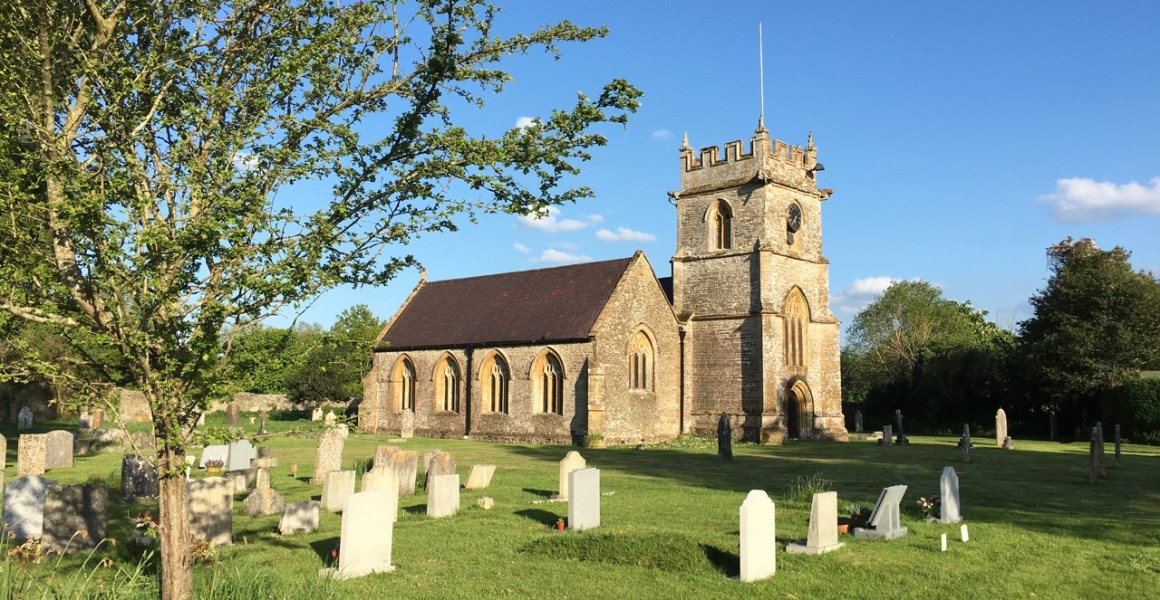
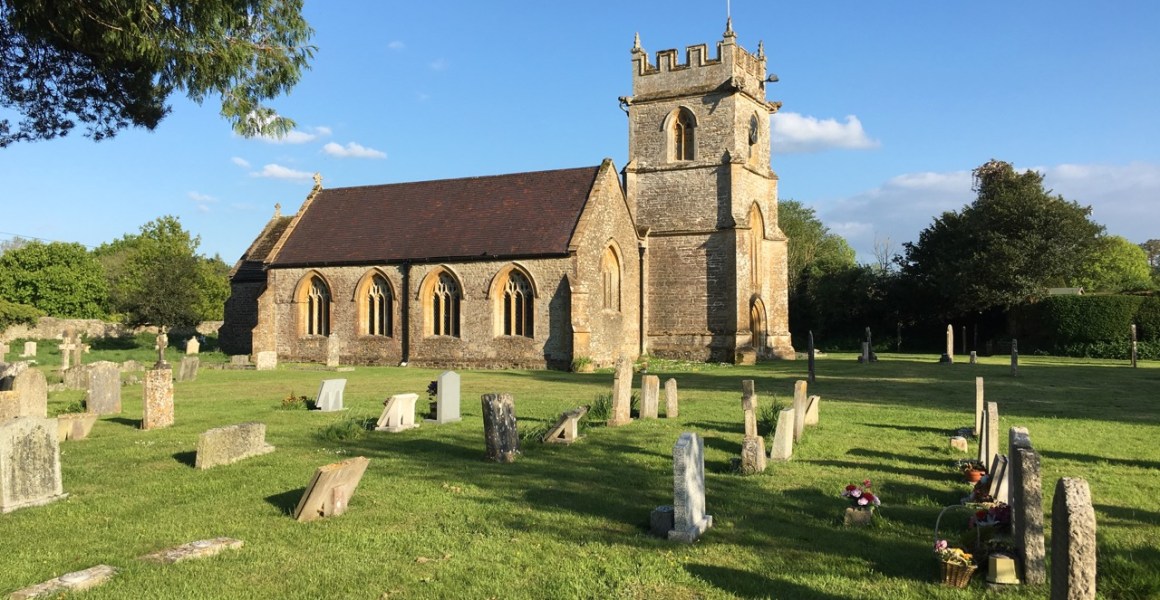
St Peter’s, Chetnole is a pretty and very typical rural Dorset church with a long history. It is at the heart of the village, and the popular village pub is close by. The openness of the churchyard is one of its attractions, and helps the church to be seen to its best advantage.
St Peter's Church, Chetnole, Dorset (Keith Salvesen)

St Peter’s dates from c13, including the nave, the south door and a lancet window. Later features date mostly from c15 including the barrel vault and the tower, which was rebuilt at least in part in the c16. The four gargoyles on the tower are of particular note. The south porch is later. In the mid-c19, the church was enlarged (controversially, apparently) with the addition of the north aisle, and the chancel was refurbished. The clock was installed in soon after (and remains reliable). I couldn’t find the trace of a medieval scratch dial, though (see Sundials) other local churches have one.

St Peter's Church, Chetnole, Dorset (Keith Salvesen)

The bells are of particular interest, with the first and second of the three being among the oldest in Dorset. They were cast by a London founder, William Chamberlain, in about 1500 and inscribed respectively: wox augustinae sonet in aure dei (‘the voice of Augustine speaks in the ear of God’), and sante laurenti ora pro nobis (‘St Lawrence pray for us’). The third (tenor) bell was cast in 1865 by John Warner and Sons of London, and weighs about 8cwt. The fittings are not suitable for ringing, so the bells are chimed.

St Peter's Church, Chetnole, Dorset (Keith Salvesen)

St Peter’s is worth making a detour for if you are in the area, not least because of its attractive setting, and after visiting the church the proximity of the pub with its ales, food and garden for those with a thirst after righteousness to quench.

Photos: Keith Salvesen; Info adapted from Three Parishes Benefice’s informative website
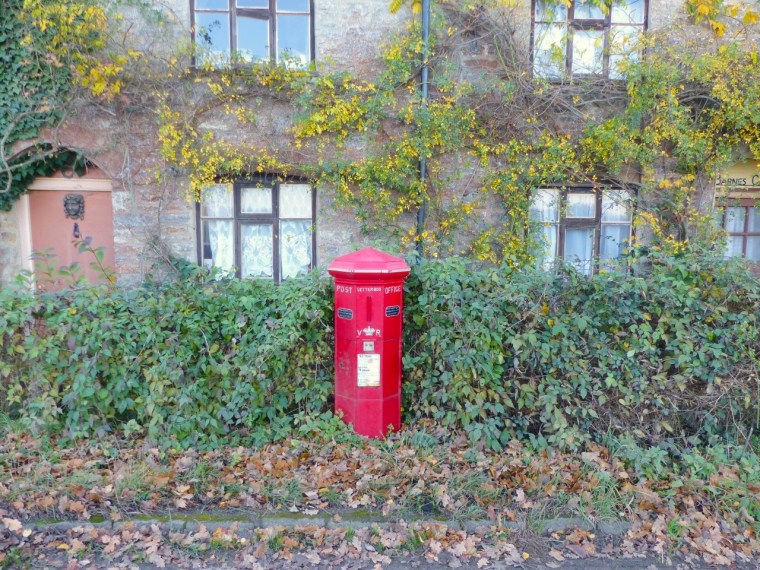
BRITAIN’S OLDEST POST BOX: A GRADE II* CHANCE FIND


On a cold, sunny November day, we went to a local church that was slightly outside our usual territory. The purpose was to photograph the medieval mass dial on the porch – or, as it turned out, dials in the plural. Beneath a neat dial from roughly 1600, we found the traces of an apparently older and much more sketchy dial. Below that, the possibility of a  hint of a dial -possibly an original practice run. More of those another time.

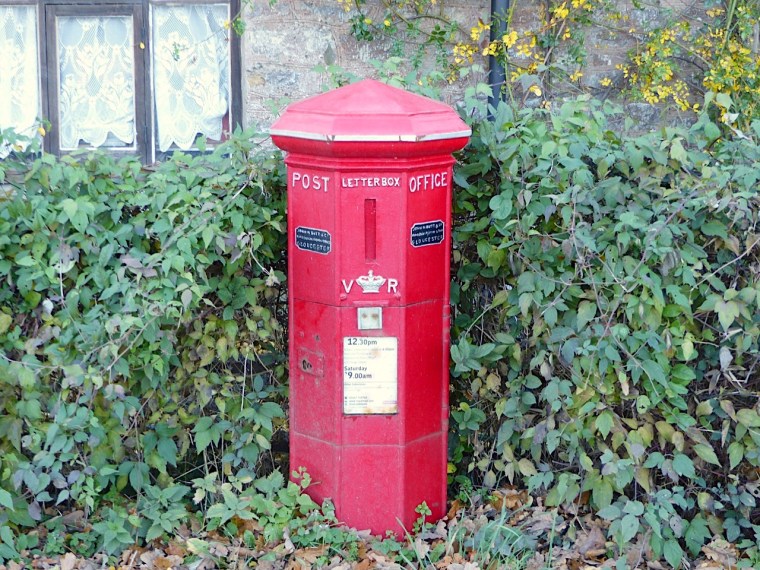
As we drove home on a different road, we had a ‘stop the car’ moment. For there, outside a row of old cottages, was a small post or pillar box. Not only that, it was octagonal, Victorian, and worthy of immediate investigation. The location is at Holwell, Dorset – rather more of an area than a defined village. Its Church, St Laurences, is in its own hamlet known as The Borough, down a no-through-road. The box is actually at Barnes Cross near The Borough and Cornford Bridge, National Grid Ref: ST 69308 11775. 

The box turned out to be a wonderful find. Plainly, it was an early one. Research when we got home revealed that is is in fact the oldest box still in everyday use in Britain. According to HE, it is dated to 1853 and was made (as the box itself proclaims) by a Gloucester firm, John N. Butt & Co. Roadside boxes were only introduced in 1852, so this one is a very early example. There are apparently two other extant boxes made by them, one at the National Postal Museum in London and the other a private box at a hospital in Plymouth.  Standardisation of design was not brought in until 1859 – before that, designs varied from area to area.


The box is grade II* listed in 1987, designated thus for its ‘legacy record’. Despite the listing, the box became badly dilapidated, until in 2104 a restoration campaign by the local community succeeded. The Daily Mail carried an article with ‘before, during, and after’ images. The box had to be stripped before being fully refurbished to its former glory. 


This very early box has a number of interesting original features, most of all the vertical letter opening, the royal insignia, and the fact that the makers advertise their skills twice over. The most important modern feature is of course the collection notice in its inset – proof that it is business as usual 165 years after the box was installed.

I have referred to this box as a post box, with a nod to pillar box  (which is the name I grew up using). I realise some prefer postbox in one word. And clearly the correct description in the 1850s was letterbox, as shown printed on this example. But I imagine that in those early postal days houses did not have what we now usually call letterboxes, i.e. holes in the front door of a house, so there was no cause for confusion.

Credits: Historic England; Dorset OPC (Online Parish Clerks); BNPS Dorset Press Agency; Daily Mail. All photos apart from the 2 restoration ones are mine.  

A RIVER RUNS THROUGH IT… A HUT ON THE FROME


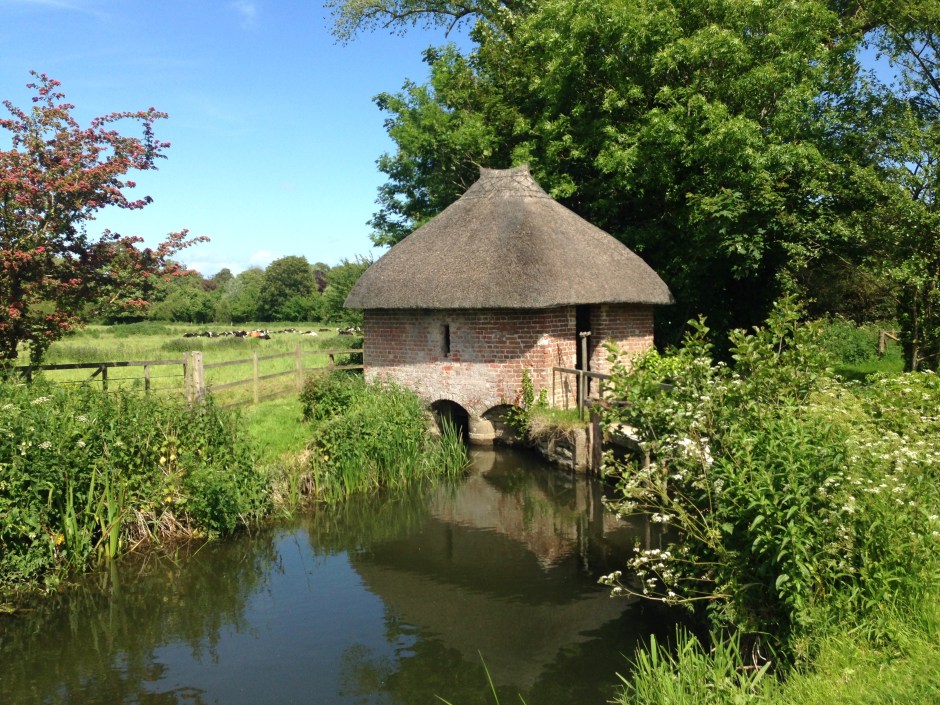
Fishing Hut on the River Frome, Dorset (Keith Salvesen)

The River Frome in Dorset rises in Evershot and flows 30 miles eastwards before, like its neighbouring river the Piddle, entering Poole Harbour near Swanage. It is the most westerly of the classic English chalk streams and provides excellent fishing for trout and in the lower reaches, salmon and sea trout.

Fishing Hut on the River Frome, Dorset (Keith Salvesen)

The upper river fishings, upstream of Dorchester, are wonderful for brown trout. The beat I fish (with variable success) is a couple of miles above this hut, where the fish are as wild as the unkempt banks, wily, and hard won. I have occasionally fished the beats lower downstream, above and below this wonderful hut, where the banks are well tended, though without pretention to the manicured perfection found elsewhere. 

Fishing Hut on the River Frome, Dorset (Keith Salvesen)

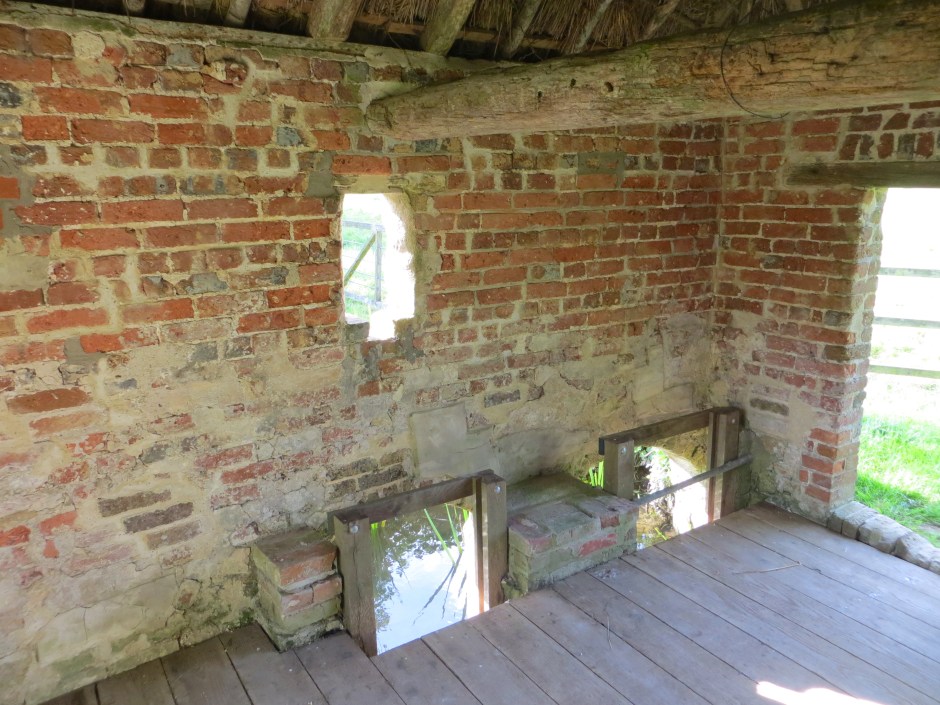
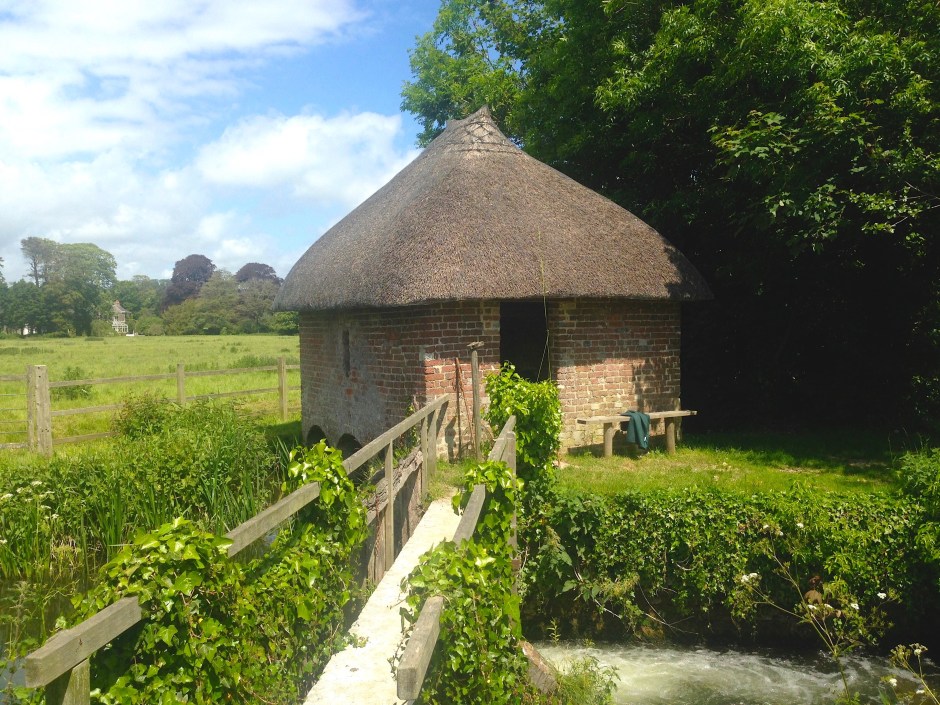
The river level changes abruptly at the hut, with a water-level control and an overflow that goes directly under the hut through two entries. Inside the hut, is it slightly strange to watch and hear the water passing underneath. The hut is a simple structure, its historic beams and brickwork more or less original.

Fishing Hut Interior on the River Frome, Dorset (Keith Salvesen) Fishing Hut Interior on the River Frome, Dorset (Keith Salvesen) The pastoral setting makes this stretch of the Frome a most pleasant place to be for a day. And if it the weather becomes adverse, there’s a simple and most attractive shelter from the elements.

Fishing Hut on the River Frome, Dorset (Keith Salvesen)Fishing Hut on the River Frome, Dorset (Keith Salvesen)Fishing Hut on the River Frome, Dorset (Keith Salvesen)


SMALL MAGPIE MOTH, DORSET


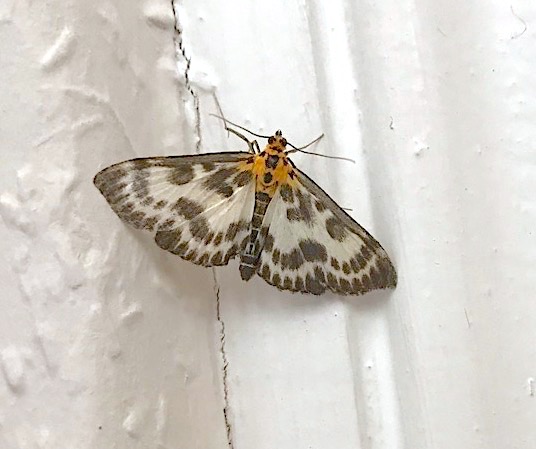
I posted about the MAGPIE MOTH quite a while ago. Now I’ve come across its junior cousin, the small magpie moth. This one was in a hard to photograph corner (especially with an iPhone), and the images are neither good nor varied (it stayed completely still). But it’s another species to add to the list. Unlike the large magpie, the small variety has no yellow band across the wings,

Small Magpie Moth, Dorset Small Magpie Moth, Dorset Small Magpie Moth, Dorset

ARMILLARY SPHERE SUNDIAL: KINGSTON LACY, DORSET


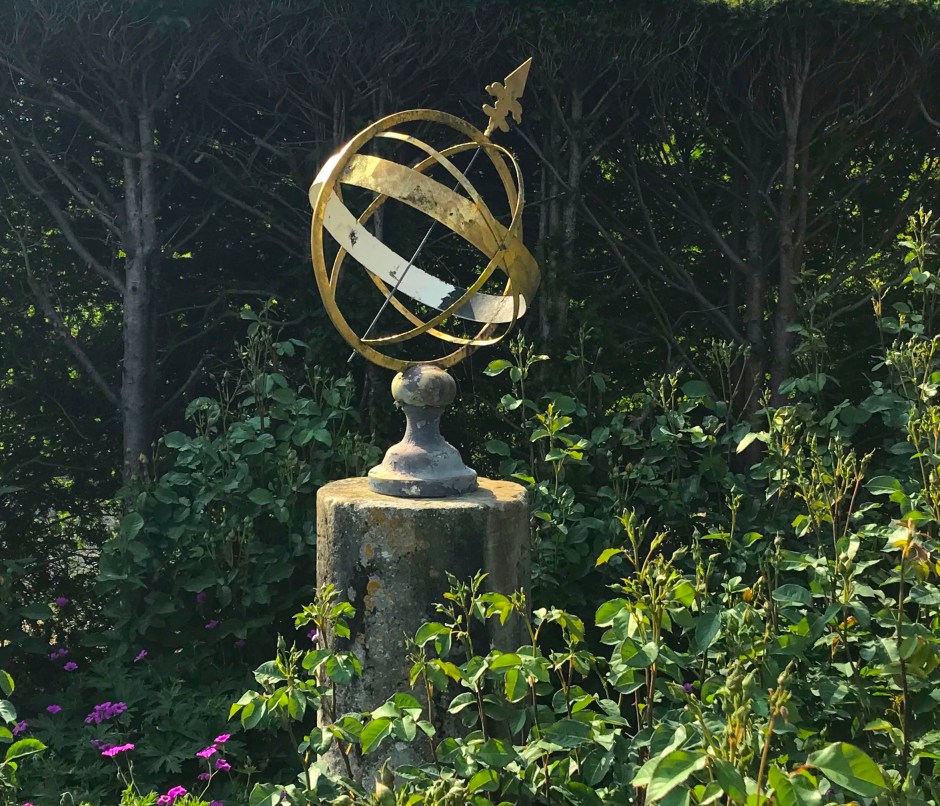
ARMILLARY SPHERE SUNDIAL: KINGSTON LACY, DORSET (Keith Salvesen)

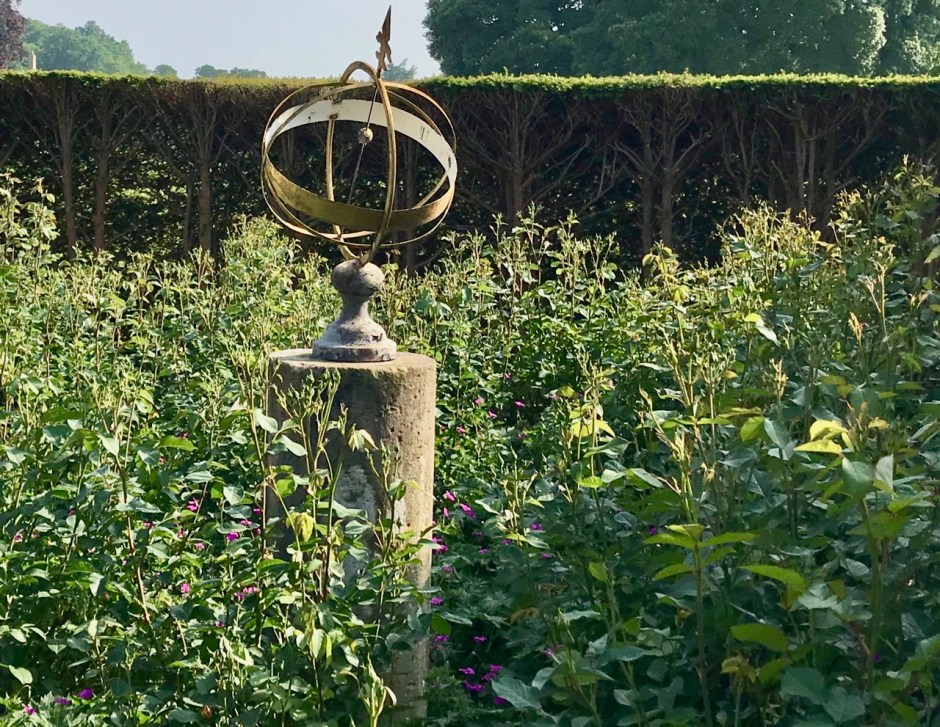
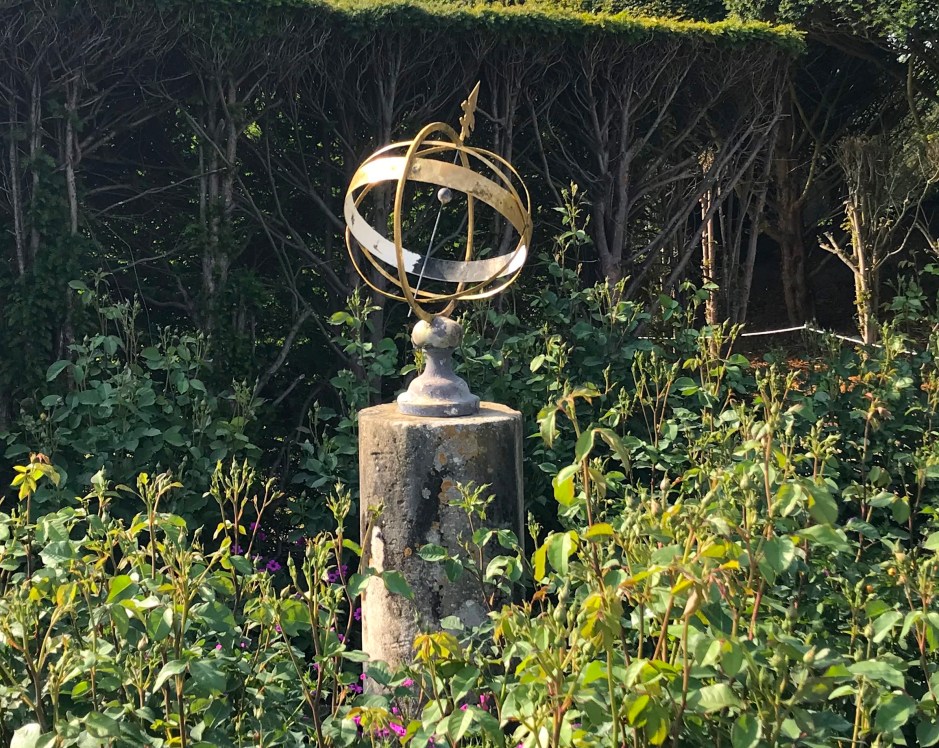
This enjoyable armillary sphere at Kingston Lacy stands proudly on a tall stone baluster in the middle of a rose garden. I wanted to get close to it to look for markings, few of which were visible at a distance. However the lush spring growth deterred closer investigation, and I preferred to leave it inspected. It is not included in Historic England’s detailed descriptions of the house and garden. A photograph found online suggests that the sundial was at one time located elsewhere in the garden, near a wall. I need to try a bit harder to find a date for it.

ARMILLARY SPHERE SUNDIAL: KINGSTON LACY, DORSET (Keith Salvesen) ARMILLARY SPHERE SUNDIAL: KINGSTON LACY, DORSET (Keith Salvesen) ARMILLARY SPHERE SUNDIAL: KINGSTON LACY, DORSET (Keith Salvesen) ARMILLARY SPHERE SUNDIAL: KINGSTON LACY, DORSET (Keith Salvesen) ARMILLARY SPHERE SUNDIAL: KINGSTON LACY, DORSET (Keith Salvesen)

All photos: Keith Salvesen Photography

A STAINED GLASS SUNDIAL AT TOLLER PORCORUM, DORSET


Toller Porcorum is an archetypal Dorset village, right down to a latinate name redolent of medieval swine-herding (cf Ryme Intrinseca, Kington Magna etc). The fine Church of St Peter and St Andrew lies at the heart of the village, and is also very ‘Dorset’. 

Toller Porcorum Church, Dorset (Nigel Walden / Geograph)

While I was fishing on the nearby River Frome a couple of weeks ago, Mrs RH visited some churches in the area, including this one. Inside, she noticed an unusual modern ‘glass sundial’ set in a stained glass window, a marker of the hours and the millennium.  

Toller Porcorum Church, Dorset - Stained Glass Sundial

Knowing that sundials are one of the features on this blog, she took a few photographs with her phone. They have come out very well. 

Toller Porcorum Church, Dorset - Stained Glass Sundial

In the close-up above, you can just make out the shadow of the gnomon at approx 12.40 (midday being at the bottom). On the outside the gnomon, in the right-hand window (below), is elegantly simple and  unobtrusive. The close-up shows it more clearly. But of course the effect is meant to be seen from the inside, if only to time the length of the sermon.

Toller Porcorum Church, Dorset - Stained Glass Sundial

Toller Porcorum Church, Dorset - Stained Glass Sundial

Lordy, but I am negligent of this site. Thanks you, kind people who still come to look at stuff  here even though (I am ashamed to note) my last post was in November 2017. I’m going to try to get back on track with this side-project… there’s quite a backlog of material!

MILTON ABBEY, DORSET


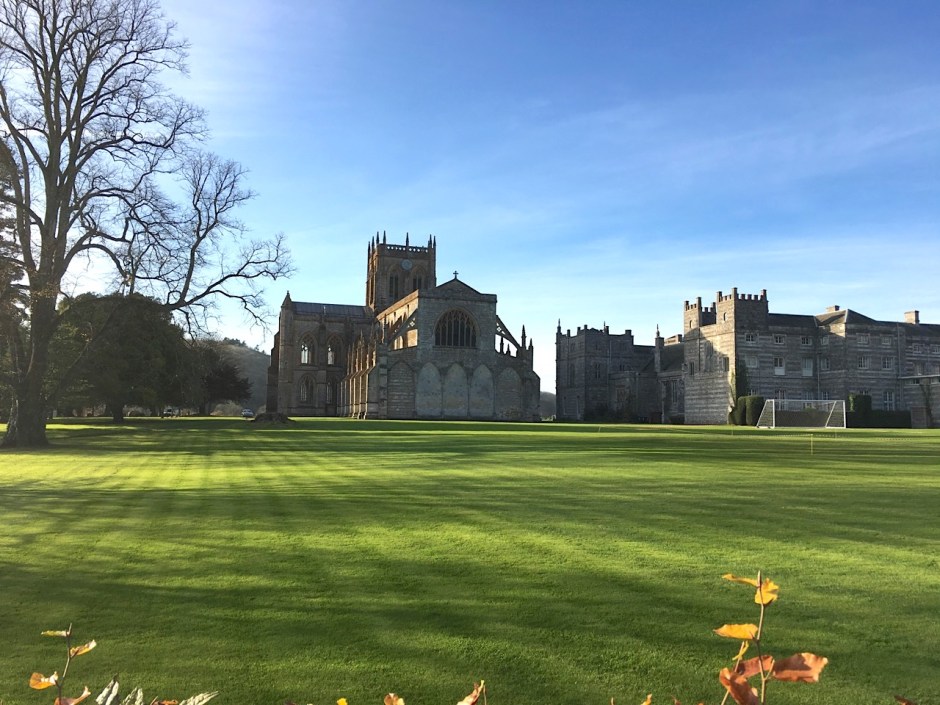
Milton Abbey, Dorset

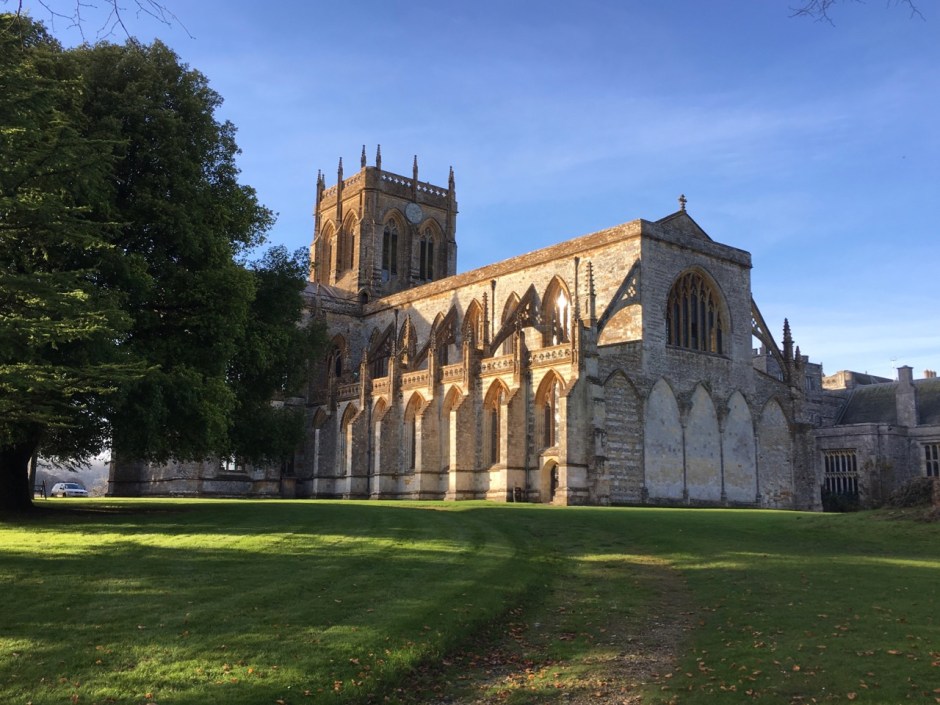
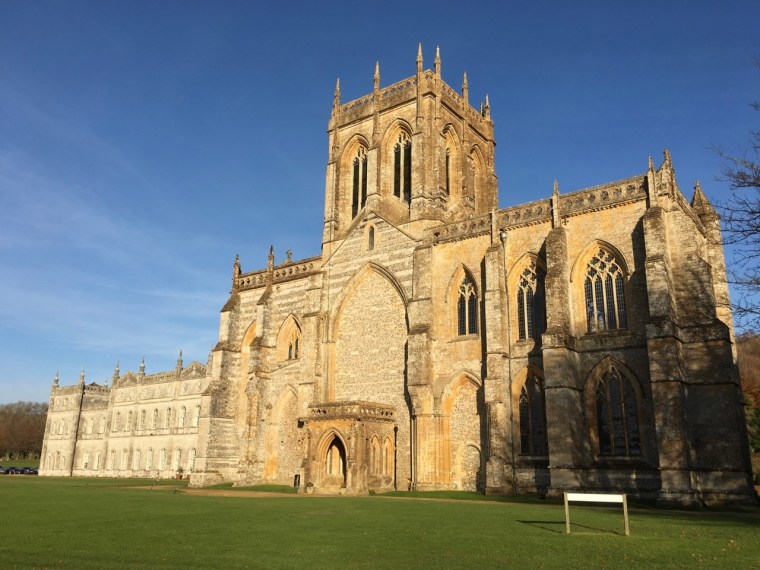
Milton Abbey, more properly called ‘The Abbey Church of St Mary, St Sansom and St Bradwalader*’, is a former Benedictine monastery founded in c10. The present building dates from the c14 and c15. The Abbey, with a post-reformation country house attached where the monastic buildings used to be, is now a school. 

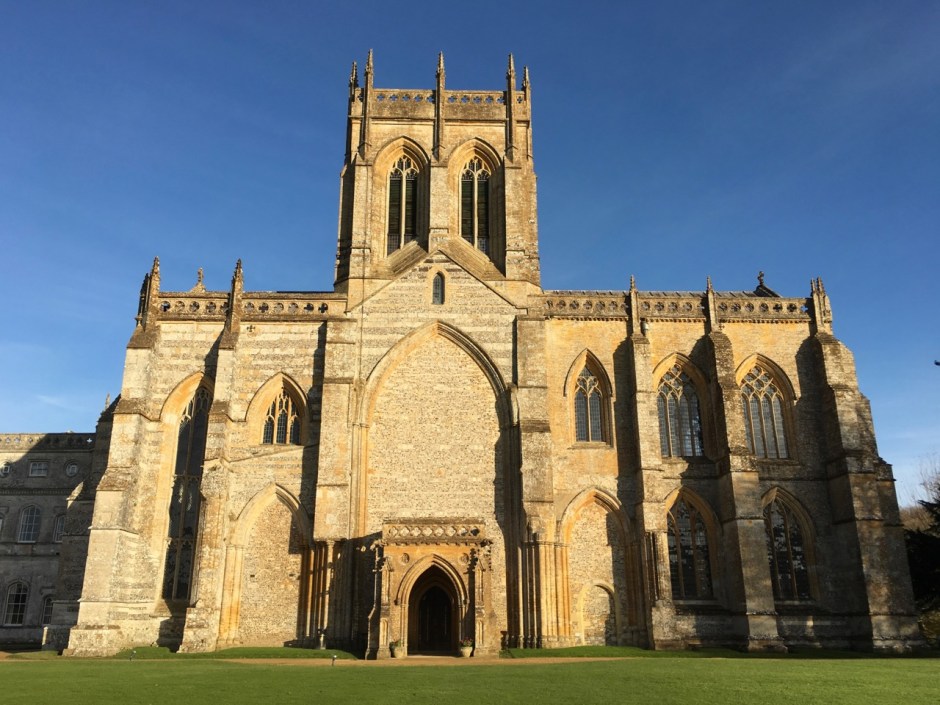
Milton Abbey, Dorset - Abbey Church of St Mary, St Sansom and St BradwaladerThe Church building consists of the tower, transepts and choir. The nave is entirely absent, not as the result of the reformation’s destructive zeal (though that may account for the absence of statues in the empty interior niches). In fact, the nave was never built. The blank arch on the ‘front’ side (below) indictes how huge the nave – and the completed edifice –  would have been.

Milton Abbey, Dorset

The country house / school buildings are to the left side of the Abbey. This isn’t the place to detail the comings and goings of the various families who lived there, but it’s all on Wiki and also in an exhaustive entry in the Dorset ‘Pevsner’ – or in more technical detail HERE

We enjoyed a c15 pun high on a wall inside the Church. The date shown on the device looks at first sight to be 1618, but is in fact 1514. Medieval numbering was not formed in quite the way we are familiar with now. The W stands for Abbot William of Middleton (the original town name, shortened to Milton), with his rebus, a mill on top of a tun. Milton Abbey, Dorset (detail)Close to the Church, there is a small stone circle about which I became quite excited. Sadly, a complete lack of mention of this circle in any historical context suggests that it is a modern imposter, perhaps related to a school project. But it’s pretty convincing!

Stone Circle at Milton Abbey, Dorset (Keith Salvesen)

*Me neither. And online research doesn’t disclose much about St Bradwalader. Or indeed anything at all.

All photos: Keith Salvesen

ELEPHANT HAWK-MOTH CATERPILLAR IN DORSET


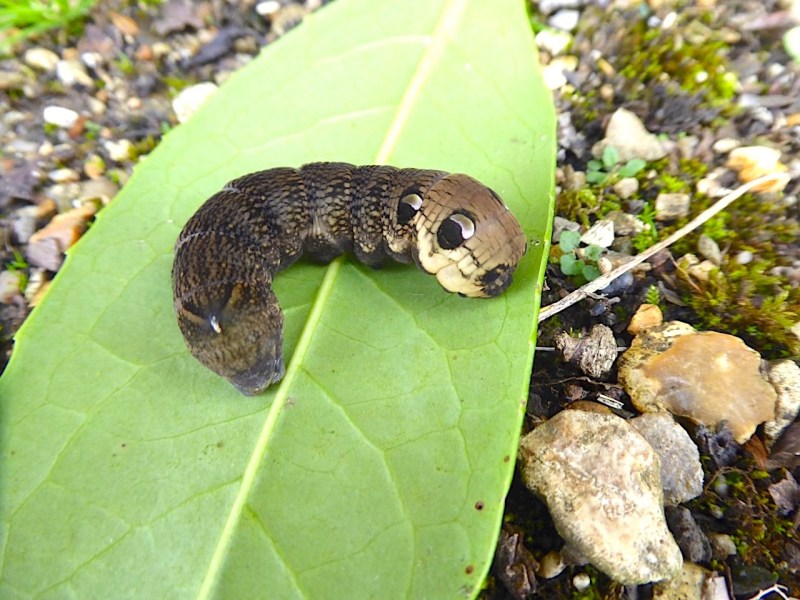
Elephant Hawk-moth Caterpillar, Dorset (Keith Salvesen)

This fearsome creature was within an inch of being crushed by my heedless foot… but luckily it made a surprisingly agile lurch to one side just in time. I had no idea what it was, other than the largest caterpillar I have ever come across. Everyone else will know, of course, that it is the childhood form of what will become an elephant hawk-moth Deilephila elpenor. I haven’t knowingly seen one of those either.

NOTE Aug 2023. This post from 2017 on this largely defunct site was has attracted a lot of hits this month. It  gives an excellent example of APOSEMATISM, defensive appearance and / or behaviour designed to repel predators. The Wiki link above will take you to a very good article on this topic, and is highly recommended if you want to know how animals of all kinds have developed many and varied protective methods

These caterpillars have three ‘poses’. The first is the usual day-to-day one, as it goes about its business with its little snout – or ‘trunk’ – extended. Note the four prominent ‘eye’ markings behind the head. 

Elephant Hawk-moth Caterpillar, Dorset (Keith Salvesen)

At the threat of danger, the caterpillar assumes its ‘elephant’ pose, tucking away its snout and humping its front end so that the 4 ‘eyes’ glare intimidatingly. From the front, there is the hint of a mouth, with two sharp eyes above it.

Elephant Hawk-moth Caterpillar, Dorset (Keith Salvesen)

From above, the creature looks like a formidable, probably toxic adversary, to be given a wide berth.
Elephant Hawk-moth Caterpillar, Dorset (Keith Salvesen)
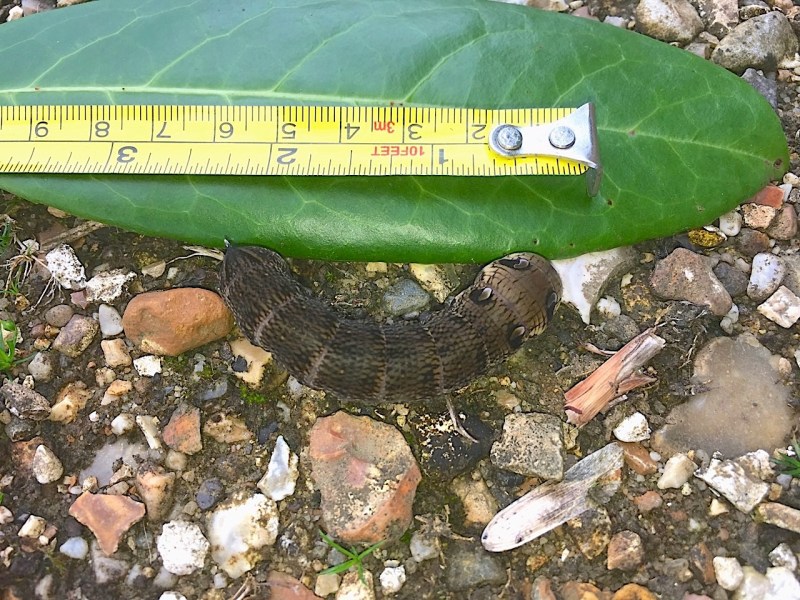
The third pose is a so-called snake pose, whereby the caterpillar curves its body, and, as I found, continues to do so back and forth accompanied by alarmingly quick ‘head’ movements, as if squirming menacingly. I backed away, before bravely putting it on a laurel leaf to move into better light in order to inspect it further. At the back, there’s a backward-facing hook or spike – in common with most hawk-moth species I think.
Elephant Hawk-moth Caterpillar, Dorset (Keith Salvesen)

I haven’t investigated how the eyes are constructed, but the white parts are plainly holes rather than surface marking
Elephant Hawk-moth Caterpillar, Dorset (Keith Salvesen)

I had to look up what the actual moth looks like, and courtesy of wiki I can reveal what everyone probably knows already – like this:

Elephant Hawk-moth wiki

 Had I wanted to straighten it out, the caterpillar would have been over 2 inches long. Quite wide, too. All-in-all an impressive beast.

A BEE HOUSE IN DORSET


Bee House & denizens, Dorset

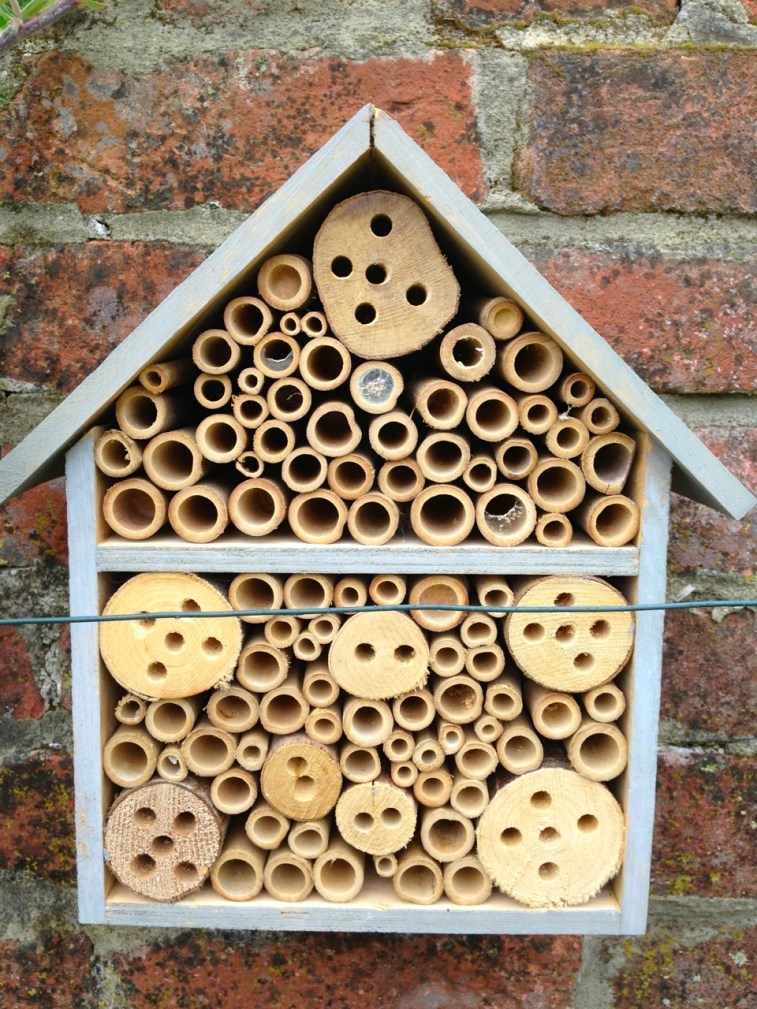
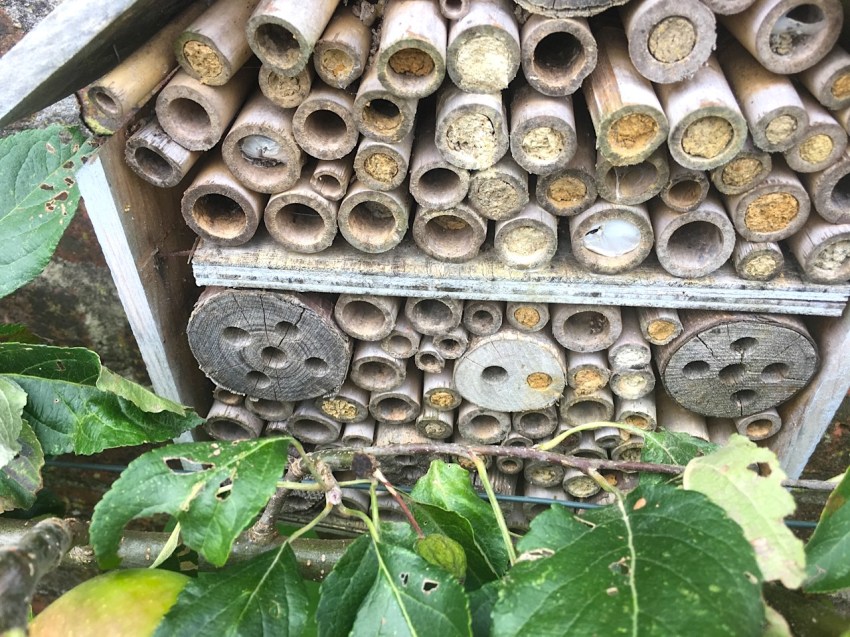
It took a year before there were many settlers in the new bee house. To begin with, there were just some transients; tiny bees that stationed themselves at the mouth of a hole, retreating from time to time to the depths. I’ve no idea what type of bee they were, but they didn’t leave any building works. And then there were a few wax caps to wonder about. 

The first resident occupied the penthouse.Bee House & denizens, Dorset

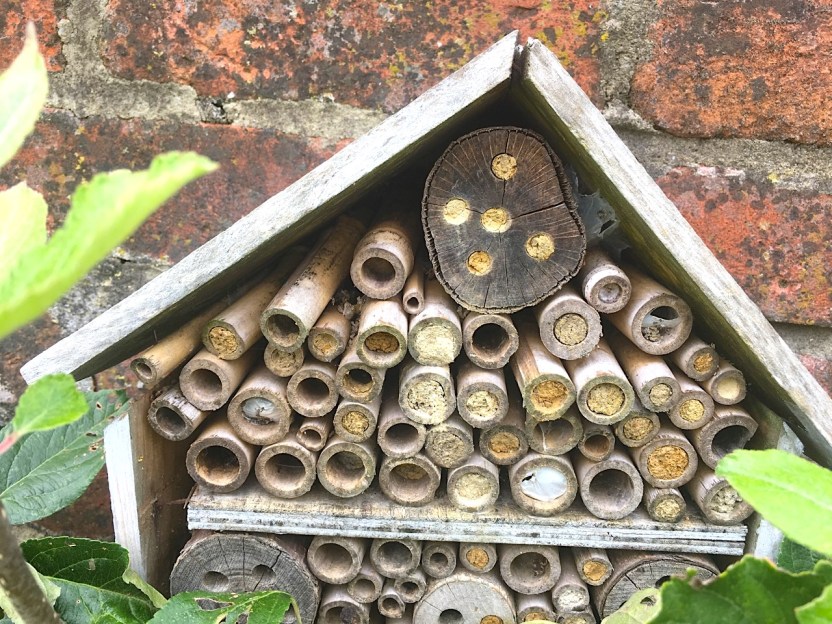
The box began to weather a bit during that first winter, and to fall apart slightly. That summer, we had mason bees in many of the holes, with around 60% occupancy – plus some waxed caps. The timber homes were clearly preferred to the bamboo sticks, and the first to fill up. Later, we noticed the first leaf cutters moving in, their green plugs slowly turning brown as the leaves withered.

Bee House & denizens, Dorset

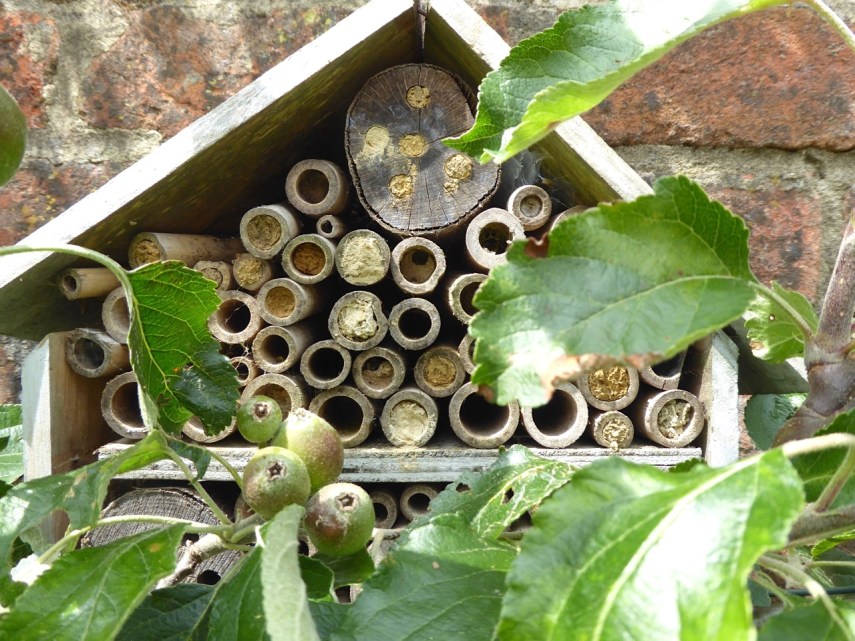
This year, by the end of May, business was thriving. The house was weathered and had no doubt completely lost the heady scent of Garden Centre. The upper storey was more popular than the lower; maybe the horizontal stem of a cox apple tree growing against the old wall was a disincentive for potential downstairs dwellers.

Bee House & denizens, Dorset

Bee House & denizens, DorsetBee House & denizens, Dorset

Two months later, as July fades into August, there are a few changes, but overall the house is much the same. So far, there have been no leaf cutters. And no little ‘peeping’ bees either. I’m disgracefully uninformed about the types of bee to which we offer a home. We’ve replanted much of the garden to benefit honeys and bumbles – with a consequent increase in butterflies and hitherto unknown types of moth. The solitaries are still a bit of a mystery. Time I got a grip, I think. Still, the apples are looking very promising…

Bee House & denizens, DorsetBee House & denizens, Dorset

All photos: Keith Salvesen / Rolling Harbour

ROSY FOOTMAN: A MOTH, NOT A FLORID FLUNKEY


Rosy Footman Moth, Dorset (Keith Salvesen)

Until last weekend I’d never heard of, let alone seen, a ROSY FOOTMAN. I’m beginning to discover and enjoy the ornate to downright bizarre names that moths tend to be given. They have this in common with fly-fishing flies – the previous day I had caught a plump wild brown trout on the River Frome with a ‘Tups Indispensable’*.

Rosy Footman Moth, Dorset (Keith Salvesen)

High on an inside wall above a mirror, I saw a small pink item. On closer inspection, I could tell it was a moth, and one I had never seen before. I had to fetch a small stepladder to inspect it and (with some difficulty) to photograph it, . Meet a Rosy Footman.

Rosy Footman Moth, Dorset (Keith Salvesen)

The Rosy Footman is apparently a moth of southern England, in particular the southern-most counties from Kent to Cornwall. They fly in July and August. With such very particular markings, they are unmistakeable, but clearly I’d failed to notice one ever before… I’m glad I have now.

Rosy Footman Moth, Dorset (Keith Salvesen)

* For those concerned about these things, I use barbless hooks. I netted the fish, unhooked it still in the water and released it in about 30 seconds to fight another day. Or preferably to produce more wild stock.