
IN-FLIGHT REFRESHMENT


This blog was started in 2012 and was originally intended to be an omnium gatherum of specific and conceivably interesting categories. The menus below mostly had sub-menus. The blog was a spin-off from a more time-consuming effort that took priority.

I never posted very regularly, and I didn’t promote the site. Looking back at my stats, I can’t help noticing that, even by 2015, I was excusing myself for long gaps between posts. I see that 2017 was the last year that I made regular posts. In the last 5 years there have been 30 short posts – none at all for the last 2 years.

It could easily be argued (I do so with myself sometimes) that I should quietly put the blog out of its misery and delete it. However, several thousand people a year visit the site and possibly find something of interest, entertainment – or even the exact thing they are looking for.
So I have decided to leave things as they are, at least for the time being. And thanks to those who have visited, even if only once…

If you are interested in Sundials of all kinds and / or Medieval Churches, there’s a properly working blog HERE
If you have an interest in natural history elsewhere in the world – birds, reef fishes, marine mammals – try HERE

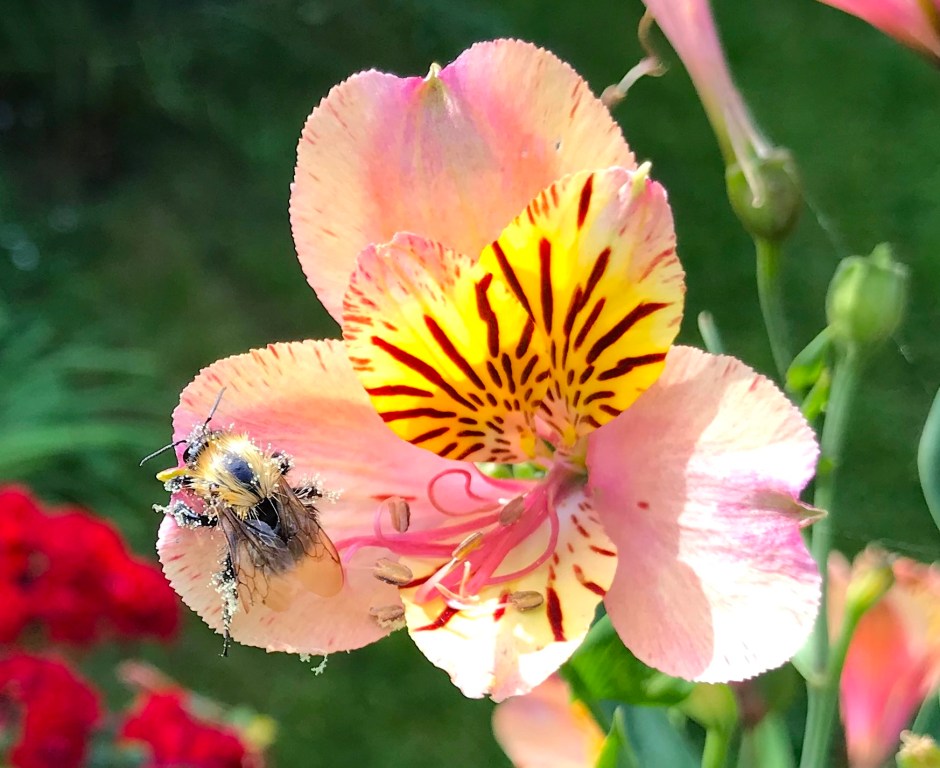
This little bee spent several minutes deep inside this alstroemeria flower, and in the process getting an all-over pollen decoration. It stayed for so long that I decided to investigate. I didn’t have a camera handy, just my phone. In good light, results can be quite satisfactory (in low light or on so-called “zoom”, it’s terrible).
If anyone can ID this bee, please leave a comment.


 I watched this small bee as it circled round the flower, busily filling its already bulging bright yellow saddlebags. We are fond of these little bees, which were introduced to the UK (or perhaps simply spread here) quite recently and have made themselves at home. They are one of two bee species that have chosen to live inside our house.

The location varies from year to year, but for about 3 months a year over the last few years there has been gentle bee-chatter going on in the roof-space above our bedroom, or in an old wall cavity between 2 rooms.
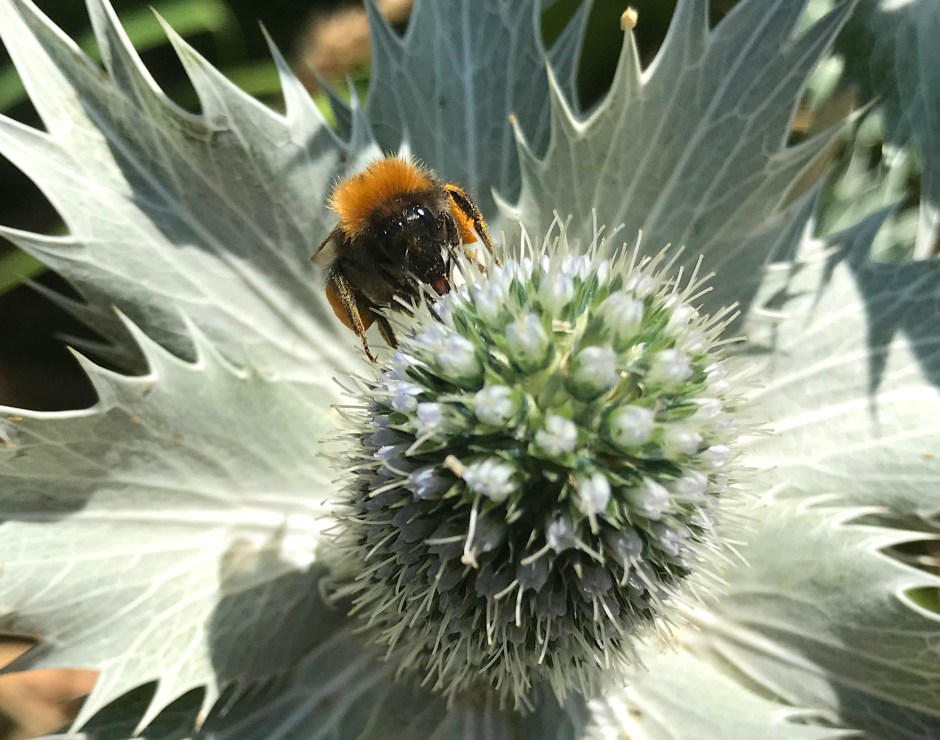
This year the tree bees decamped to the roof-space above the kitchen; and a splinter colony has recently set up a buzzing plant-produce stall in a cavity above the front porch, no doubt to the surprise of the bats that hang out there.
 You may have noticed that the bee featured here is carrying a tiny passenger, a mite, that you can see in some of the images (eg the header image). There’s a small story about these photos. I own ‘beloved camera’, ‘unreliable camera’, ‘snappy camera’ and an iPhone. **
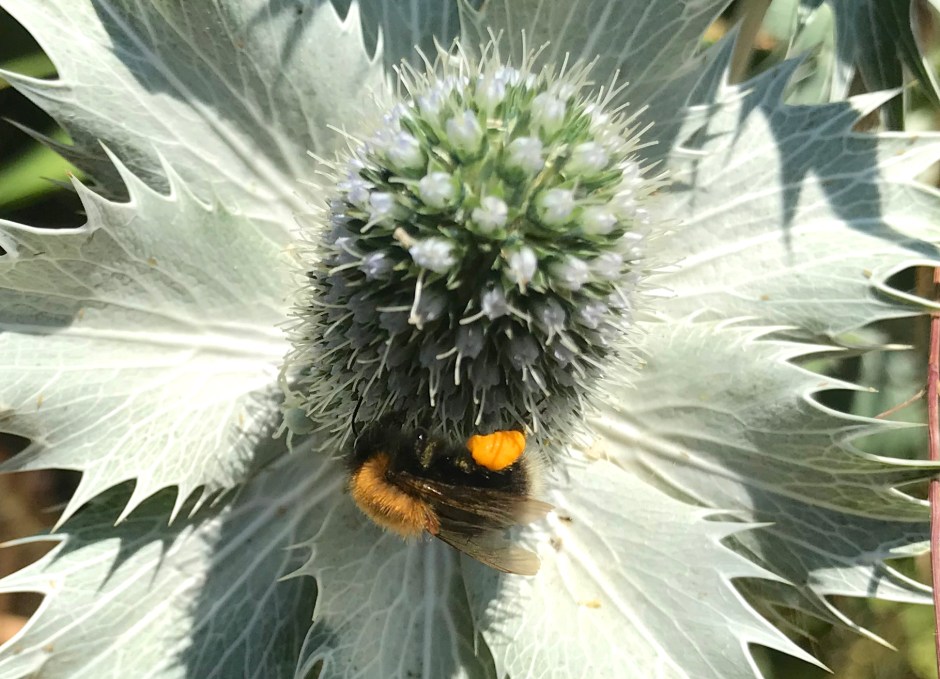
When I first saw this little bee, I had ‘unreliable’ with me (‘beloved’ being 125 miles away). It is a martyr to light sensitivity, with an annoying ‘satirical’ take on focus. Reader, I rattled off 20 shots. Then I deleted every one of them. Quickly throwing the camera behind a wall in disgrace, I reached for my phone in desperation to catch the bee at work in the sunshine. Here are the results, with a level of clarity that only ‘beloved camera’ could have matched.
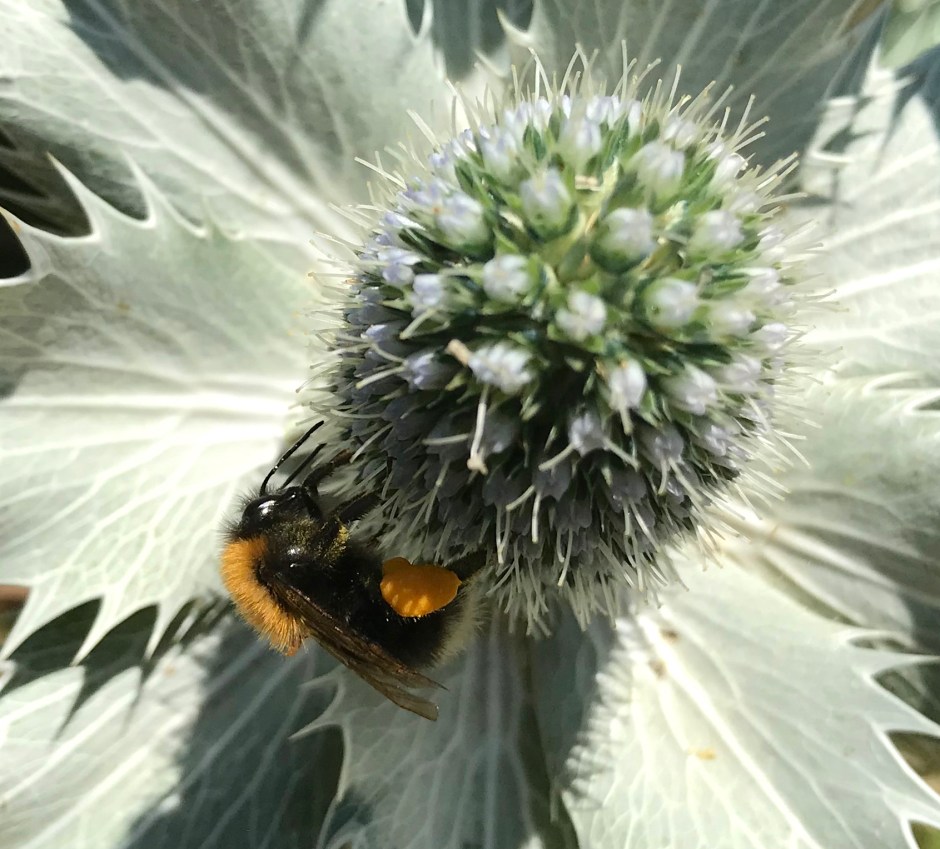
** There was ‘hated camera’ too, a DSLR that I never mastered and eventually sold back to the place I bought it for a fraction of the original cost. They saw me coming…
 All photos © Keith Salvesen Photography

It took a year before there were many settlers in the new bee house. To begin with, there were just some transients; tiny bees that stationed themselves at the mouth of a hole, retreating from time to time to the depths. I’ve no idea what type of bee they were, but they didn’t leave any building works. And then there were a few wax caps to wonder about.
The first resident occupied the penthouse.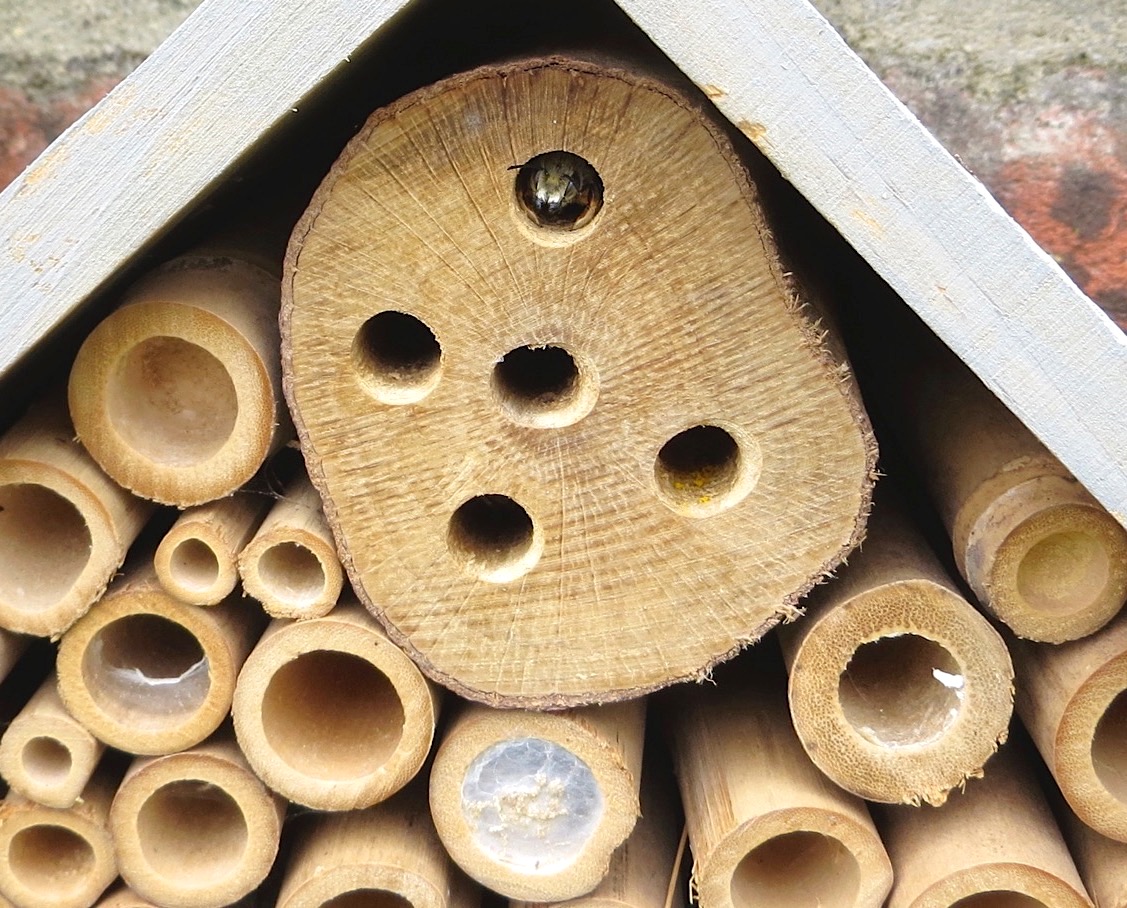
The box began to weather a bit during that first winter, and to fall apart slightly. That summer, we had mason bees in many of the holes, with around 60% occupancy – plus some waxed caps. The timber homes were clearly preferred to the bamboo sticks, and the first to fill up. Later, we noticed the first leaf cutters moving in, their green plugs slowly turning brown as the leaves withered.

This year, by the end of May, business was thriving. The house was weathered and had no doubt completely lost the heady scent of Garden Centre. The upper storey was more popular than the lower; maybe the horizontal stem of a cox apple tree growing against the old wall was a disincentive for potential downstairs dwellers.

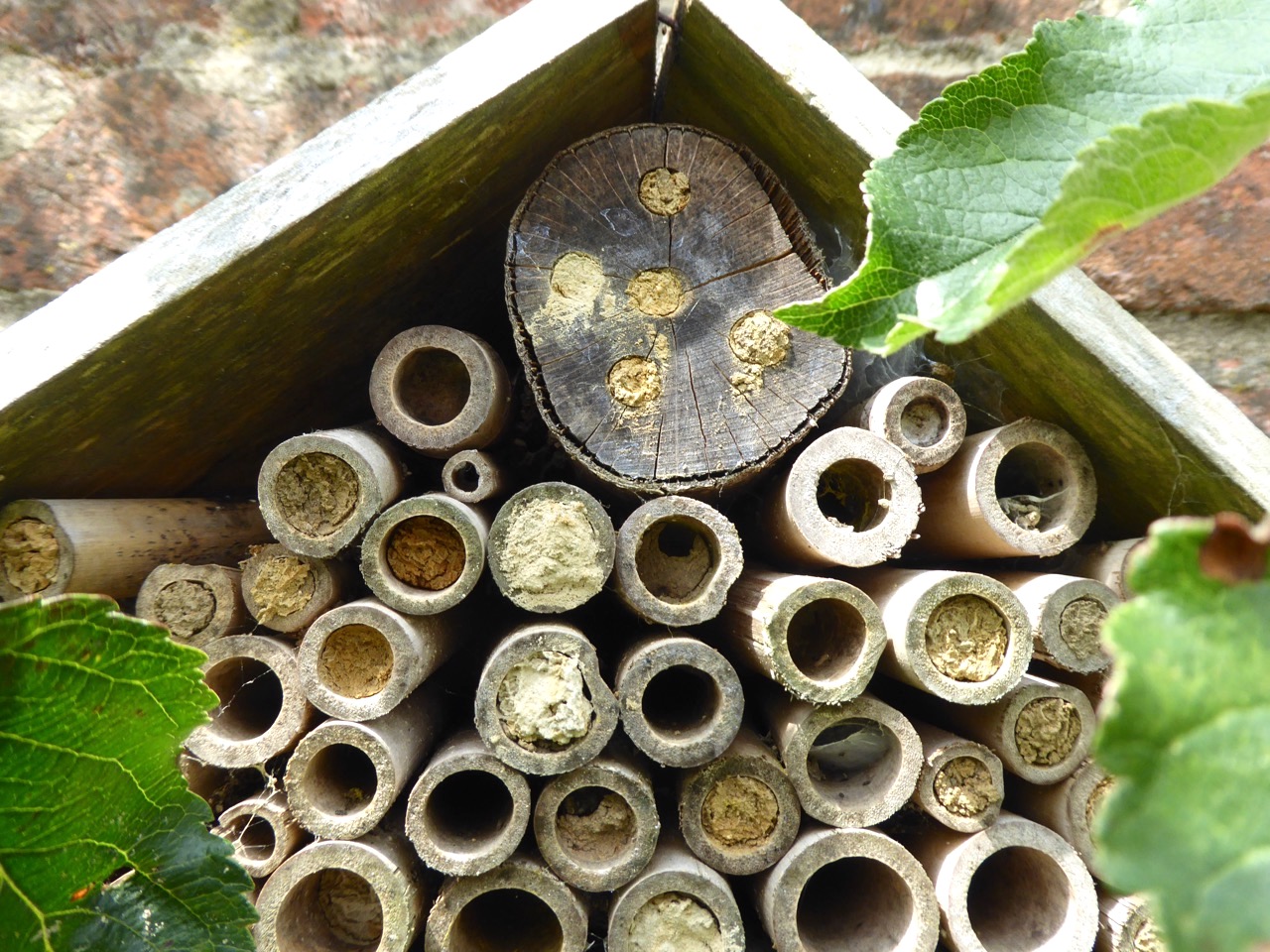
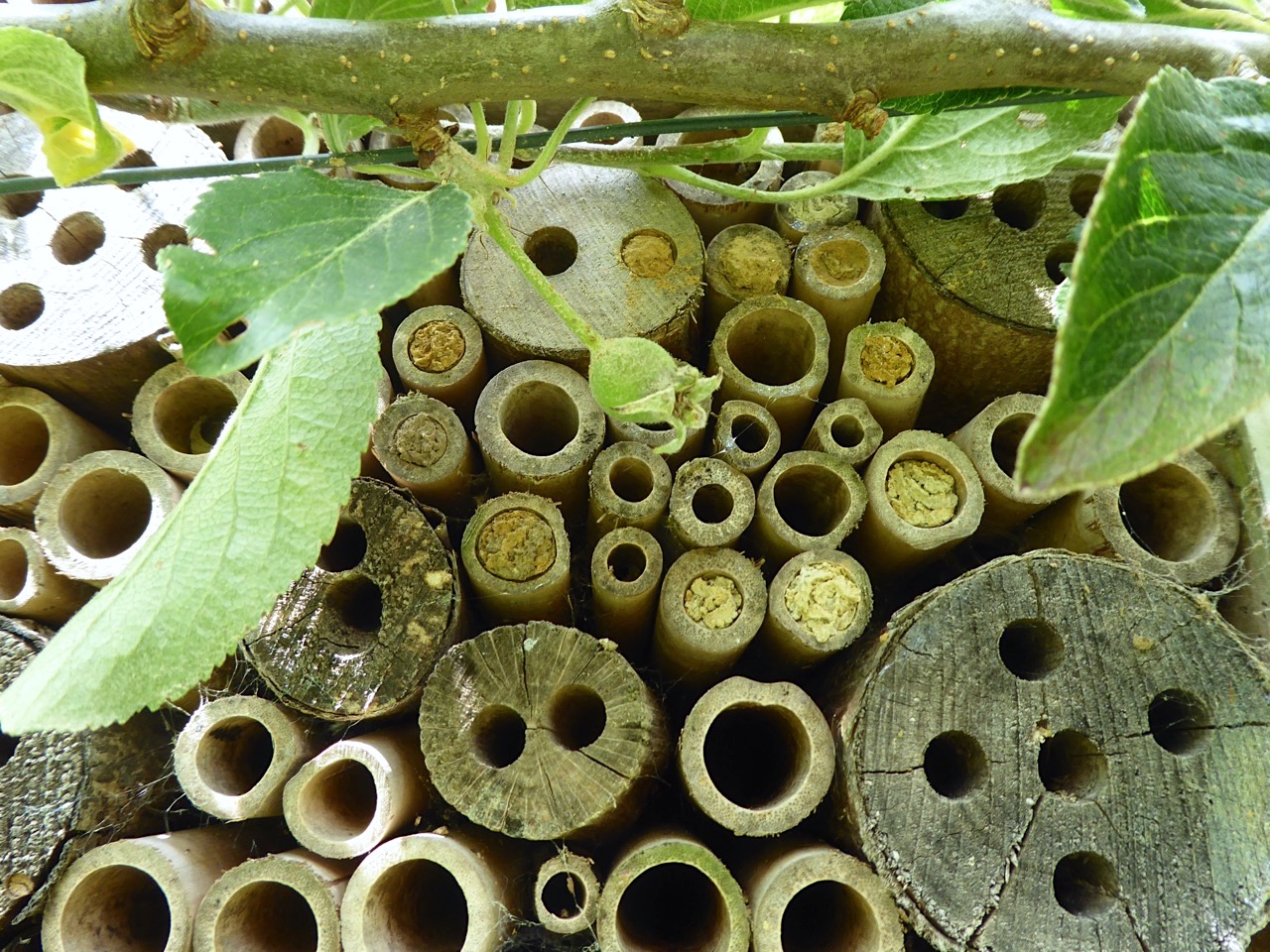
Two months later, as July fades into August, there are a few changes, but overall the house is much the same. So far, there have been no leaf cutters. And no little ‘peeping’ bees either. I’m disgracefully uninformed about the types of bee to which we offer a home. We’ve replanted much of the garden to benefit honeys and bumbles – with a consequent increase in butterflies and hitherto unknown types of moth. The solitaries are still a bit of a mystery. Time I got a grip, I think. Still, the apples are looking very promising…


All photos: Keith Salvesen / Rolling Harbour
St Martin de Boscherville is a small town – more of a large village – quite near Rouen, but a world away from the bustle of the city. In many ways, it is much the same as any similar French rural community 30 or more years ago. Set in an agricultural landscape in a loop in the Seine, it has the familiar small shops for provisions, the cafe / bar, some old houses and barns, some neat modern houses and… a magnificent early Norman abbey, St Georges. It was largely spared from revolutionary destruction by being designated the parish church, as it remains today. There’s more to be written about the abbey, a favourite of artist John Sell Cotman during his Normandy tours.
The gardens are being – have been – restored, if not to their former glory at least to an impressive standard, with well-ordered flower beds, vines, herbs and fruit trees – staples of the medieval way of monastic life. And a hive. A truly splendid ‘Bee Pass’ chimney hive that stands impressively tall. Each facet has one or more doors for access to the innards. I have posted videos below that show the workings of this unusual hive rather better than I can describe them. These hives have been installed in a number of locations in France – not least the Chateau de Chenonceau – and Germany. I’ve no idea if there are any in the UK yet, but if not, there ought to be…
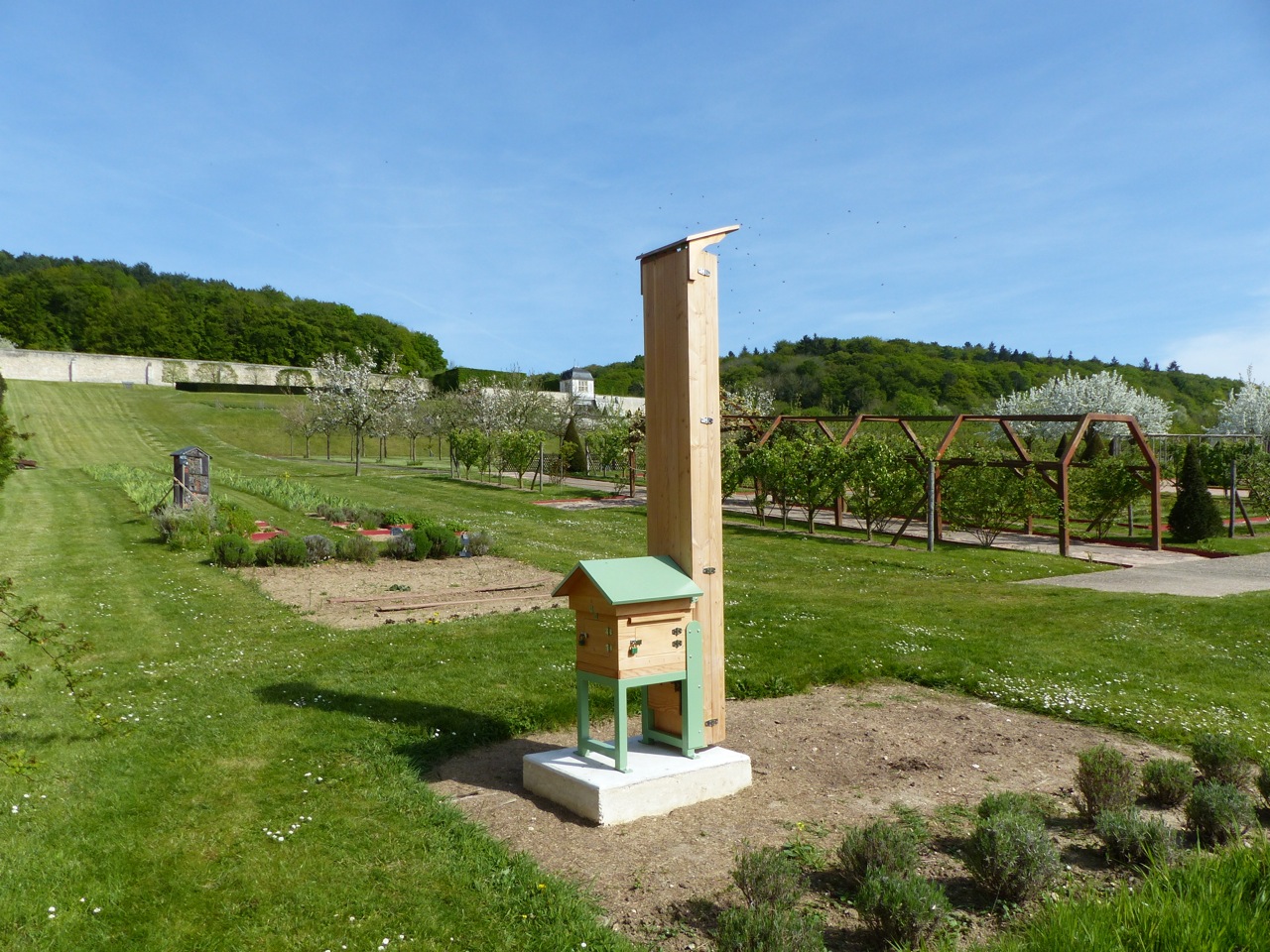

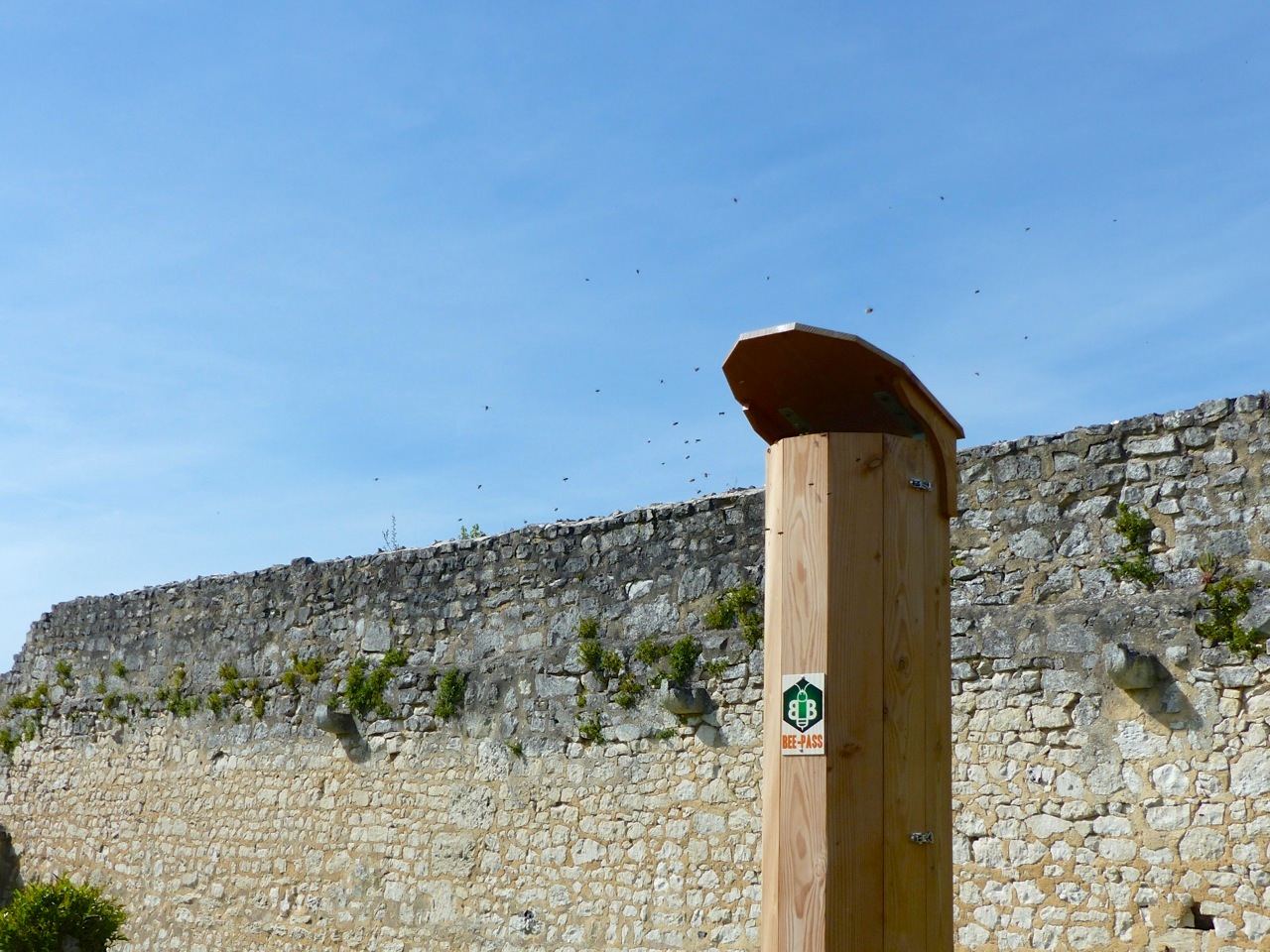
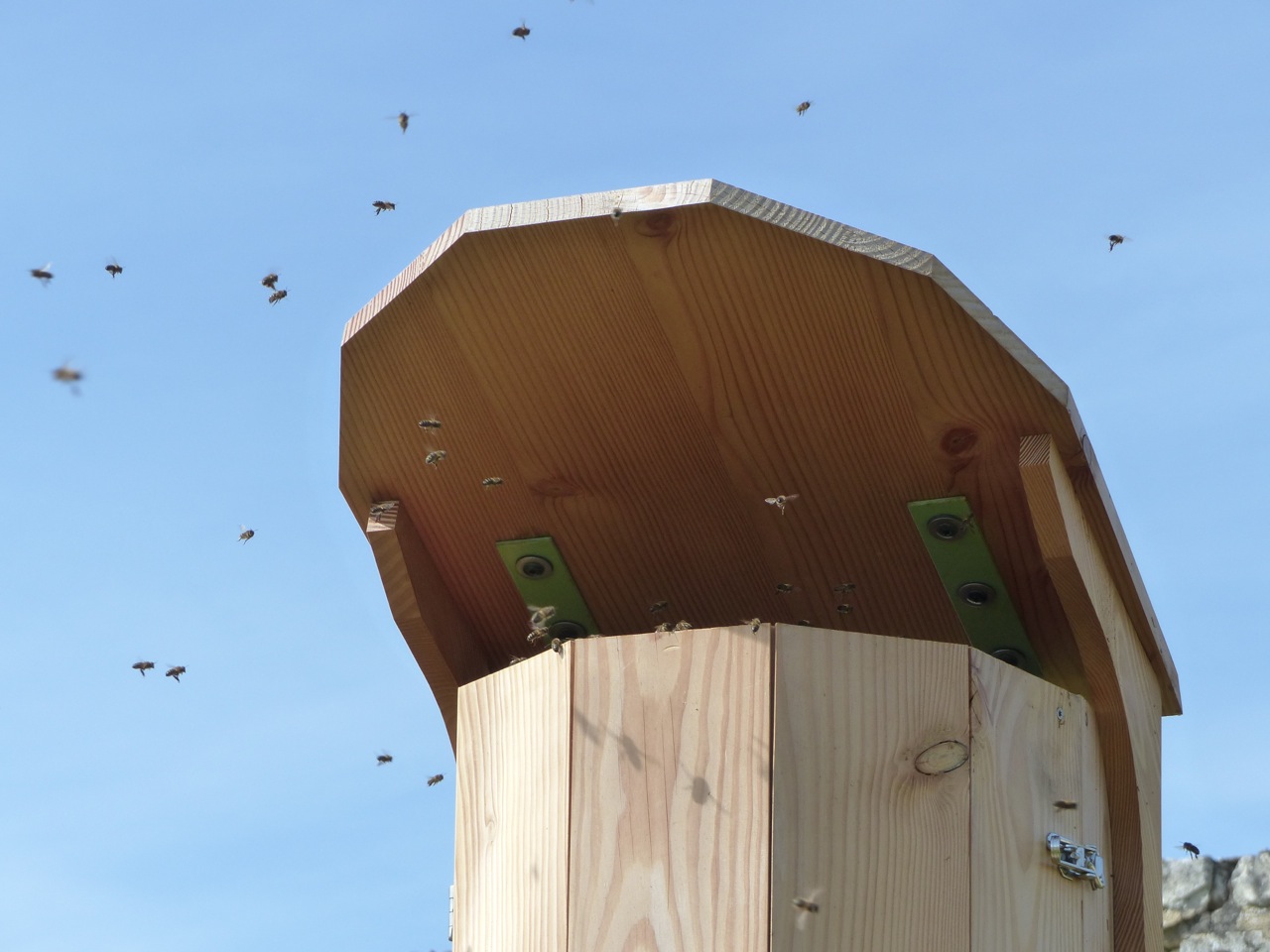


Click HERE to go to the ‘Abeille Avenir’ website
Click HERE to reach the ‘Abeille Avenir’ Facebook page
All photos: RH
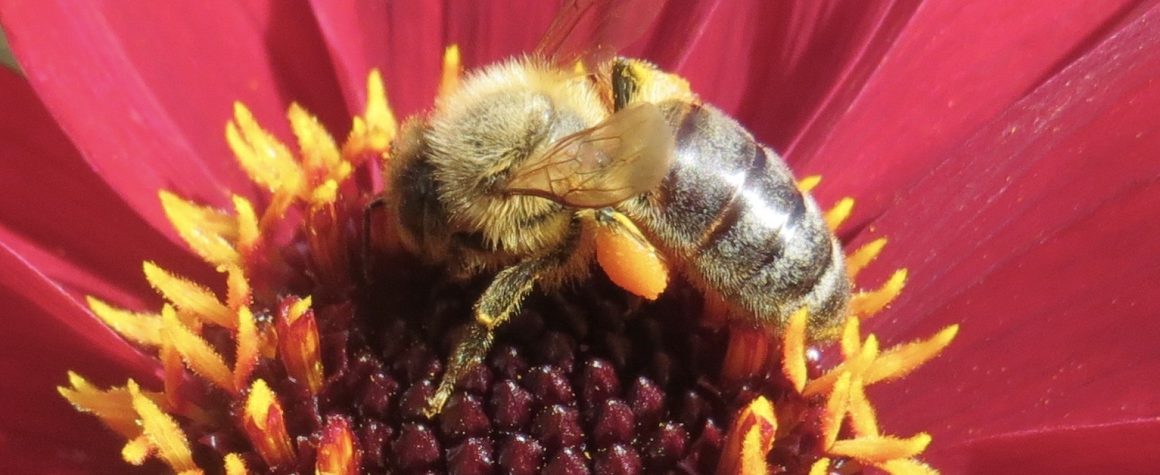
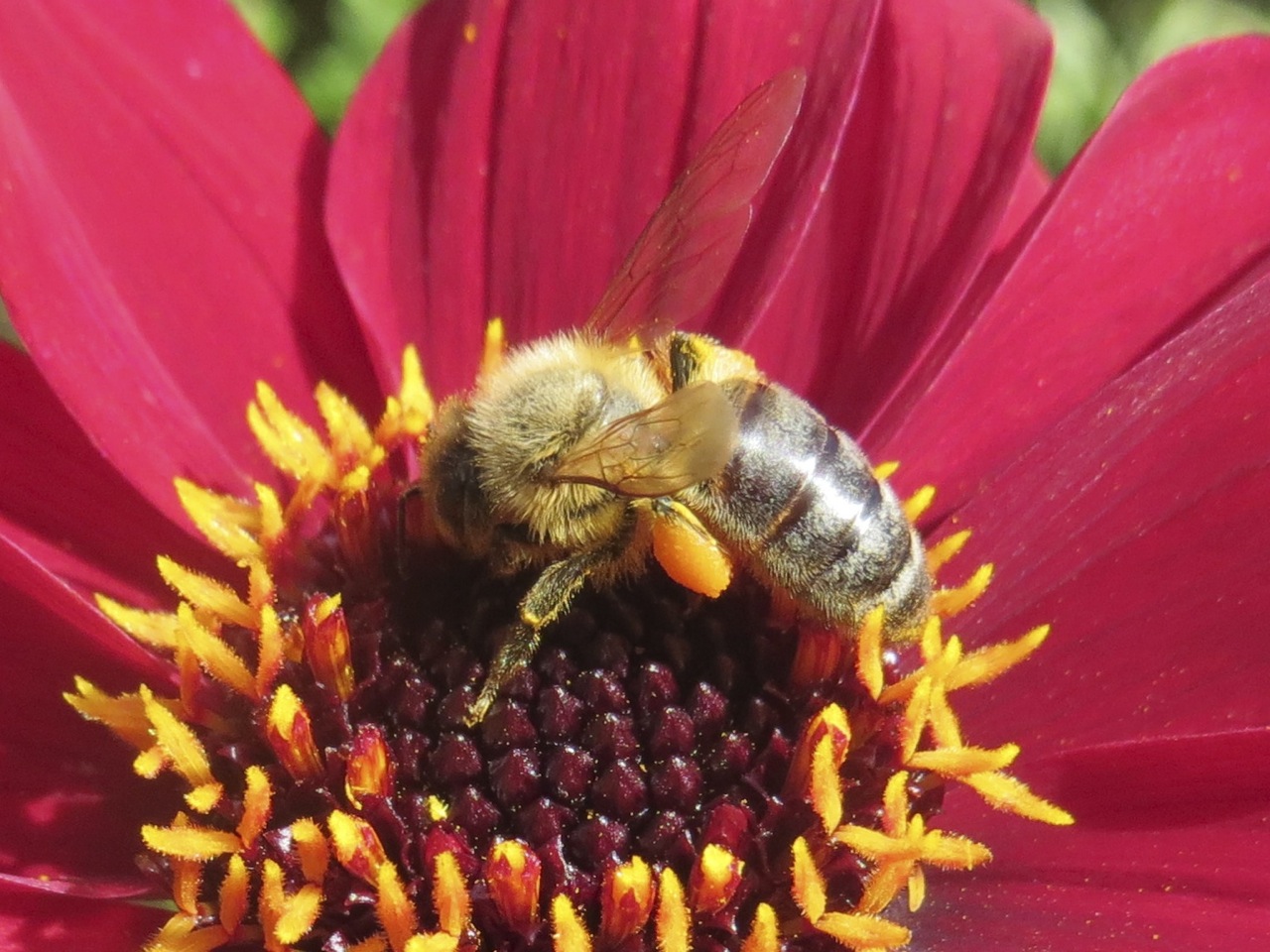
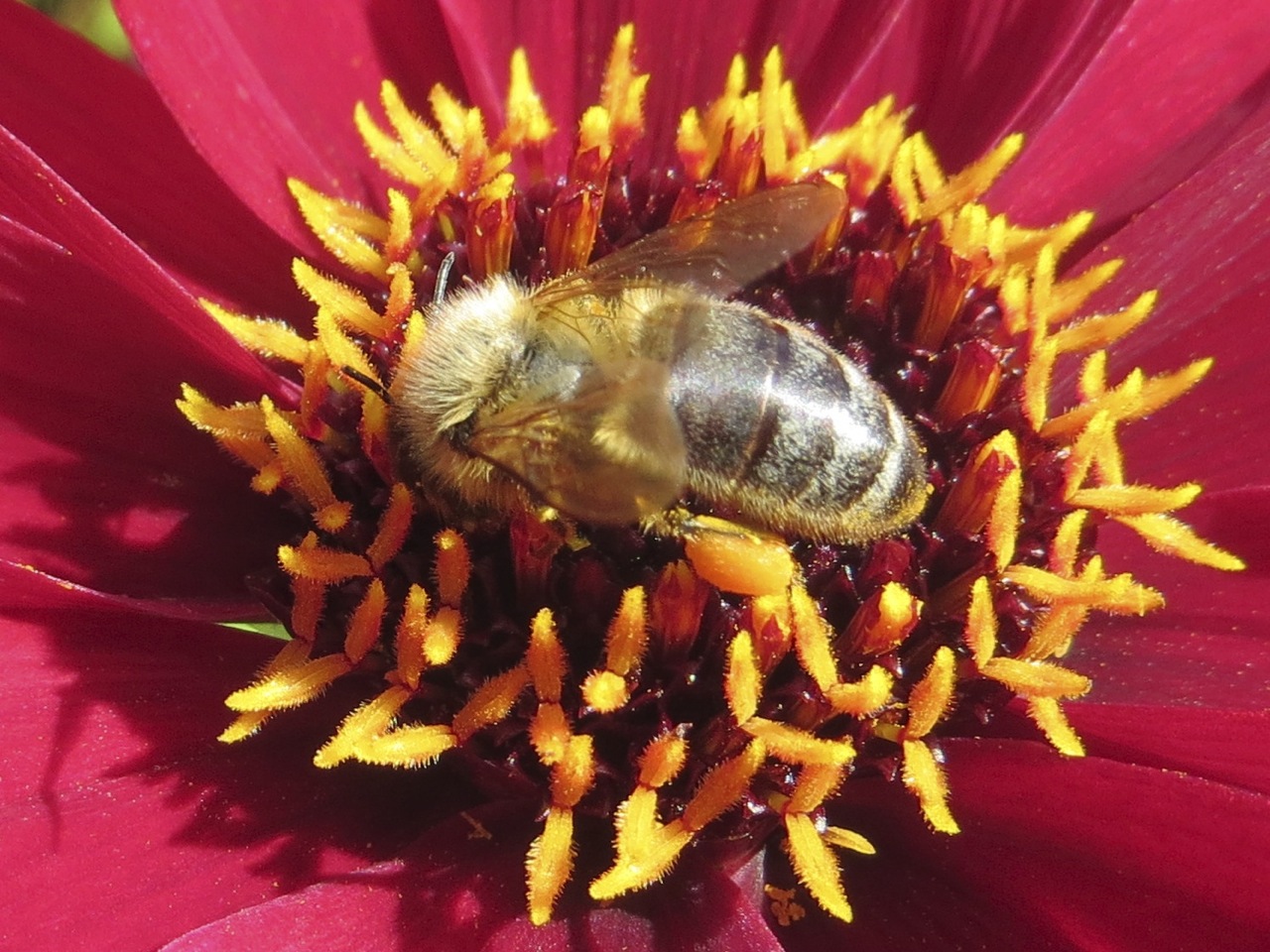
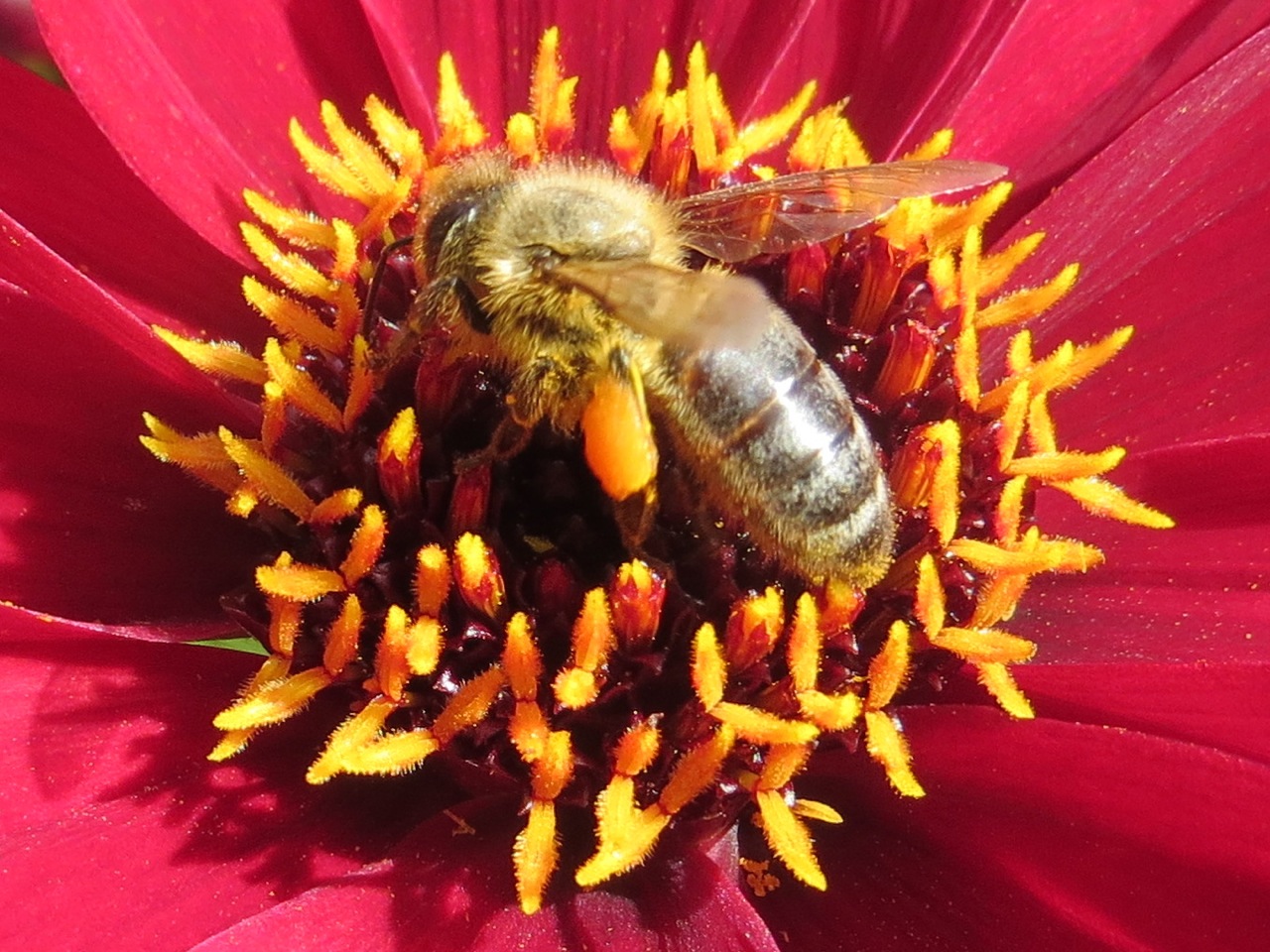
This honey bee was making the most of the late September sunshine. The colour of its pollen load suggests it had decided to target the dahlias. It managed to get a good all-over dusting too.





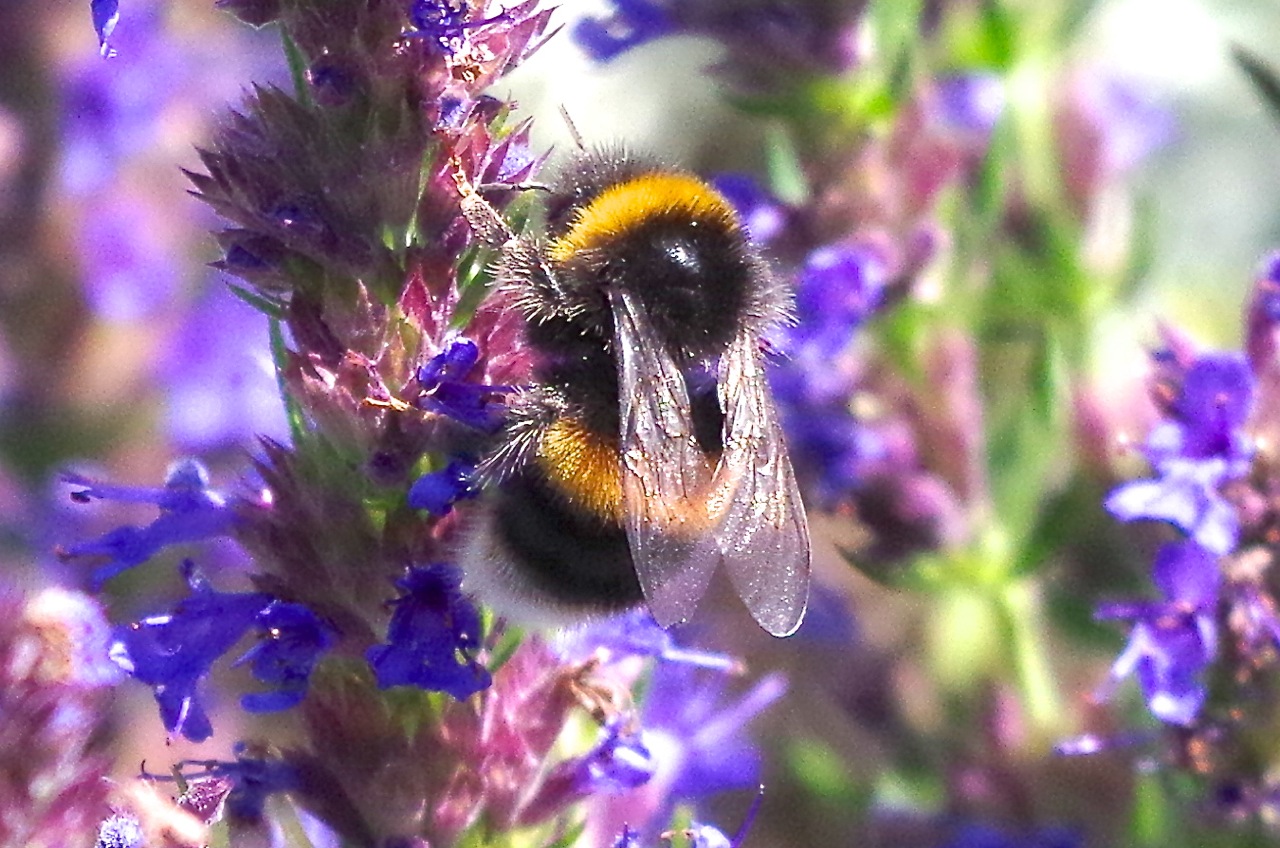
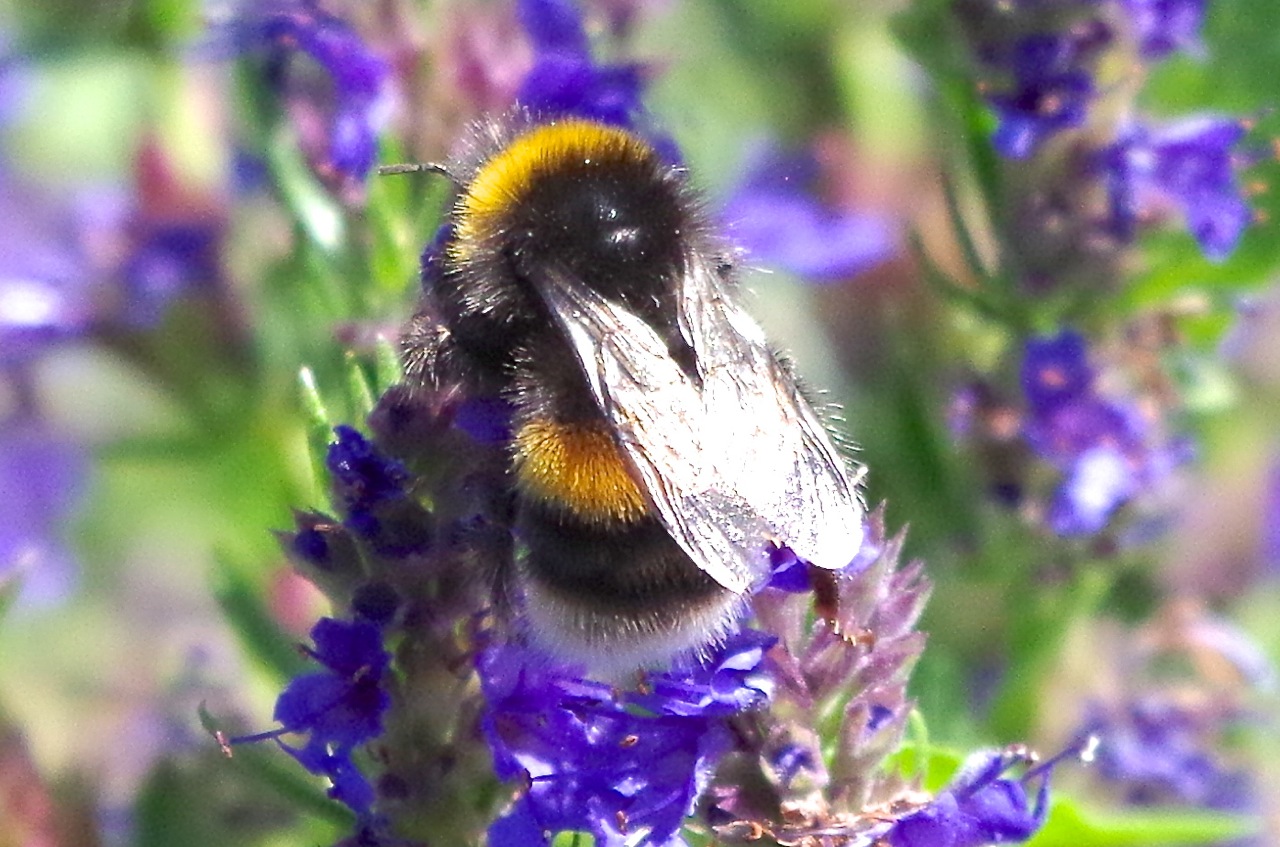
Whitchurch Canonicorum, Blandford Forum, Toller Porcorum and Bombus Lucorum – all very Dorset names. Except the last of course. Here are a few of them, feasting on hyssop. The first one is launching himself on his way to the next stem.




 ROLLING HARBOUR GALLERY