
This fearsome creature was within an inch of being crushed by my heedless foot… but luckily it made a surprisingly agile lurch to one side just in time. I had no idea what it was, other than the largest caterpillar I have ever come across. Everyone else will know, of course, that it is the childhood form of what will become an elephant hawk-moth Deilephila elpenor. I haven’t knowingly seen one of those either.
NOTE Aug 2023. This post from 2017 on this largely defunct site was has attracted a lot of hits this month. It gives an excellent example of APOSEMATISM, defensive appearance and / or behaviour designed to repel predators. The Wiki link above will take you to a very good article on this topic, and is highly recommended if you want to know how animals of all kinds have developed many and varied protective methods
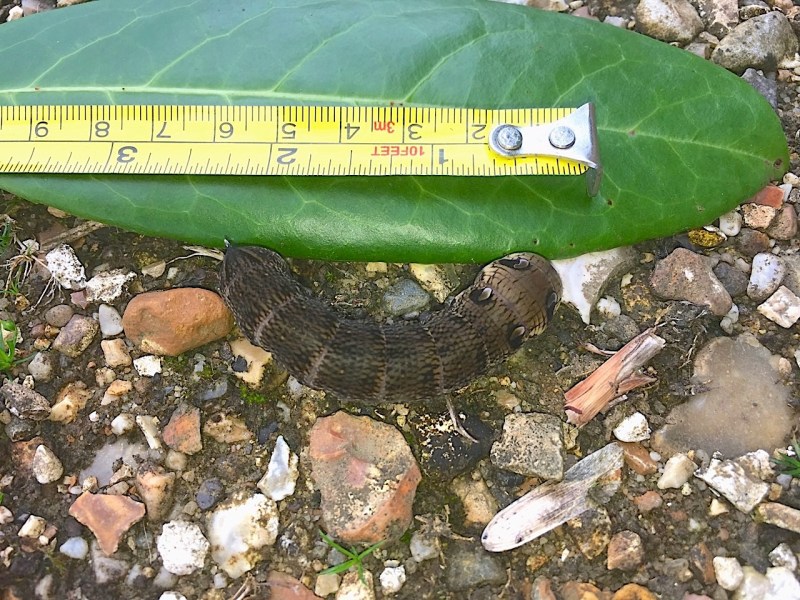
These caterpillars have three ‘poses’. The first is the usual day-to-day one, as it goes about its business with its little snout – or ‘trunk’ – extended. Note the four prominent ‘eye’ markings behind the head.

At the threat of danger, the caterpillar assumes its ‘elephant’ pose, tucking away its snout and humping its front end so that the 4 ‘eyes’ glare intimidatingly. From the front, there is the hint of a mouth, with two sharp eyes above it.


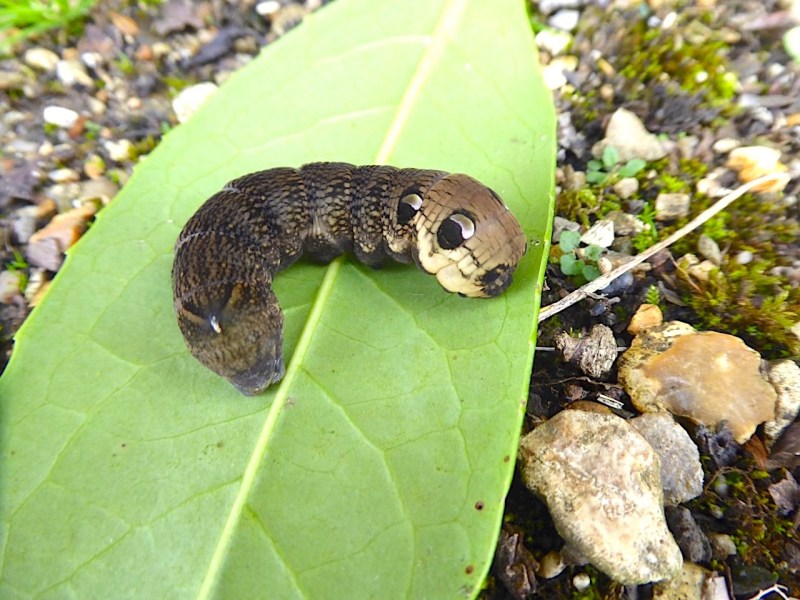
I haven’t investigated how the eyes are constructed, but the white parts are plainly holes rather than surface marking


 ROLLING HARBOUR GALLERY