HUNKY PUNKS & GARGOYLES


Hunky Punk Rampisham Church Dorset (Keith Salvesen)

HUNKY PUNKS

The image above shows a Hunky Punk. These strangely-named grotesques are found on churches in many areas of the country, especially Late Gothic ones. Usually where there is one hunky punk, there will be several (as with gargoyles). Sometimes, there may be a lone one lurking over a buttress or above a porch.

Hunky Punk Bradford Abbas Church Dorset (Keith Salvesen)

Different regions have different names for these intriguing ornaments. The name hunky punk is associated most strongly with Somerset, and more broadly with Wessex. They range from the dramatically gross to the disconcertingly lurky (see above). There’s nothing anodyne about them.

Wherever they are found, hunky punks all have a common factor: they are distinct from gargoyles. They may be very similar in design and style, but they have different functions. Gargoyles are working grotesques, usually acting as outlets for rainwater on church roofs. A length of lead pipe – or metal or  (occasionally / regrettably) plastic – is the sign of a gargoyle. This usually but not invariably protrudes through the stone mouth.
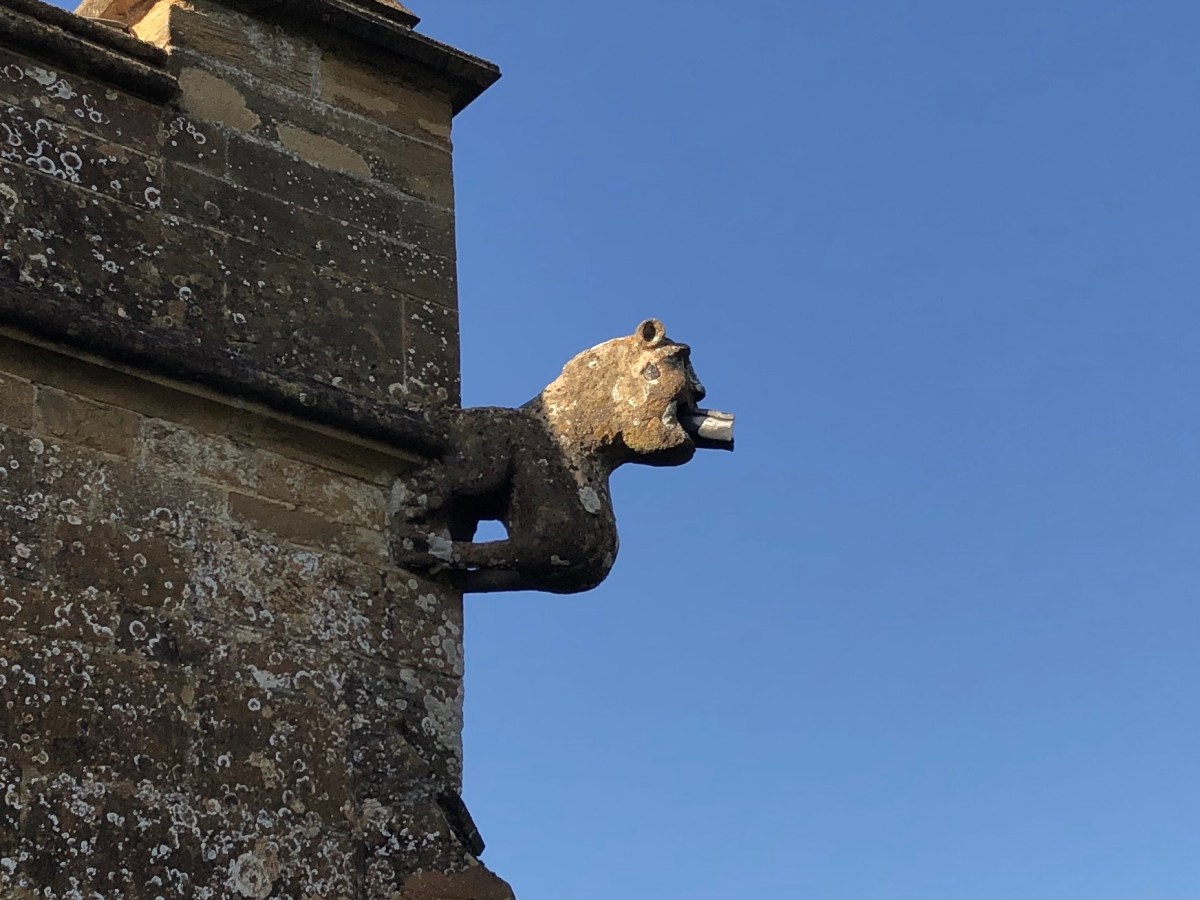
Gargoyle Nether Compton Church Dorset (Keith Salvesen)

A hunky punk, on the other hand, has a purely decorative function. One might dignify it with the term ‘architectural feature’. But then so is a gargoyle. Confusingly, where several grotesques are found, eg on a tower, only one or two may be functional gargoyles and the others not. Here’s an example where it is easy to tell which is which.  The hunky punk appears to be praying with some distaste; the water drain (non-gargoylic) is separate.**

Hunky Punk Leigh Church Dorset (Keith Salvesen)

There are a number of theories about the purpose of hunky punks, absent a water spout function to make them useful as gargoyles. Symbols of (benign) evil to counterbalance the prevailing piety of the church precincts. Sculpture practice for trainee stonemasons. Caricatures of priests or local people; or perhaps representing Parish folklore .

Hunky Punk Trent Church Dorset (Keith Salvesen)

My current favourite hunky punks are from St Mary’s Charminster. This church deserves a post in its own right, not least because it also has 2 medieval scratch dials (my current project), one of which was moved from the south side and replaced upside-down on the wrong  face of the building.

Hunky Punk Charminster Church Dorset (Keith Salvesen)

While other more distant projects are marking time, I am currently investigating Wessex churches – strictly within prevailing Covid rules, obviously. So there’ll be more posts along these lines in due course, mostly about exterior features.

** This one may be a double bluff. It’s possible that the modern water spout to the side replaces an old pipe that emerged from the clasped hands of the priest, and channelled the rain water even as he prays. On the other hand, the aperture isn’t quite right for that. I need to check that tower again to see if any of the other 3 are water-spouting gargoyles…

Churches: Rampisham – St Michael & All Angels (1); Bradford Abbas – St Mary (2, 3); Nether Compton – St Andrew (4); Leigh – St Andrew (5); Trent – St Andrew (6); Charminster – St Mary (7, 8)

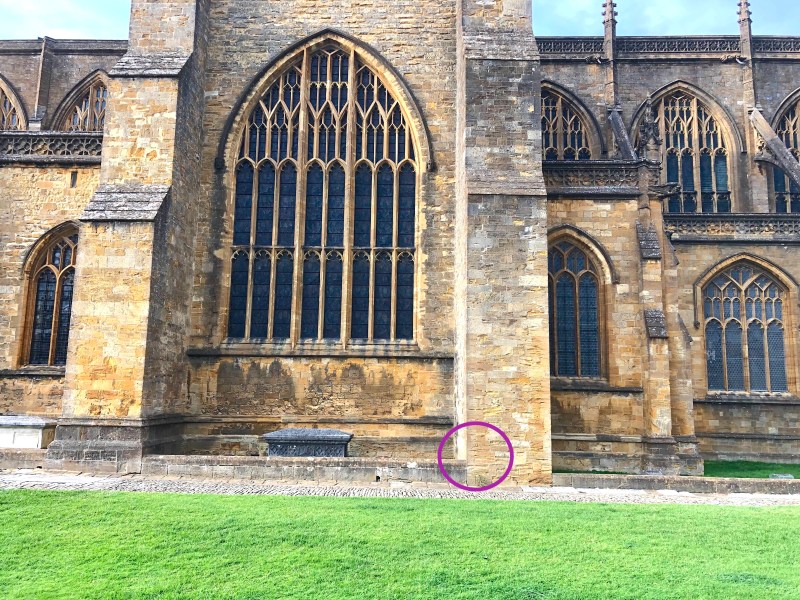
BENCHMARKS: SHERBORNE ABBEY, DORSET


Sherborne Abbey, Dorset (Keith Salvesen)

Sherborne Abbey – The Abbey Church of St Mary the Virgin – is one of England’s great churches, founded in AD705. The mellow stone beauty of the exterior and the outstanding fan vaulting (let alone its other glories) secure its primacy as a place of worship, of religious and architectural study, and of inspiration for the community it serves.

It also has a clearly incised benchmark, the bathetic subject-matter of this post as foretold in the title. It’s a strangely humble feature to focus on, but the attempted revival of this blog will include such mundanities. More interesting will be the medieval scratch dials (crude early sundials carved on church walls or doorways) that I am currently working on.

Sherborne Abbey, Dorset benchmark 1 (Keith Salvesen)

Sherborne Abbey, Dorset benchmark 2 (Keith Salvesen) Sherborne Abbey, Dorset benchmark 3 (Keith Salvesen)

All photographs © Keith Salvesen

CROSS AND HAND, BATCOMBE, DORSET


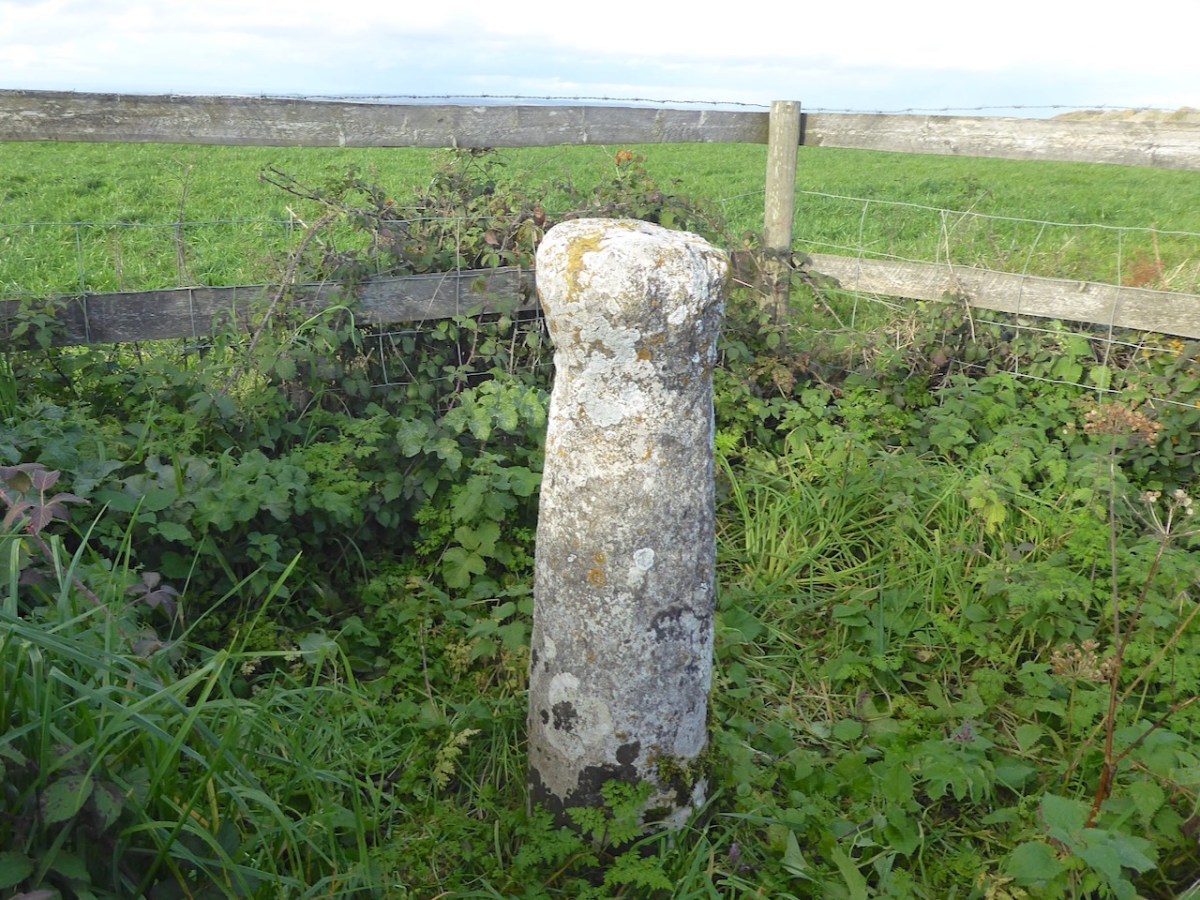
Cross-in-Hand (Cross and Hand) Batcombe Dorset Batcombe in the heart of Dorset is a hamlet of farms, cottages, and a tiny medieval church with a fine stone screen. It is also the name of the long hill ridge that rises steeply above it. This is green and flinty Hardy country. Close to the roadside that runs along the top of the ridge is a small battered stone pillar, fairly recently awarded a small protective enclosure by Dorset Council. The spectacular 180º views from this spot on a clear day stretch to the Mendips, the Quantocks, and as far as Dunkery Beacon on Exmoor.

Cross-in-Hand (Cross and Hand) Batcombe Dorset Many sources now describe this Grade II listed pillar as the Cross and Hand (the hand is now completely erased). In Hardy’s ‘Tess’ and locally, this ‘stone shaft with a rough capital, possibly pre-Conquest’ (Pevsner) is known as the Cross-in-Hand.

Cross-in-Hand (Cross and Hand) Batcombe Dorset

The `strange rude monolith’, as Hardy describes it, is a pivotal location in his novel. It is here that Alec d’Urberville makes Tess swear on the stone (as if had profound religious significance) never to tempt him: “put your hand upon that stone hand, and swear that you will never tempt me by your charms or ways.” Later she asks a local shepherd “What is the meaning of that old stone I have passed? Was it ever a Holy Cross?” To which the devastating answer is:  “Cross—no; ‘twer not a cross! ‘Tis a thing of ill-omen, Miss. It was put up in wuld times by the relations of a malefactor who was tortured there by nailing his hand to a post and afterwards hung. The bones lie underneath. They say he sold his soul to the devil, and that he walks at times.” Tess was, in the current meaning of an older phrase, ‘gaslighted’ (or maybe ‘gaslit’).

Cross-in-Hand (Cross and Hand) Batcombe Dorset
There was 70p in small change on the top when I took this photo, proving that some superstitions never die.

EXTRACT FROM OFFICIAL RECORDS

‘Wayside monolithic shaft, with necking and capital. Medieval. Stone monolith of oval form, crudely tapering. It is possible that this shaft belongs to the group of pre-conquest shafts of which the pillar of Eliseg (c6) is the best known; if so the capital must have been cut down. The hand said to have been carved on one face is not traceable.’ (RCHM) Scheduled Ancient Monument Dorset No. 137 / BLB

Additional notes: Ordnance Survey benchmark on the south side

Cross-in-Hand (Cross and Hand) Batcombe Dorset