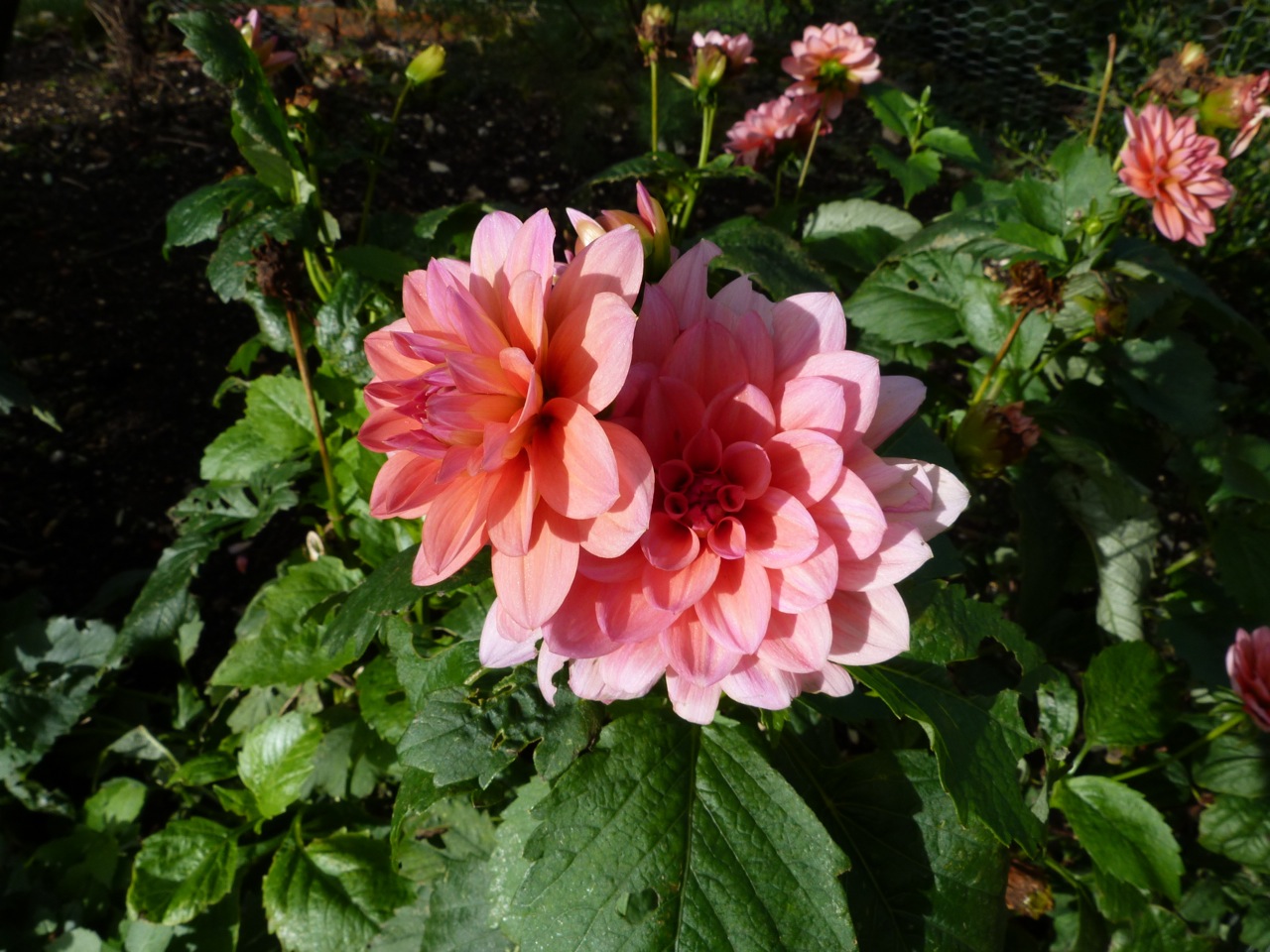
November. A month when summer flowers are over – or if not, get banjaxed by the first touch of frost. Here’s a dahlia, newly planted this year, that decided to keep calm and carry on. For the moment, at least. The flowers are still near-perfect, even at close quarters; and the leaves haven’t yet started to blacken and go squishy in the traditional way. It’s only a matter of time, though…
Author: Rolling Harbour
CENTRAL PARK & ALL THAT JAZZ: “30 BANDS, ONE SET LIST”
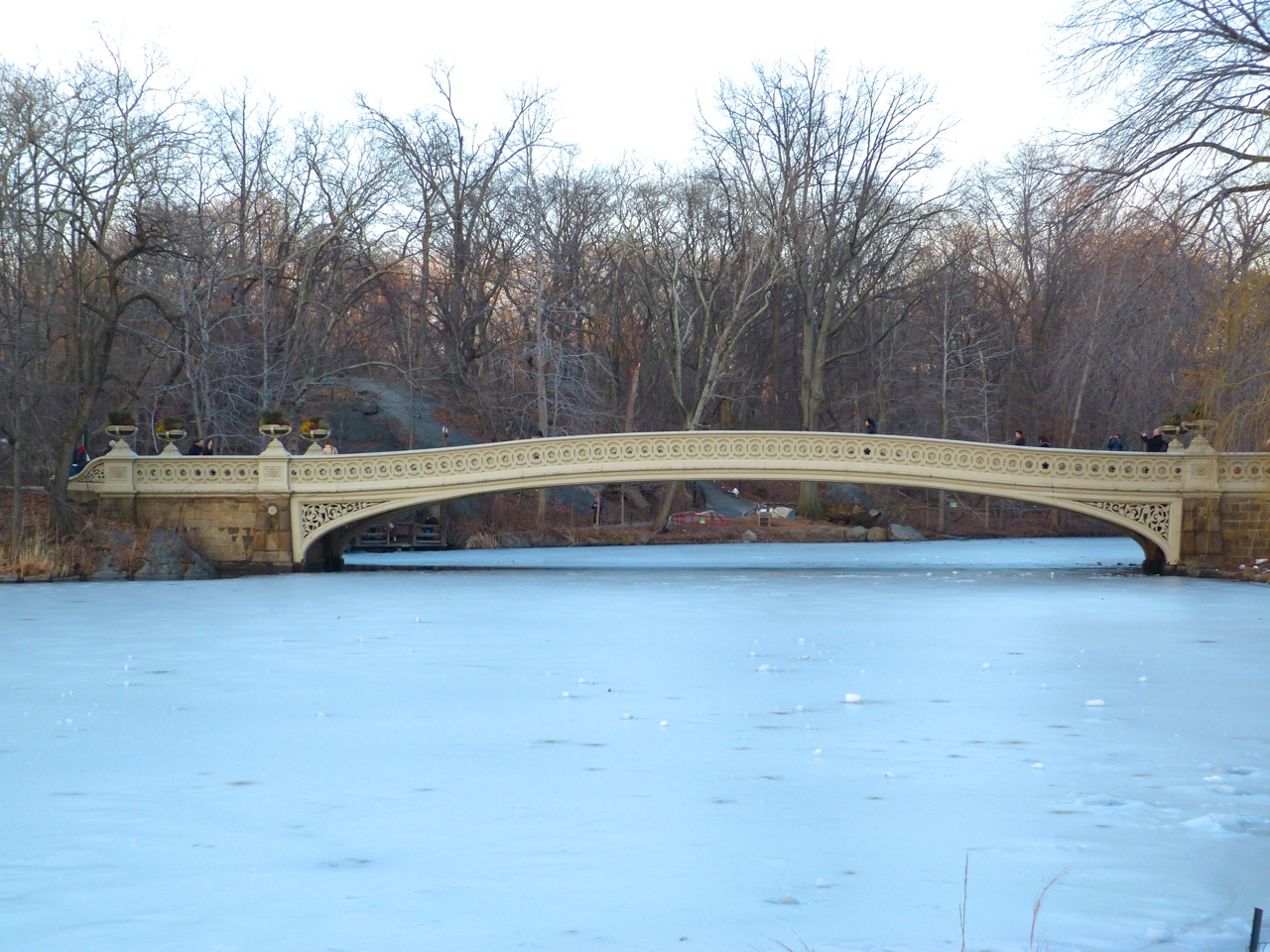
Central Park, New York: The Lake, Bow Bridge and The Ramble
9 NOVEMBER 2103. CENTRAL PARK, NEW YORK. 30 BANDS. 1 SET LIST
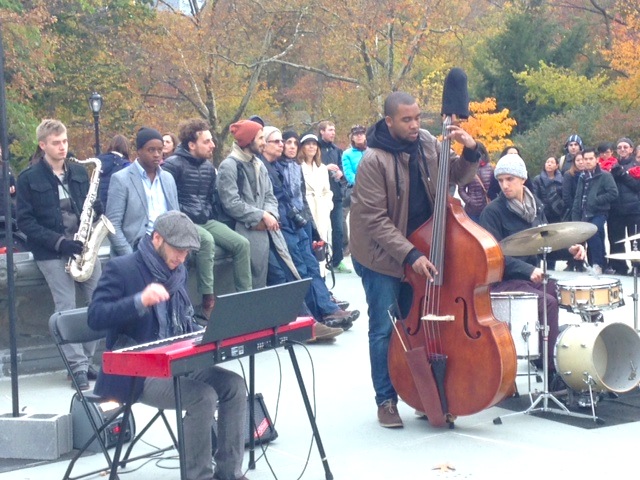
This remarkable event involved 30 different jazz bands spread round different locations throughout the whole of Central Park, simultaneously playing from one carefully timed set list. The ensemble below, the Jazz at Lincoln Center All-Stars (feat. Russell Hall Quartet), were stationed at Cherry Hill, the scenic horse carriage circular turn-around overlooking The Lake and Bow Bridge (see header picture, taken in February)
I’m not a jazz person myself, but this sort of open air occasion could get me interested… For anyone who might like to know more details, here’s the set list to give an idea of the breadth of the repertoire and the opportunity for quality soloing. The four-hour event was entirely free. What’s not to like on a misty November day?
12.00 – 1.30 pm
- Caravan (Juan Tizol)
- Bemsha Swing (Thelonius Monk)
- Cherokee (Ray Noble)
- A Night in Tunisia (Dizzy Gillespie)
- So What (Miles Davis)
- Footprints (Wayne Shorter
- Maiden Voyage (Herbie Hancock)
- Take 5 (Paul Desmond)
- Tenor Madness (Sonny Rollins)
2.00 – 3.00 pm
- Take the A Train (Billy Strayhorn)
- Harlem Nocturne (Earl Hagen)
- Stompin’ at the Savoy (Chick Webb)
- Grand Central (John Coltrane)
- Central Park North (Thad Jones / Mel Lewis)
- New York City (Gil Scott Heron / Brian Jackson)
- A Foggy Day in London Town (George Gershwin)
- Las Vegas Tango (Gil Evans)
- We live in Brooklyn, Baby (Harry Whittaker)
3.30 – 4.00
- Encore – Original Material [‘Free-for-all’]
ON KEYBOARDS…
(Note horse carriage passing in the background at 0.10…)
SAX APPEAL…
Central Park, New York: The Lake, Bow Bridge and The Ramble near dusk
Credits: RH – Bow Bridge images; Mrs RH + iPh@ne – the rest of the Jazz
DARTMEET: AN EASY SCENIC WALK ON DARTMOOR
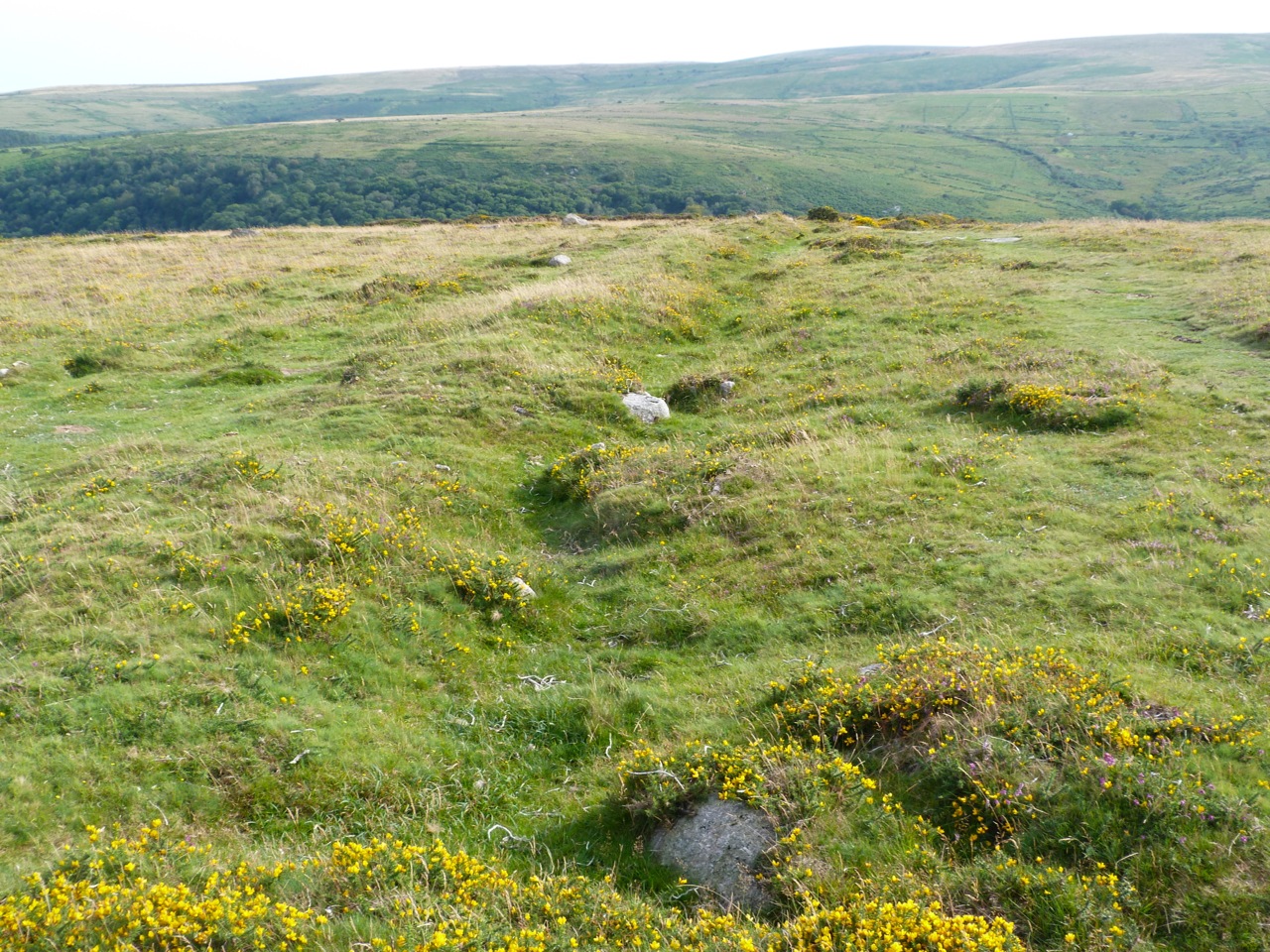
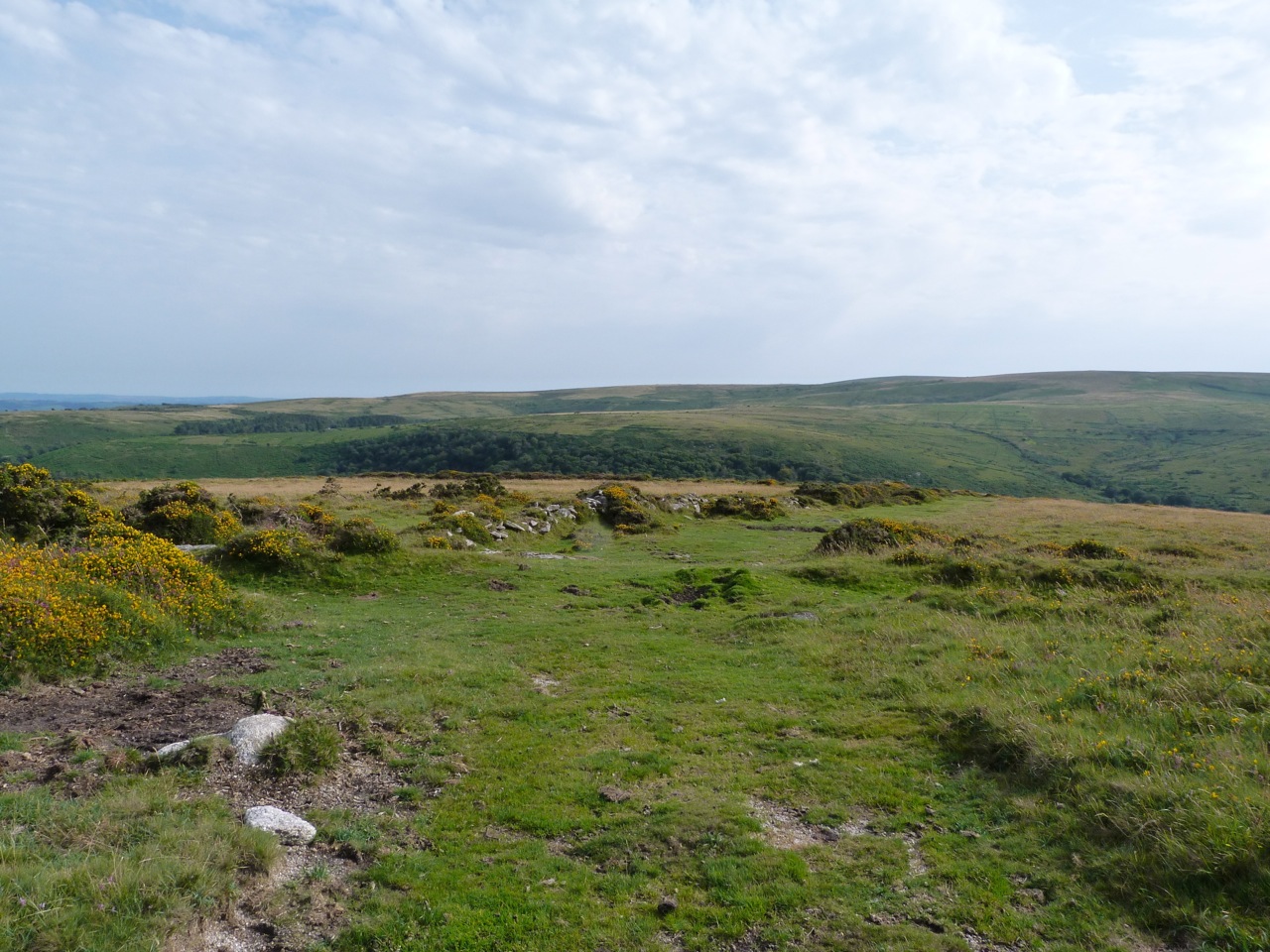
This is a simple 3-generation Dartmoor hill walk from a rustic car park just east of Dartmeet, the confluence of the West and East Dart rivers. Unchallenging. Great views. Interesting (pre?)historic trackway. Ponies. A grid of side-tracks to explore. Rocks and stones. Something for everyone. The ringed area below shows the track, which ultimately leads to a ruined village, now barely discernable.
I find in retrospect that my photos of the route tended to concentrate overmuch on the ‘agger and fossum’ aspect of the track. There’s a perfectly good natural track to walk up. It looks a fairly steep start, but I assure you it is easy walking…
Looking back down the hill to the car park 
At the top are inviting side tracks leading off the main one

No walk here would be complete without at least one pony and foal pair
There are fine views in all directions, especially from the east right round to the west


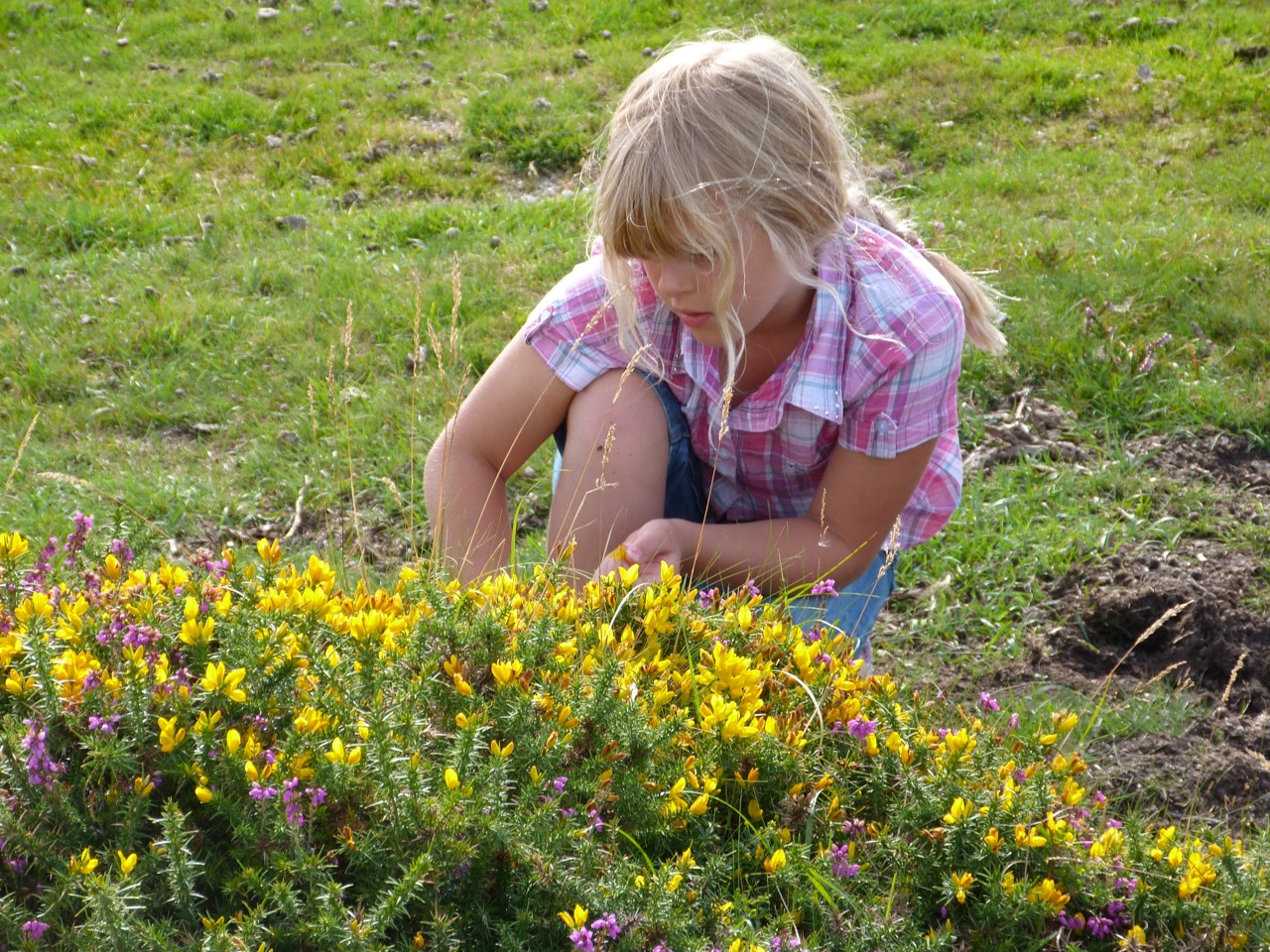
Not much grows here except grass and the exceptionally hardy gorse and heather


Photo credit: Berry (7), who loved the walk & took the more interesting photos
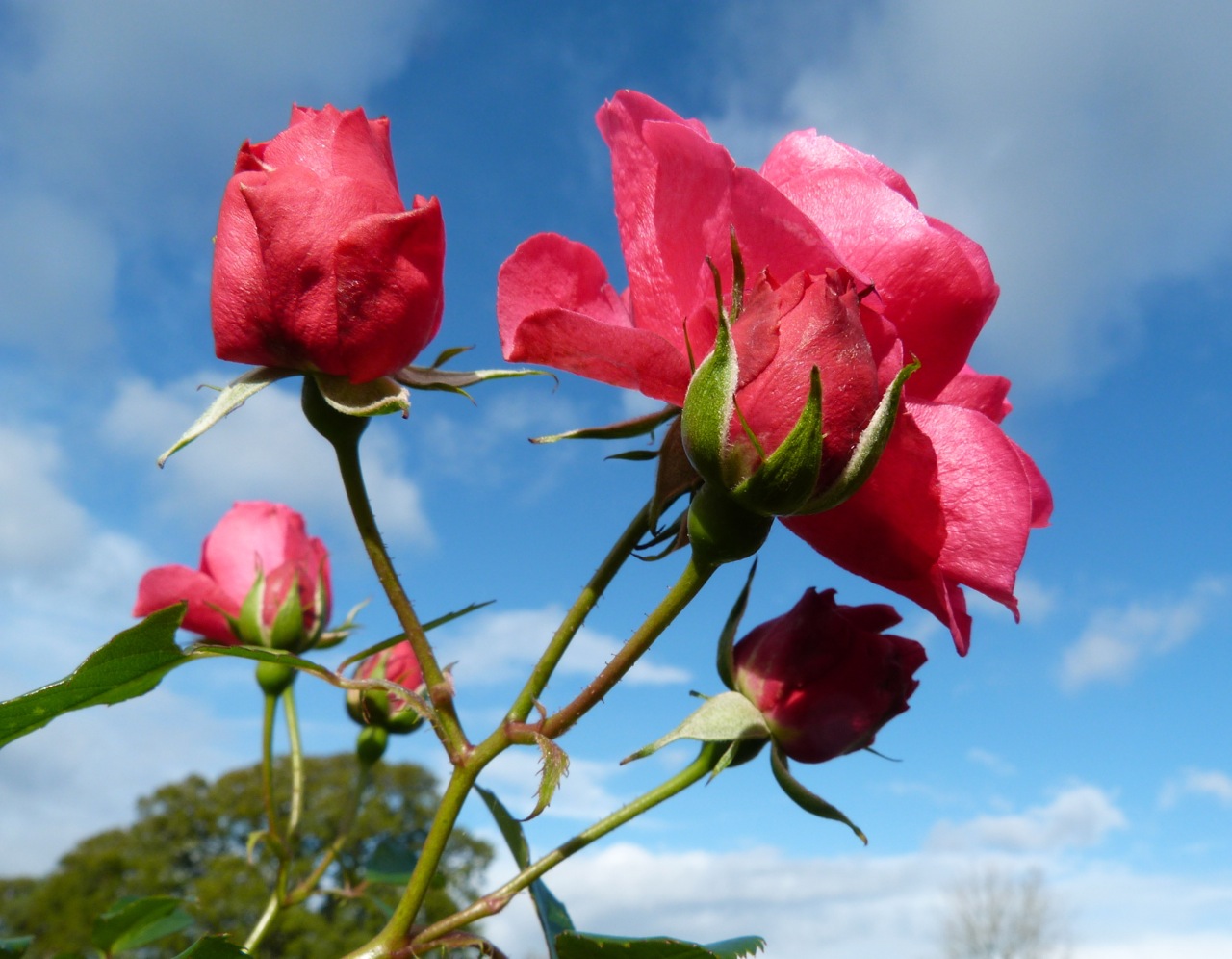
“ROSES ARE RED…” EVEN IN NOVEMBER
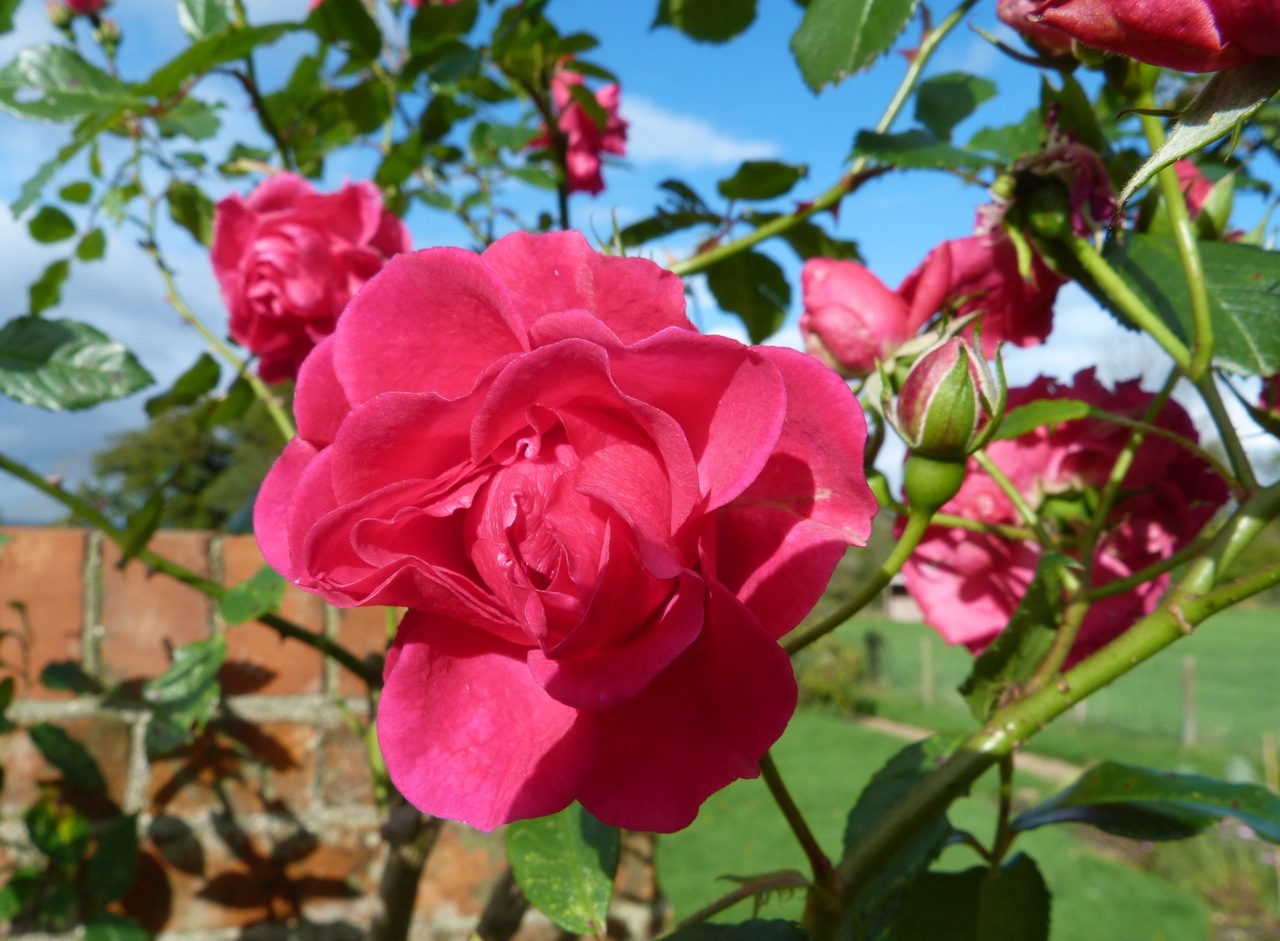
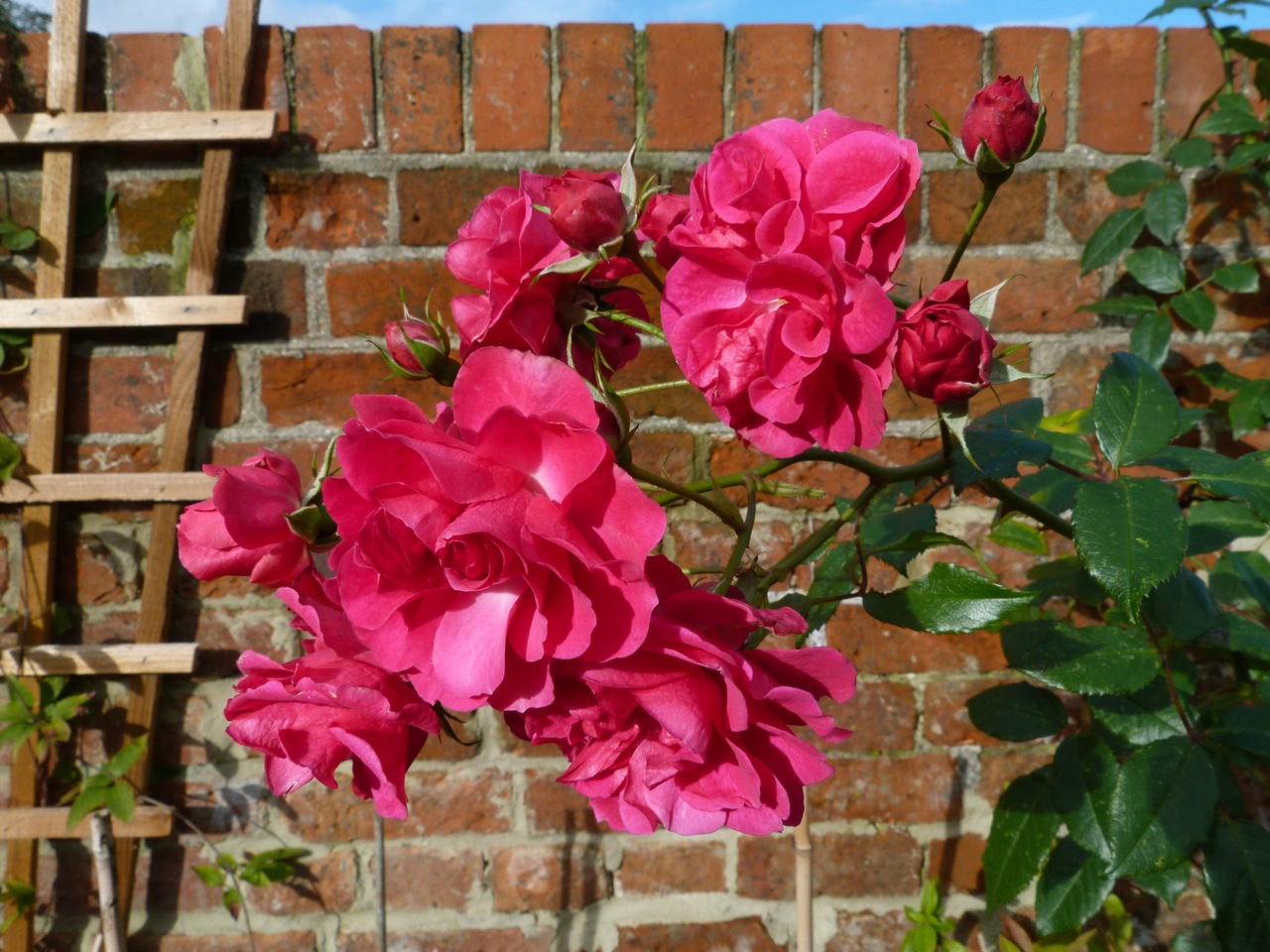
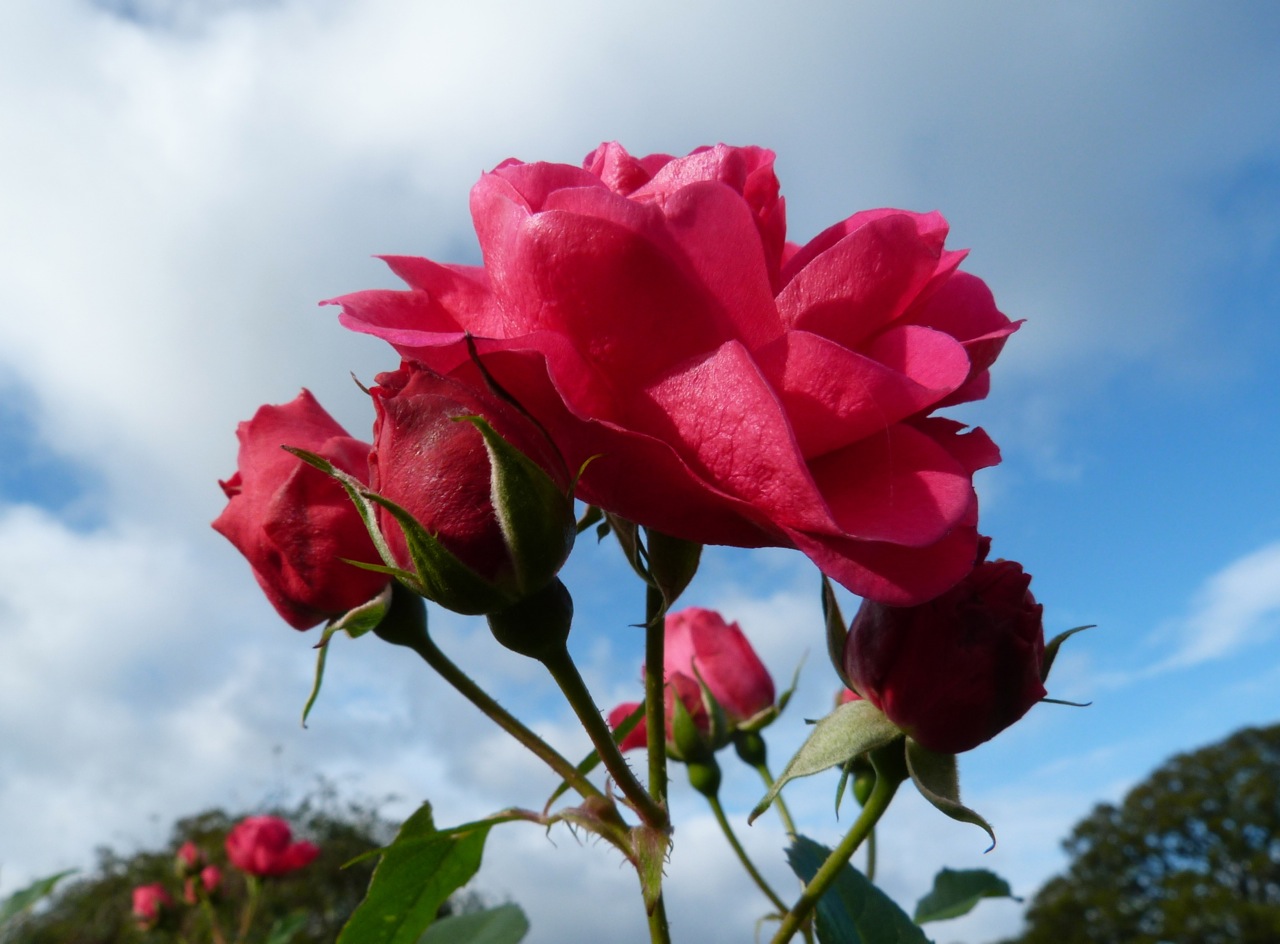
As part of a clearing project in the spring, we rescued an old rose that had been smothered by ivy and creeper. Two thirds of it was dead, and was simply hacked out and removed. The rest was decidedly unwell, so we took a ‘kill or cure’ approach and cut it right back. It responded by shooting vigorously and is now, in the first week of November, on its second flowering of the season. Amazingly, the flowers are almost entirely blemish-free; and the formerly diseased leaves are fresh and green. I expect the first frost will spoil them, but on a sunny late autumn day, they are cheerful sight. 


Mrs RH chose and planted this rose when she was in her early teens. It’s good to have revived it now. It would be nice to know the variety.
PORTLAND BILL, DORSET – ROCKS & FOSSILS 1
Pulpit Rock is an artificial stack of rocks at the southern tip of Portland. It was created in the 1870s during quarrying as a relic of the industry. It is climbable and is apparently somewhere that the adventurous like to ‘Tombstone’, an activity beyond my imagining.
The flaggy flat areas near the rock are reminiscent of the ‘Flaggy Shore’ of the Burren, Co. Clare

Rock. And a pretty wheatear. There were also meadow pipits, and lots of gulls 
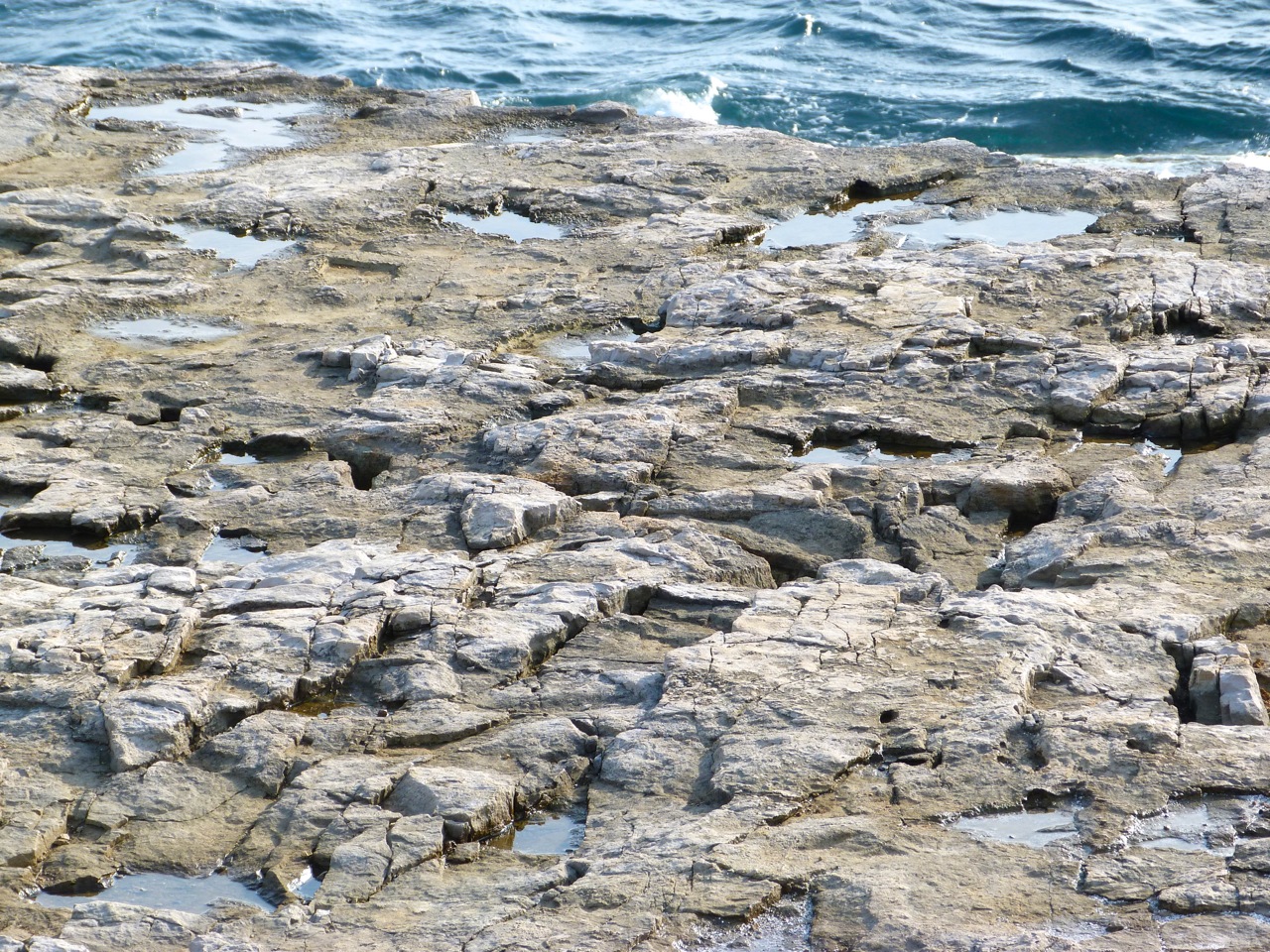
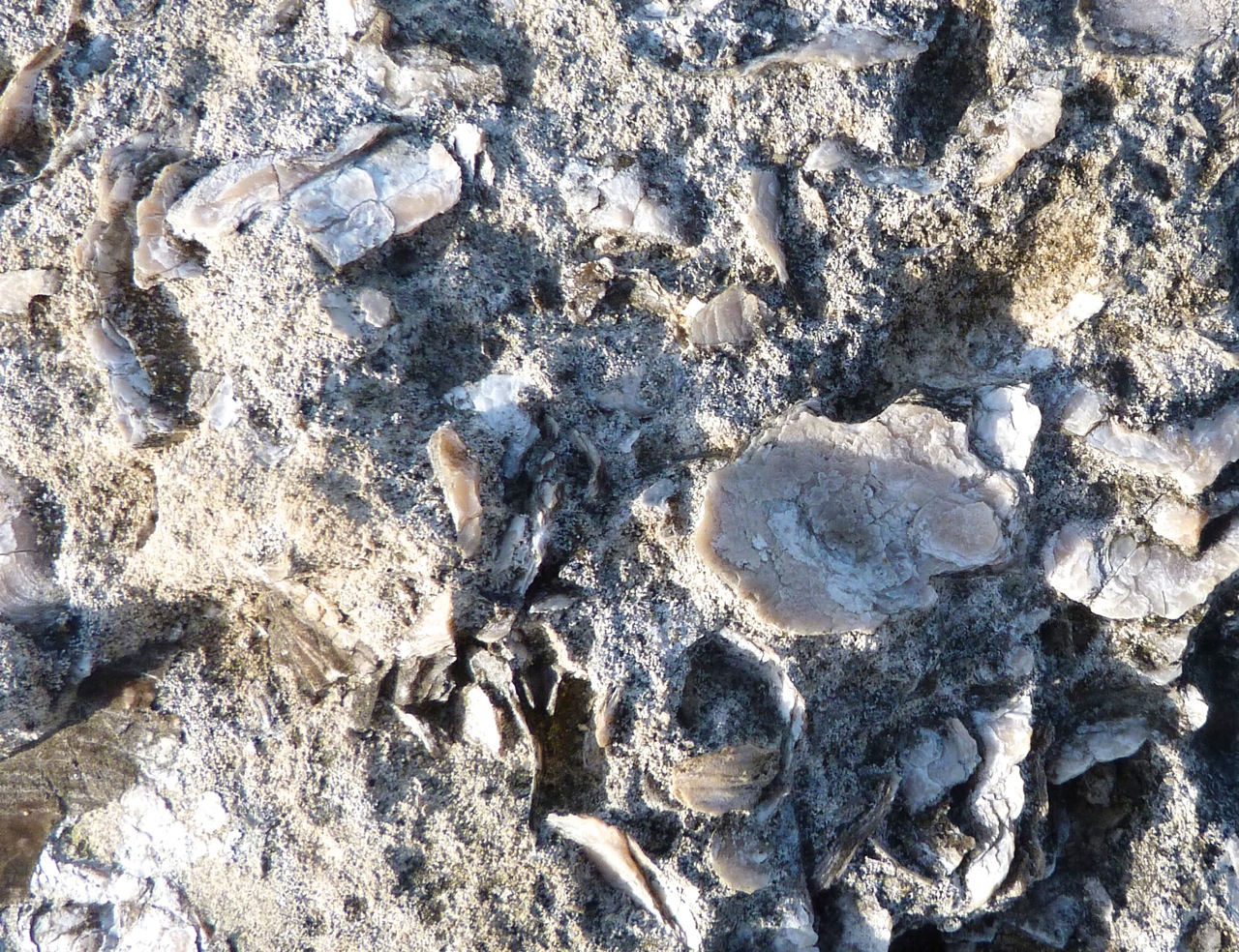
The rock surfaces all round Pulpit Rock is known as ‘Snail Shore’, embedded with millions of snail, oyster and mollusc shells from what was once the seabed in Jurassic times. Here are a few examples, some surpassingly large.

An arty shot of Pulpit Rock to end with, taken into the sun with mixed success
HEY JUDE! THEY CALL IT STORMY MONDAY…
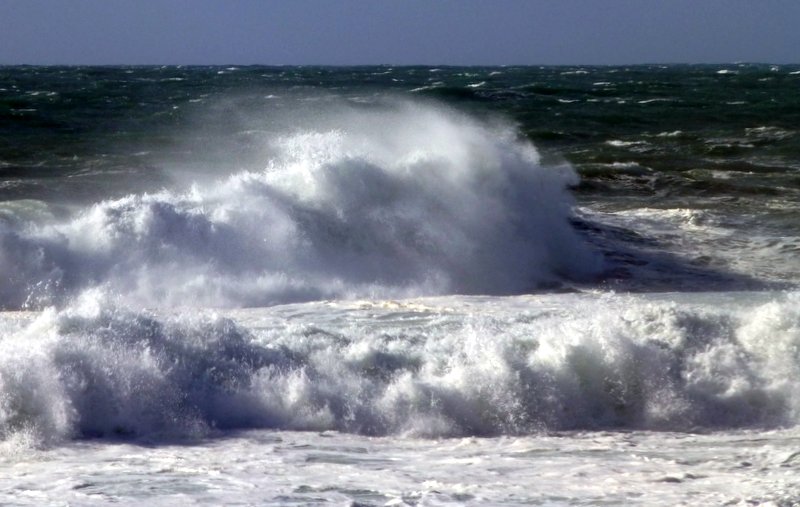
Earlier today I posted a lot of dramatic ‘Storm Jude’ images on my main blog, which relates to the island of Abaco, Bahamas and its wildlife. You can see that post HERE. The Bahamas storm season last from July to October, and most years a hurricane or severe tropical storm passes through, leaving a trail of destruction. It’s a part of life, and the settlements and communities are prepared for the annual likelihood of battening down of hatches and disruption. This year has, amazingly, been clear of any major storms. Last year, Sandy passed directly over Abaco; the previous year, it was Irene.
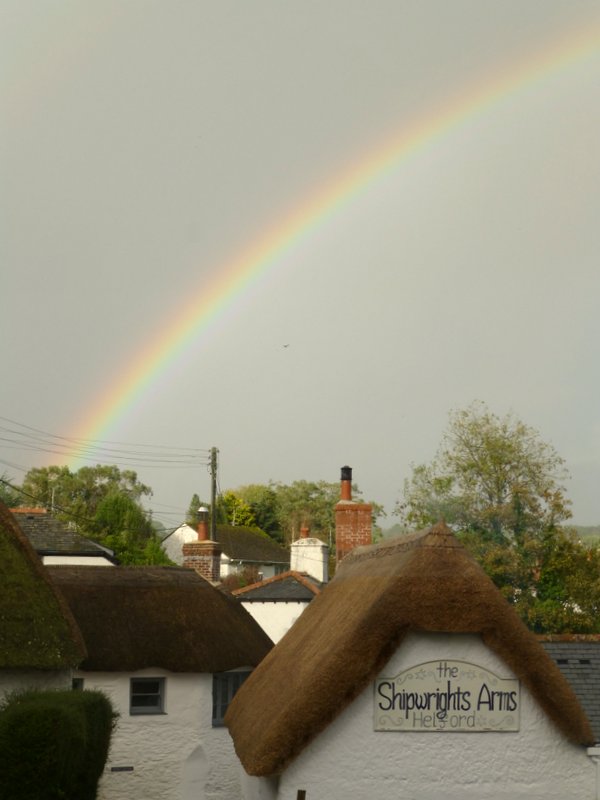
Hurricane Jude? Jude-zilla? Whatever name the UK’s storm of the last 24 hours becomes known by, the country had plenty of warning of its arrival – unlike the last major storm in 1987. Here are some images that a friend send me today of the aftermath of the storm in the Helford River area of Cornwall.
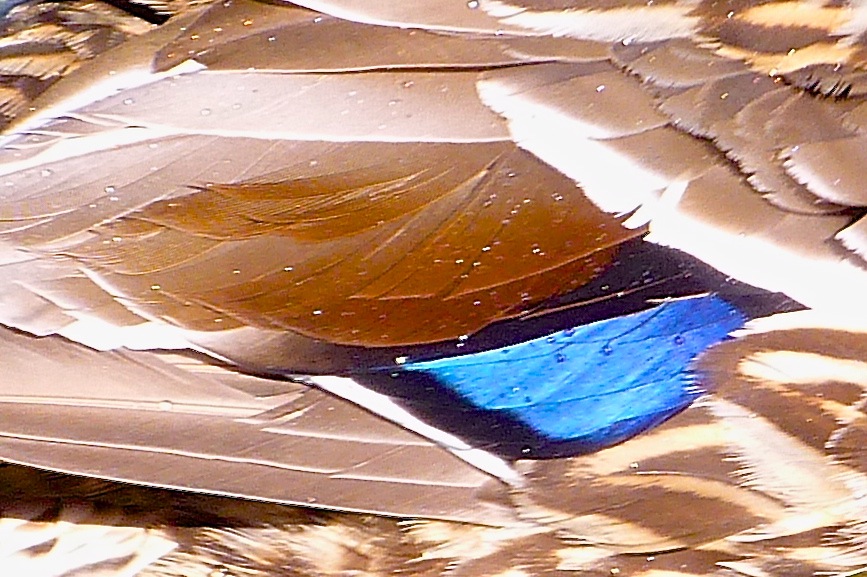
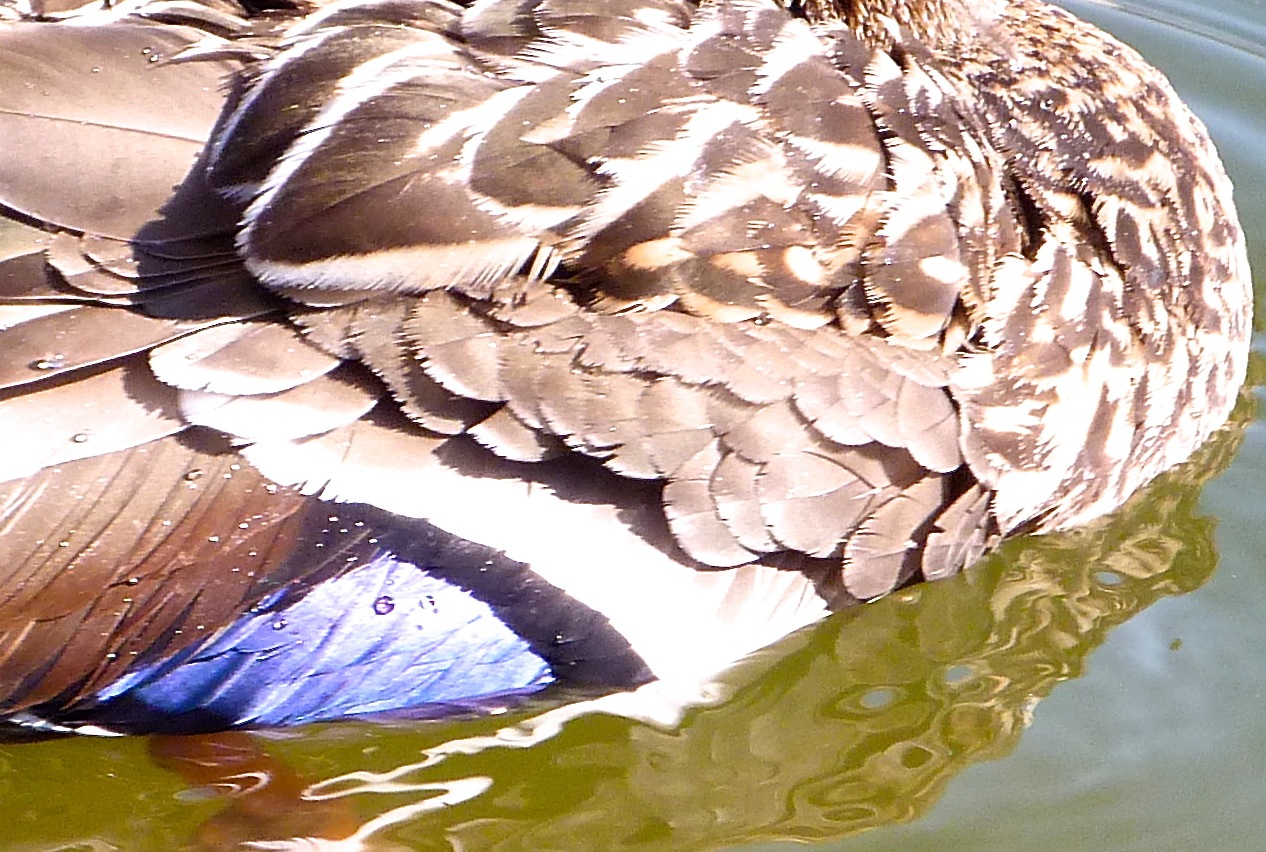
FEMALE MALLARD STUDIES: PROSPECT PARK, BROOKLYN
PORTLAND, DORSET (2): CHESIL BEACH & THE FLEET
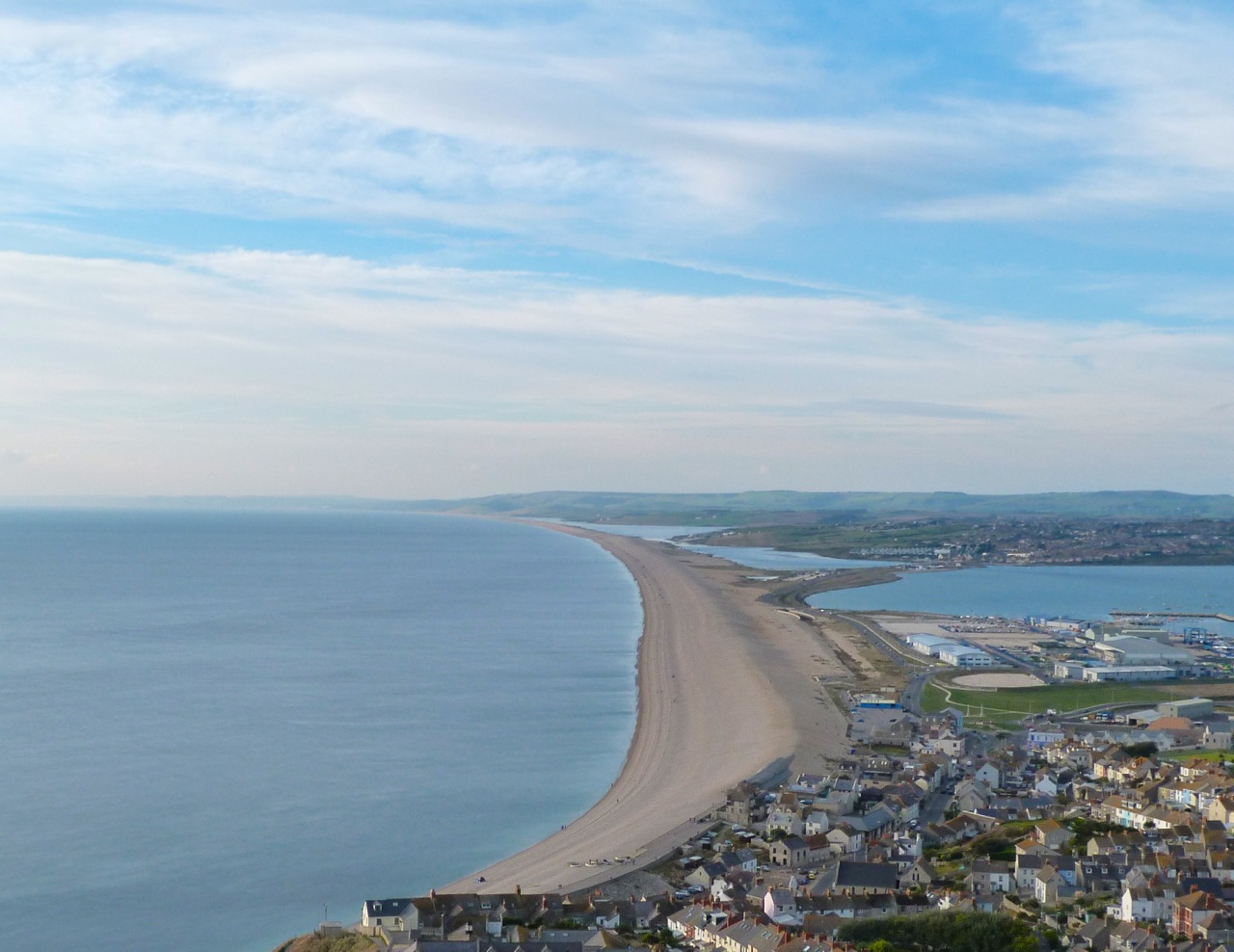
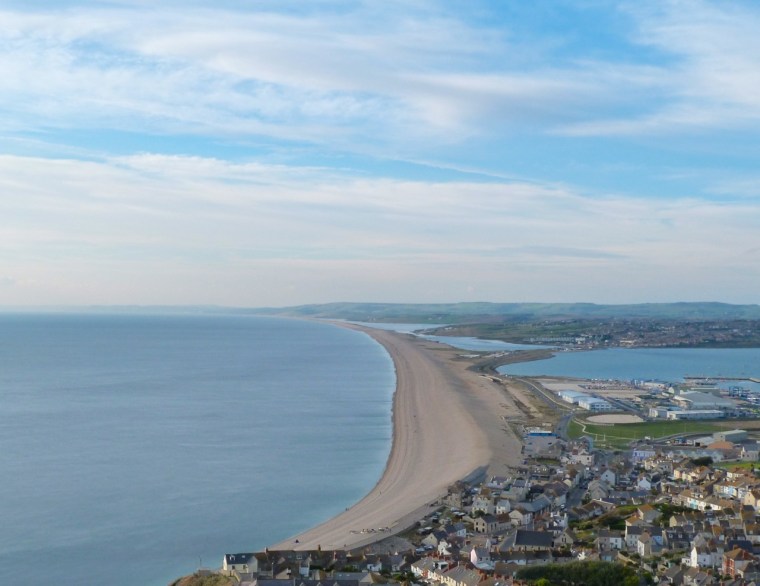
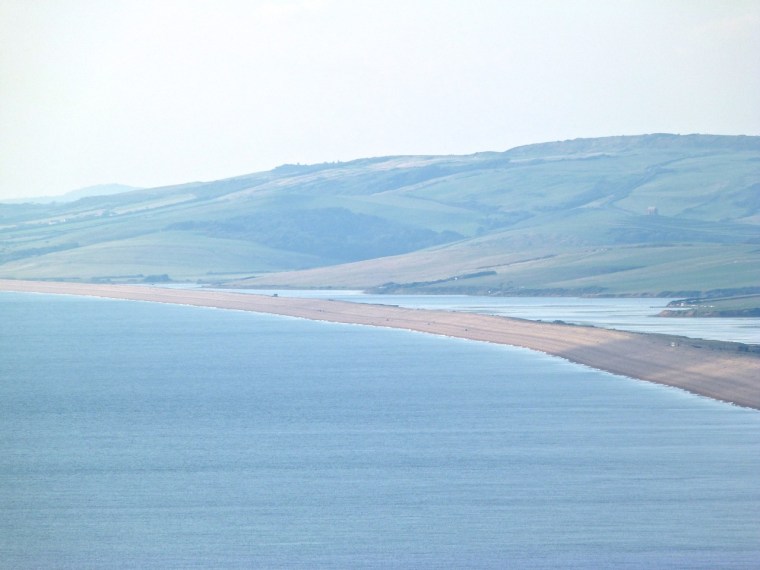
The Chesil Beach, or Chesil Bank, is a dramatic 18-mile curve of steeply banked shingle stretching north-west from Portland (the southern-most point of Dorset) to West Bay via Abbotsbury. The formation contains a long tidal lagoon known as the Fleet.*

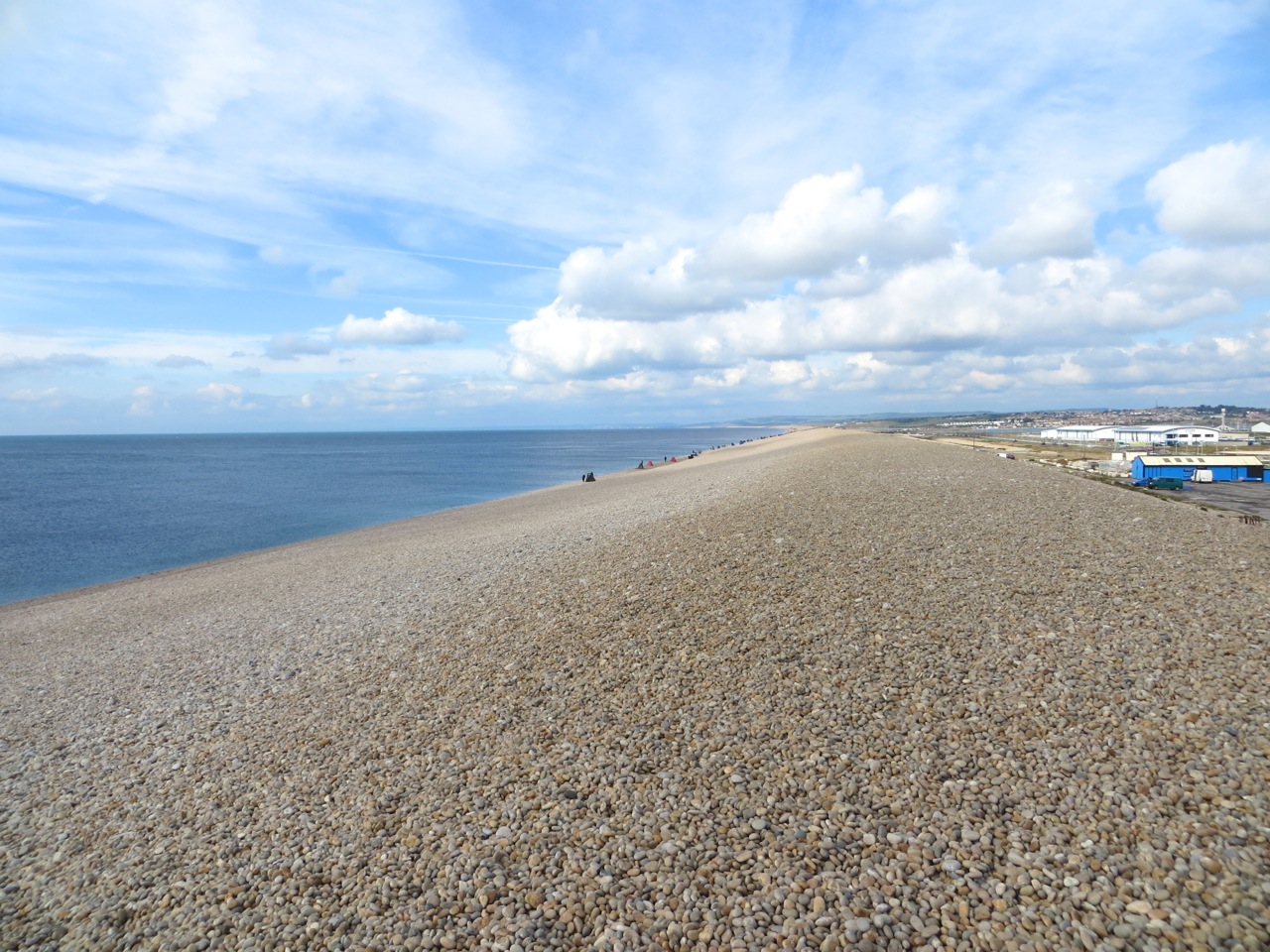
Before a causeway road was constructed, the bank connected the mainland to the Isle of Portland, creating a form of TOMBOLO (strictly, it is a ‘barrier beach’). The uninterrupted shingle strip of Chesil beach is up to 50 feet high in places. The stones are large at the Portland end, gradually reducing in size until, by the western end at West Bay, they are pea-sized. It is said that in the past (and maybe still) local people were able to tell the location on the beach that a particular pebble had come from. This knowledge was supposedly helpful for the accurate landing of contraband at dead of night, smuggling being a popular occupation along the Dorset coast (and maybe still).
Chesil Beach, the Fleet and the Isle of Portland, from the north-west over Abbotsbury![]()
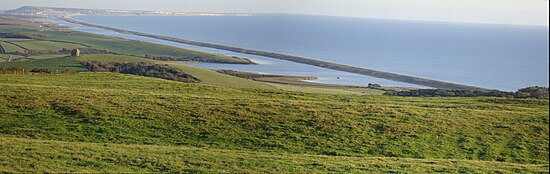
Chesil Beach looking north-west from a viewpoint on Portland
A long shot of the same view, showing the Fleet lagoon
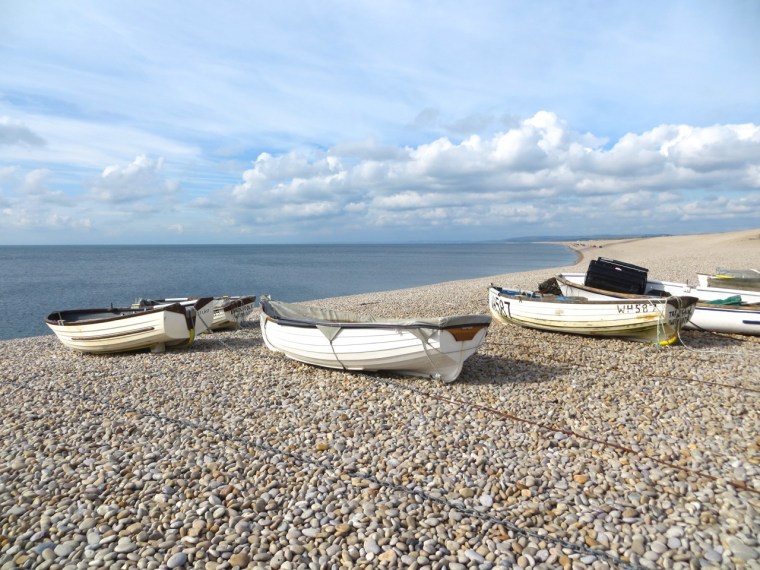
Boats on top of the beach at Portland
This view shows the breadth of the beach at the Portland end – solid shingle throughout
Further along, fishermen line up all along the water’s edge
The rake of the beach on the seaward side. It’s much steeper on the landward side.
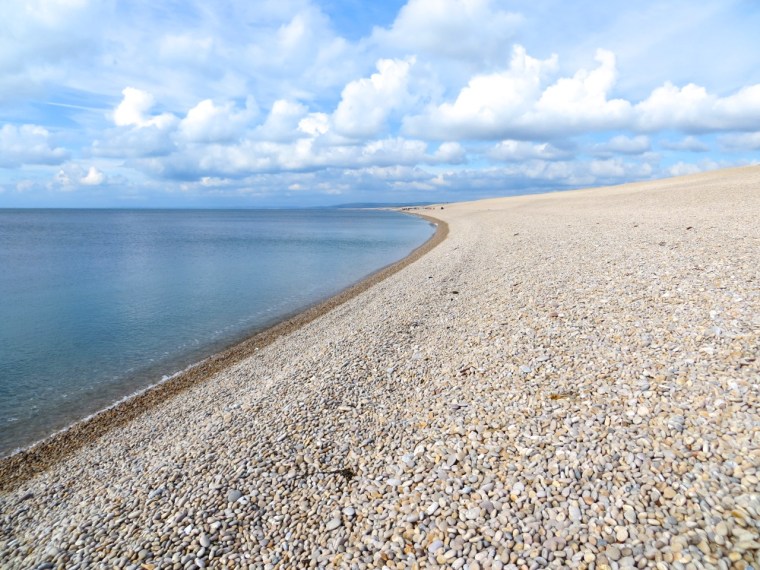
We sat on a tide-shelf above the waterline – the top stones bone dry, the next layer down wet.
Everyone will be familiar with the gentle swoosh sound of small shingle as the waves come and go. On Chesil Beach, the wave interaction with the large pebbles produces a remarkable clattering and clacking sound that is mesmerising to listen to. Luckily I remembered the video button on my camera, so here’s a very short movie to demonstrate this.
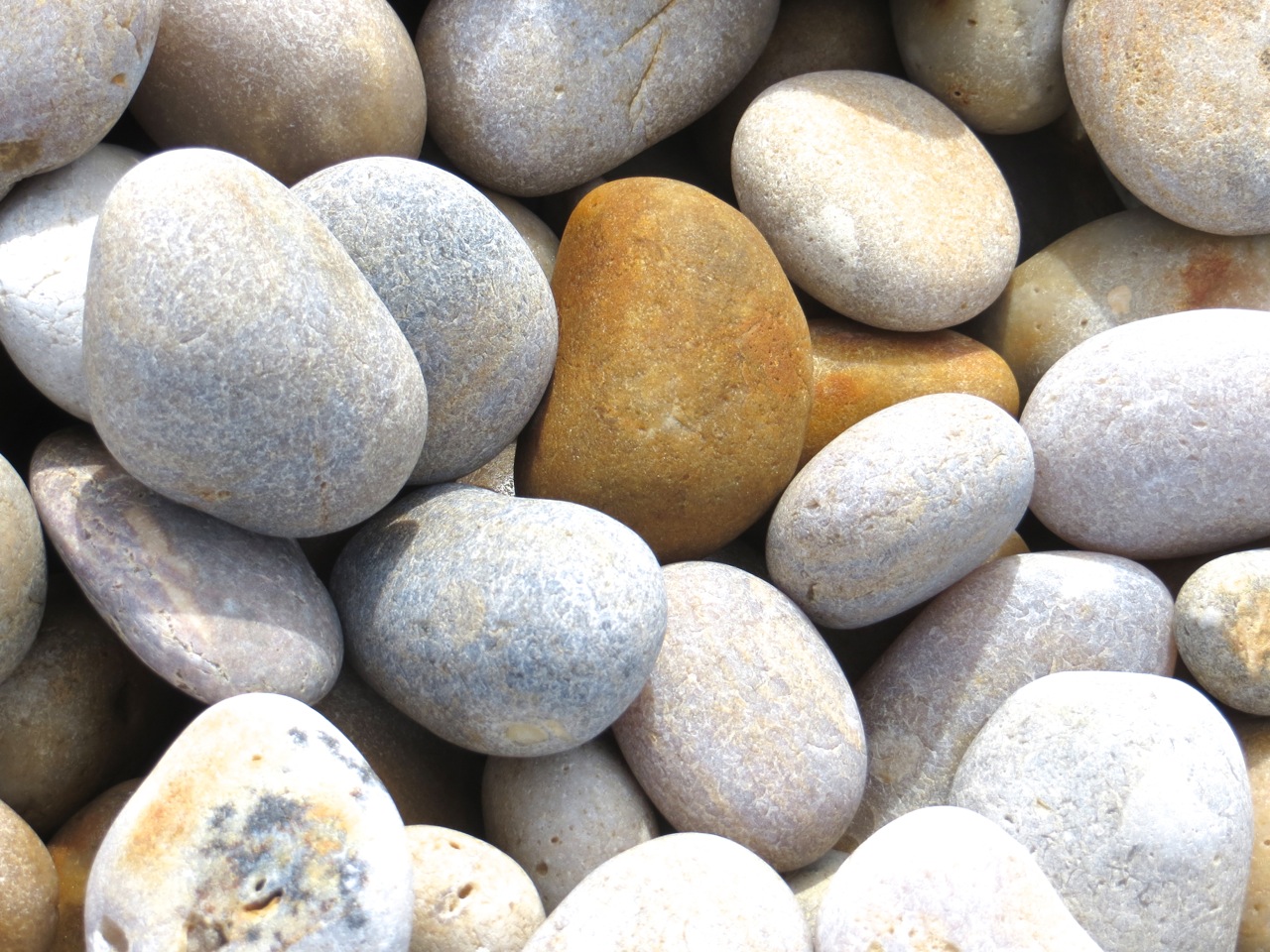
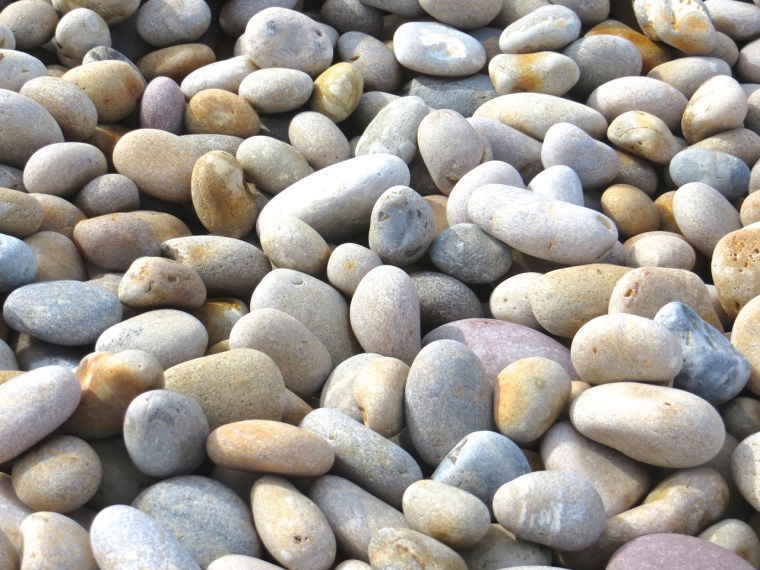
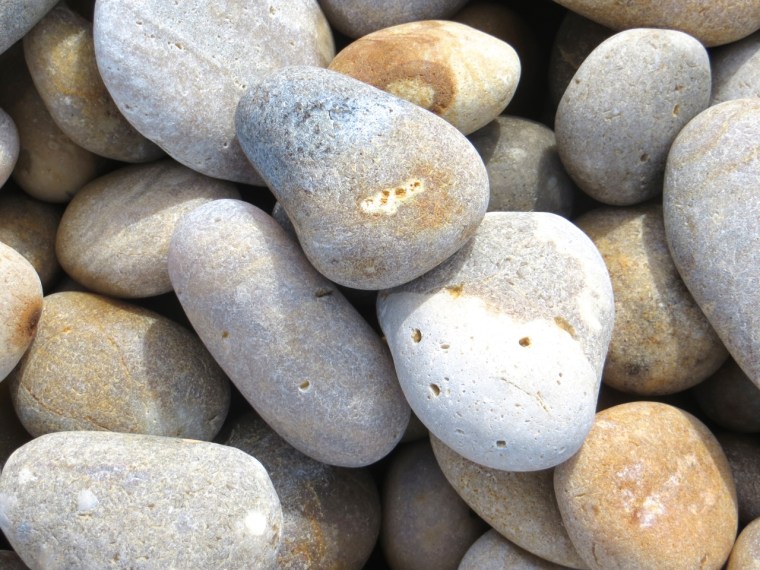
Here is a collection of photos of the stones around us as we sat by the sea. The apparently uniform colouring of the beach from a distance turns out to be a blend of many soft, subtle colours and shades – not least because the stones are of different materials. The geology of the beach would make a good post for another occasion, but not by me!
Close-up of the bottom left corner above
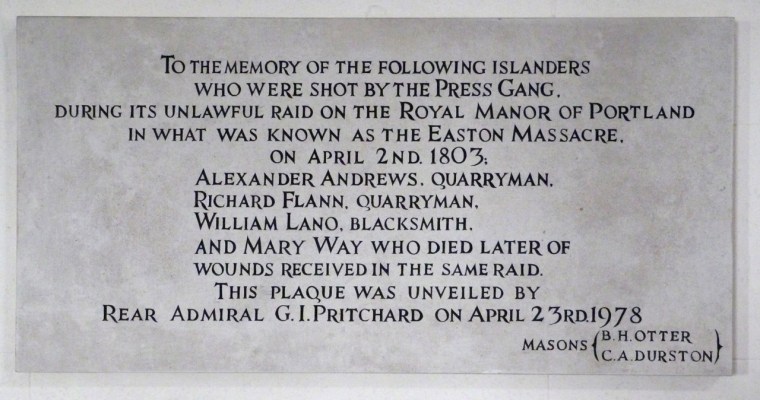
Finally, a reminder of the area’s more turbulent past – a time of press-gangs, blackjacks and daggers swiftly drawn in candlelit taverns. A portland stone plaque in the Church of St George, Portland gives eloquent testimony to an era of lawlessness.
Later, and perhaps in consequence, Portland became the centre of the Knuckleduster-making industry that flourished on the island until the passing of the Prevention of Crime Act 1953, which defined and prohibited “the carrying of offensive weapons without lawful authority or reasonable excuse”. The industry, already in sharp decline in the 1930s, was by then nearly defunct, with only one craftsman still active on Portland. In 2012, a large and elegant sculpture to commemorate this unusual aspect of Portland’s history was installed in a prominent position, commanding a fine view over the the Chesil Beach to Weymouth and the mainland beyond.
The ‘Knuckleduster Memorial’ also marked Weymouth & Portland as the Olympic Sailing venue
* I’m reluctant to endorse the enthusiastic marketing of large swathes of the Dorset seaboard as ‘The Jurassic Coast’. There are fossils in many places. They are fun to look for. More fun to find. Best not to turn it into a Theme Park. I’ll leave it at that.

COX APPLES: FIRST HARVEST (2013)
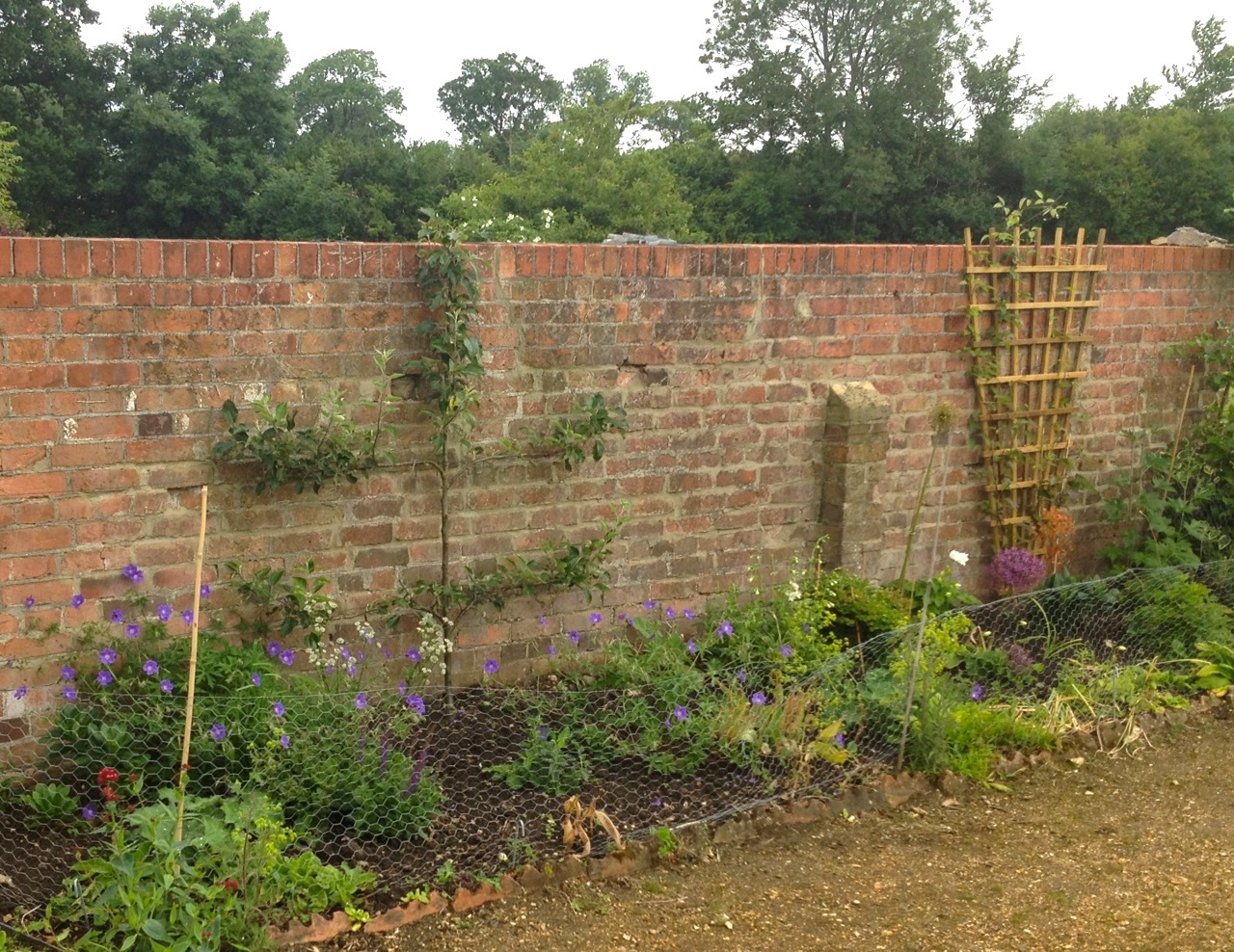
We are gradually restoring a very overgrown garden in Dorset. Part of the work has involved uncovering old walls that were smothered in rampant ivy, in places to a depth of nearly 2 feet; and the beds hidden underneath. This was followed by some approximate repointing ‘à la rustique’. The next stage was to remove the ‘dead’ soil and replace it with fresh topsoil mixed with compost; then to begin the planting. Here is part of the project, in May, showing a new espalier Cox apple tree on the south-facing side of the wall. The wire compound is to keep rabbits out – mostly successfully. The COX’S ORANGE PIPPIN, a classic eating apple, was first grown in 1826 as a hybrid of the Ribstone Pippin. This variety is small, crisp and juicy, with a slightly sharp tang. Completely delicious, in fact.
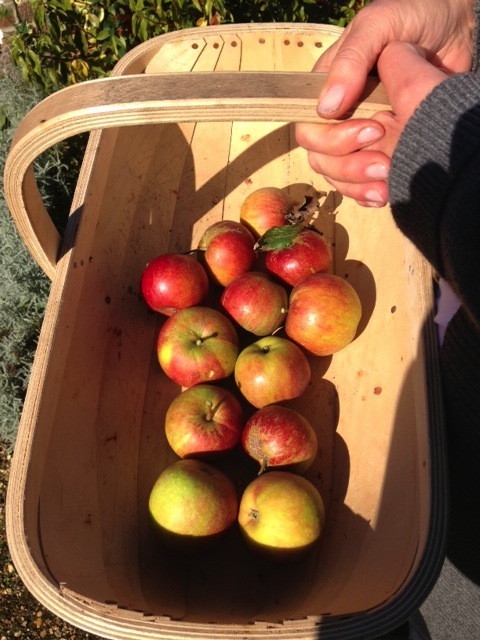
The tree luckily took to its situation and in due course began to produce some promising-looking fruit. Cox’s ripen in October, and should only be picked if the pips rattle when the fruit is shaken. We were amazed to have grown two dozen apples (there were also a couple of outliers that had been eaten, apparently by ants). A few on the lower branches are still not ready to pick – they were rather shaded by plants that grew during the summer. Some we have eaten straight off the tree. Here are a few that we harvested a couple of days ago.
Testing for the ‘pick me now’ rattle
First Harvest. Next year we will train a third row near the top of the wall. More apples.
PORTLAND, DORSET (1) THE LIGHTHOUSE AT PORTLAND BILL
Portland is a ‘tied island’ at the southernmost point of Dorset, linked to the mainland by a 5 mile strip of steeply banked stones and pebbles called the Chesil Beach (or to the older among us, Chesil Bank) that runs northwest towards Abbotsbury and West Bay. There is now a road, of course. The bank’s formation is known as a ‘tombolo’, where a spit joins to land at both ends, creating a tied island and often a lagoon (here known as the Fleet).
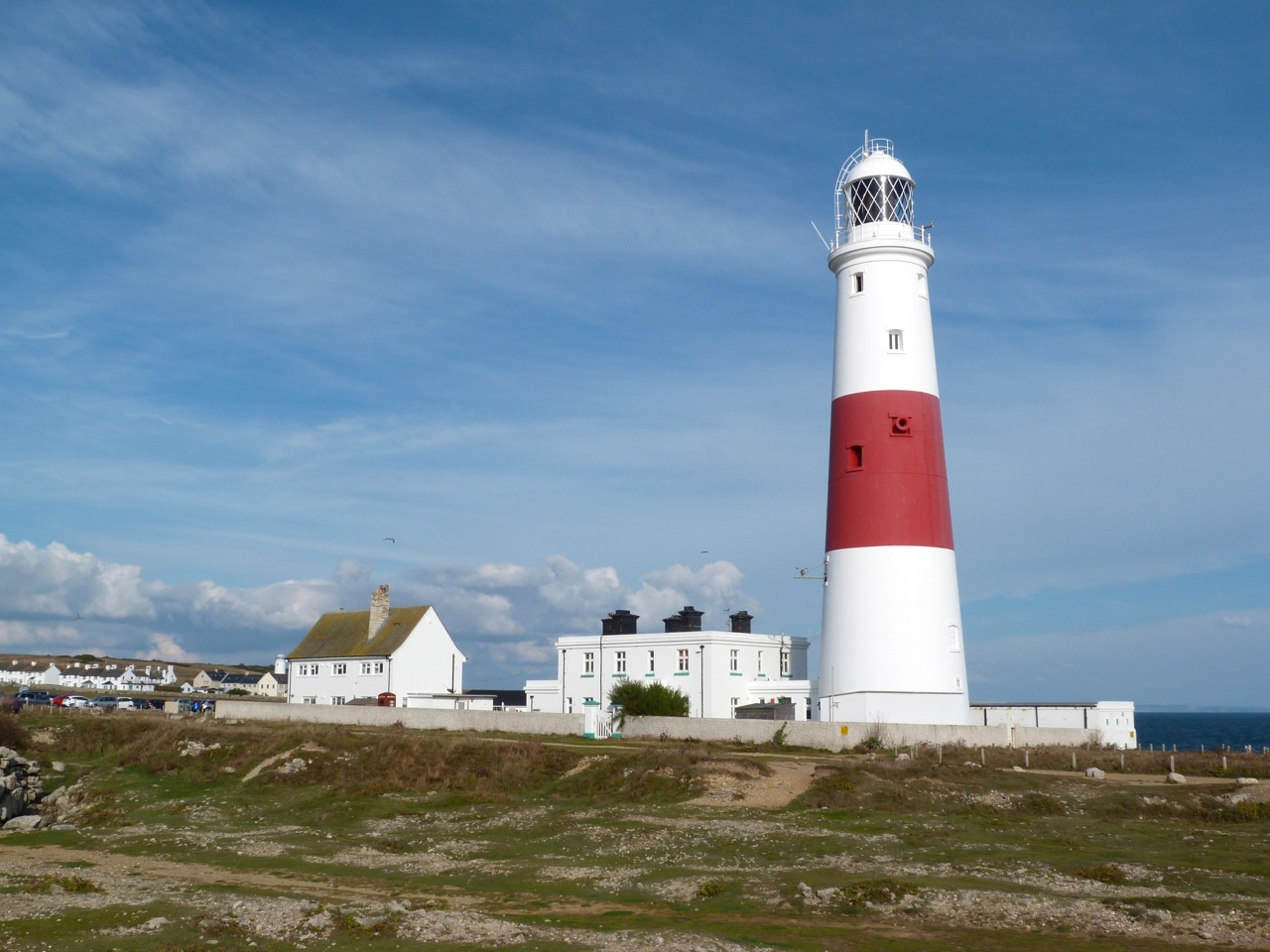
I’ll be posting about Chesil Beach and other aspects of Portland in due course. Meanwhile, I’ll focus on the southern tip of Portland, known as Portland Bill. There are 3 lighthouses there. Two were operationally replaced in 1906 by a classic red-and-white striped edifice, and are now, respectively, holiday apartments; and a bird observatory. The ‘new’ lighthouse stands guard over a strong tidal race caused by the underwater continuation of the Portland rock ‘shelf’ and the Shambles sandbank further offshore.
Portland is one of the ‘Sea Areas’ familiar from UK shipping forecasts, located between Wight and Plymouth. The lighthouse, 115 ft high, is a prominent navigational landmark for the English Channel.
Since 1514, Trinity House has been the organisation with responsibility for lighthouses and the safety of UK shipping generally since the grant of a Royal Charter by Henry VIII. The Portland light bears the Trinity House arms.
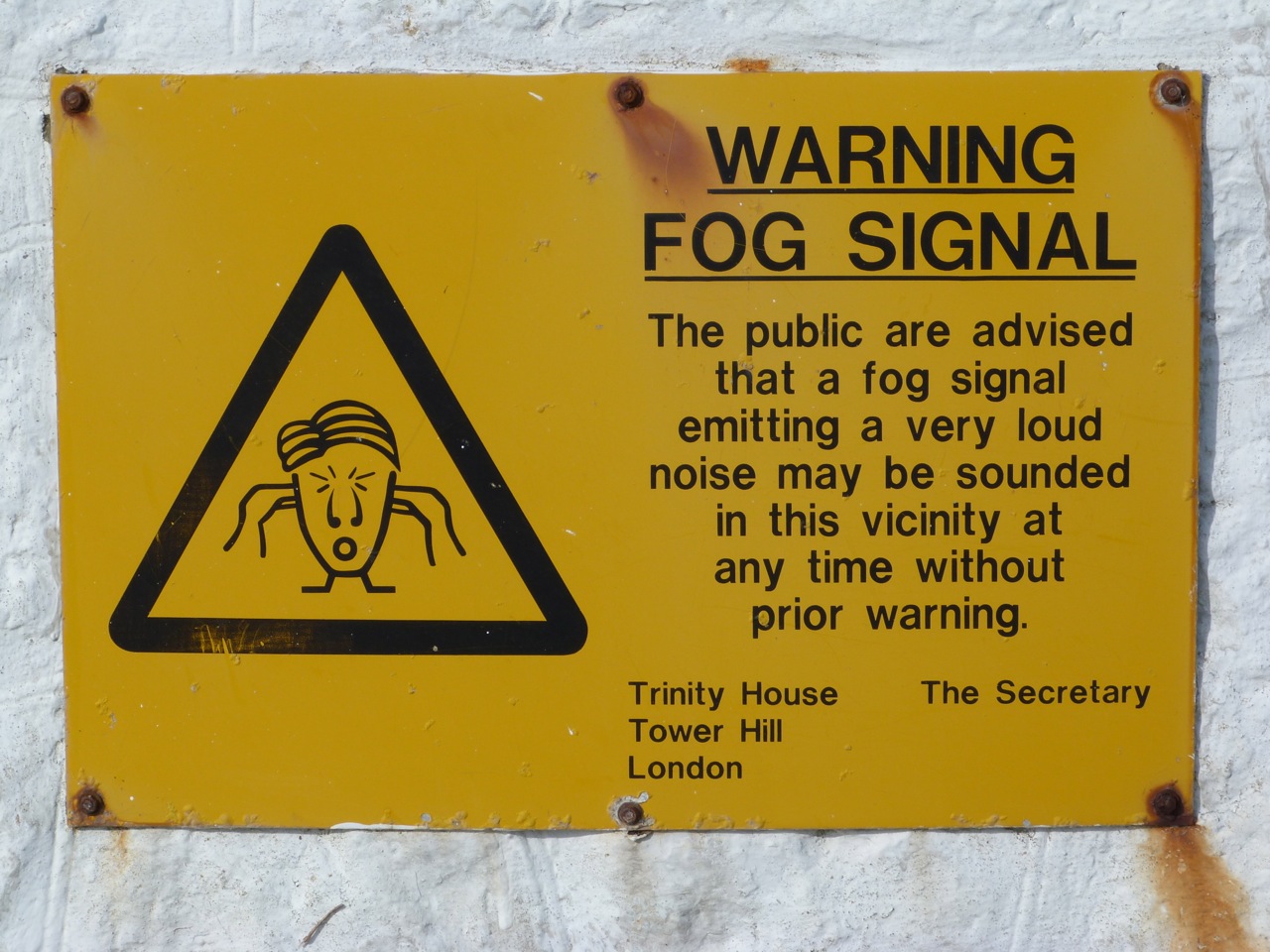
It also bears a substantial foghorn, essential to warn of the coastal rocks as well as the strong current from the tidal race
As ships are warned by the foghorn, so humans are warned of the foghorn…
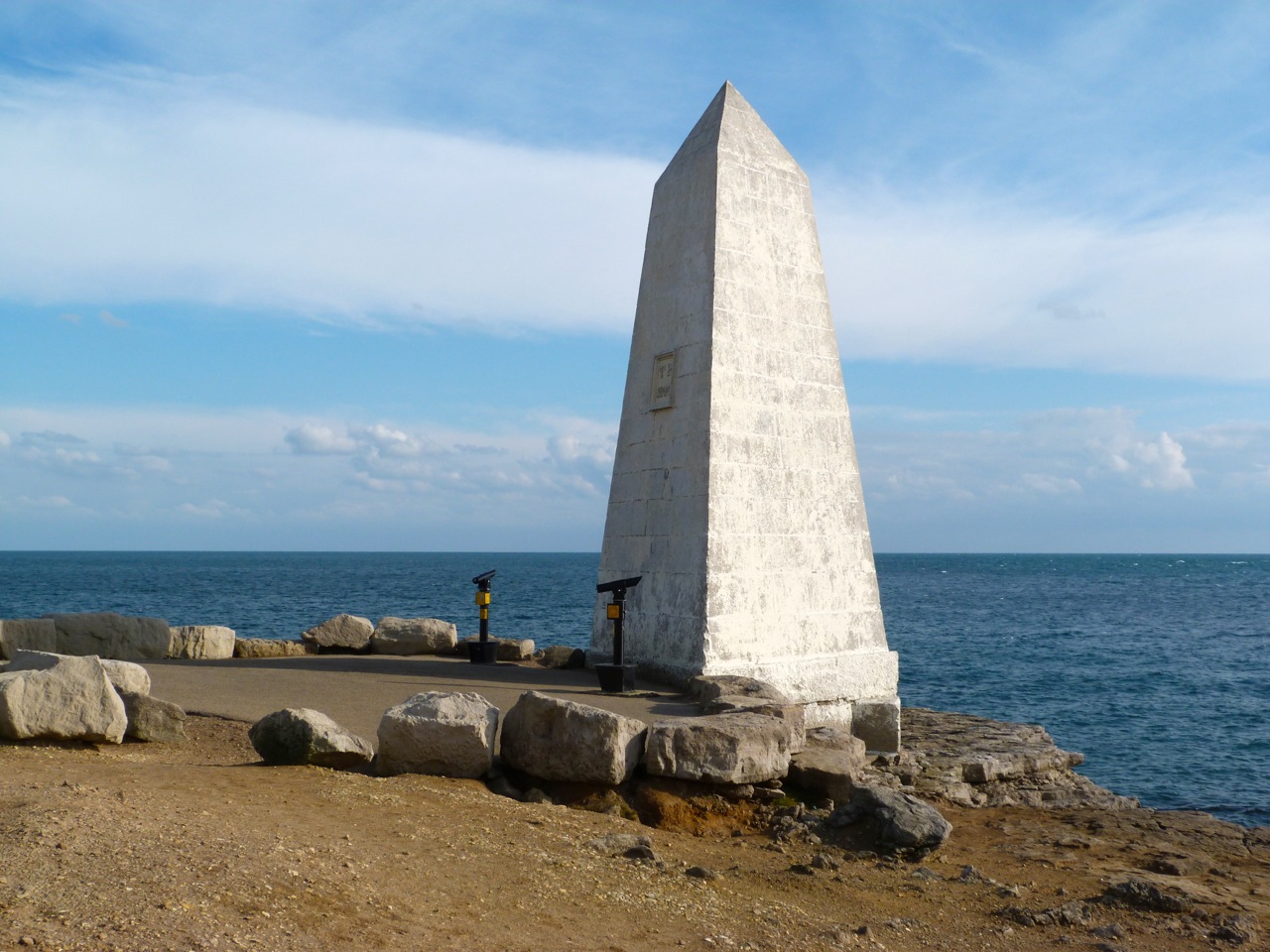
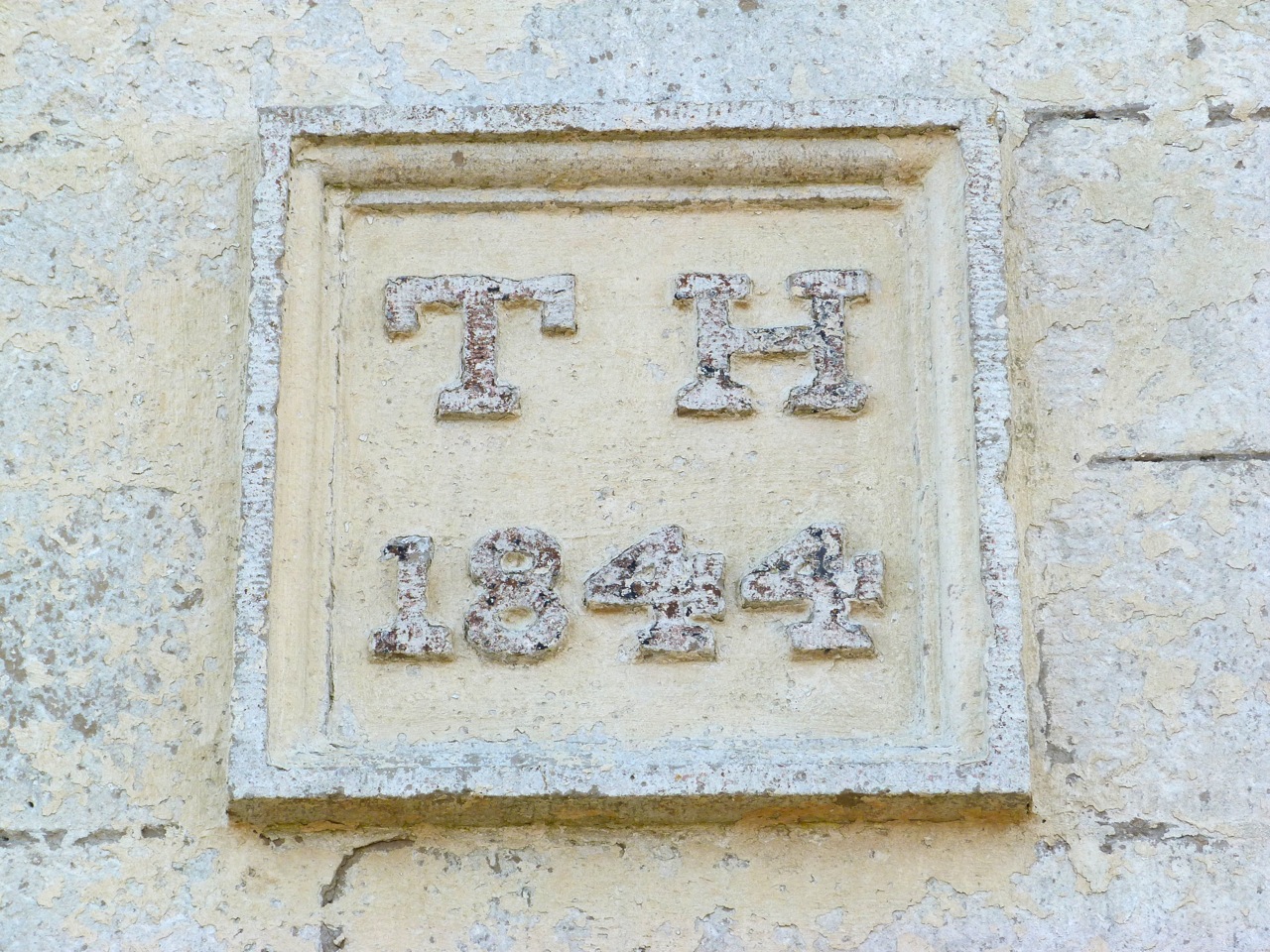
At the cliff edge is a stout obelisk of portland stone erected by Trinity House in 1844 (before the present lighthouse existed) as a daylight warning to passing ships of the dangers of the offshore race.