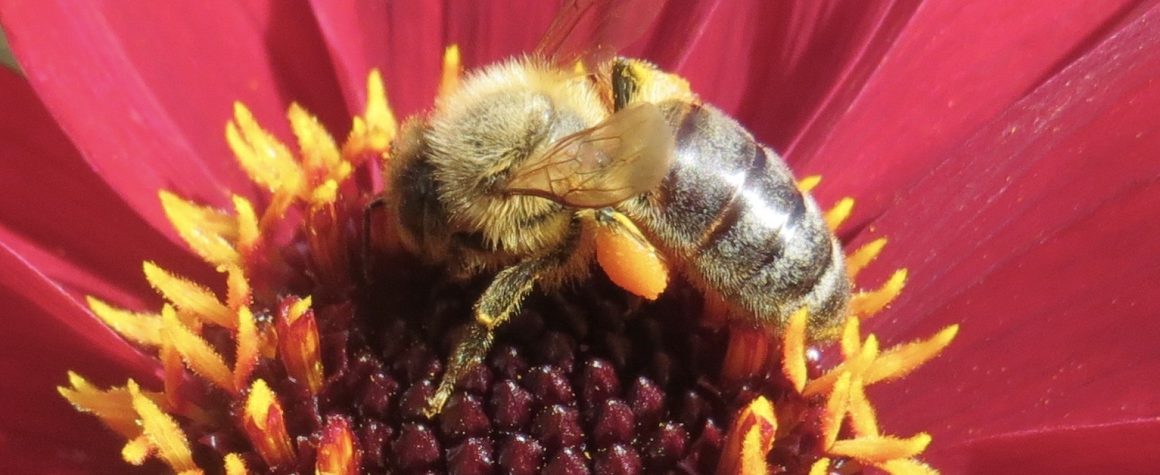

IN-FLIGHT REFRESHMENT

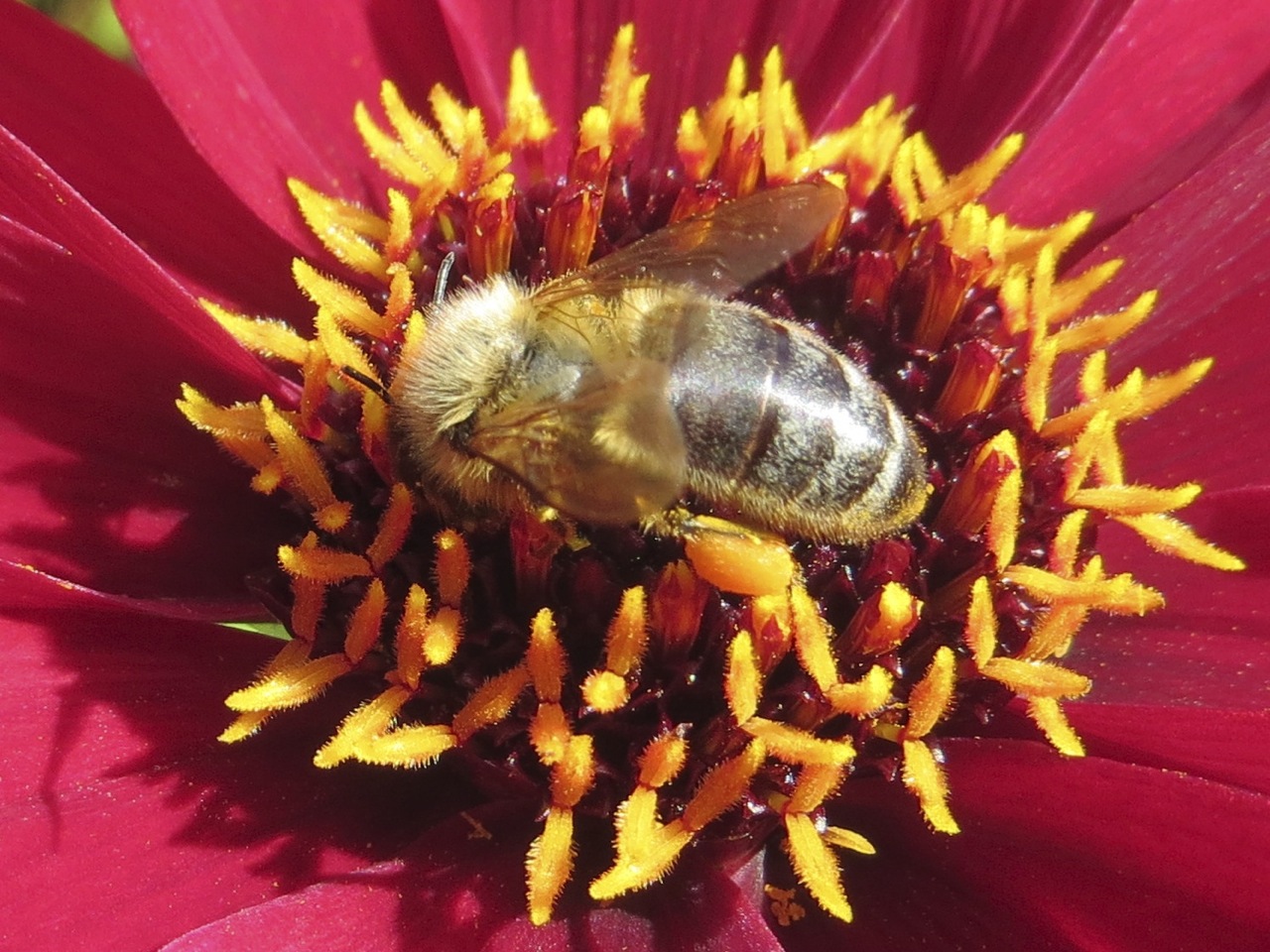
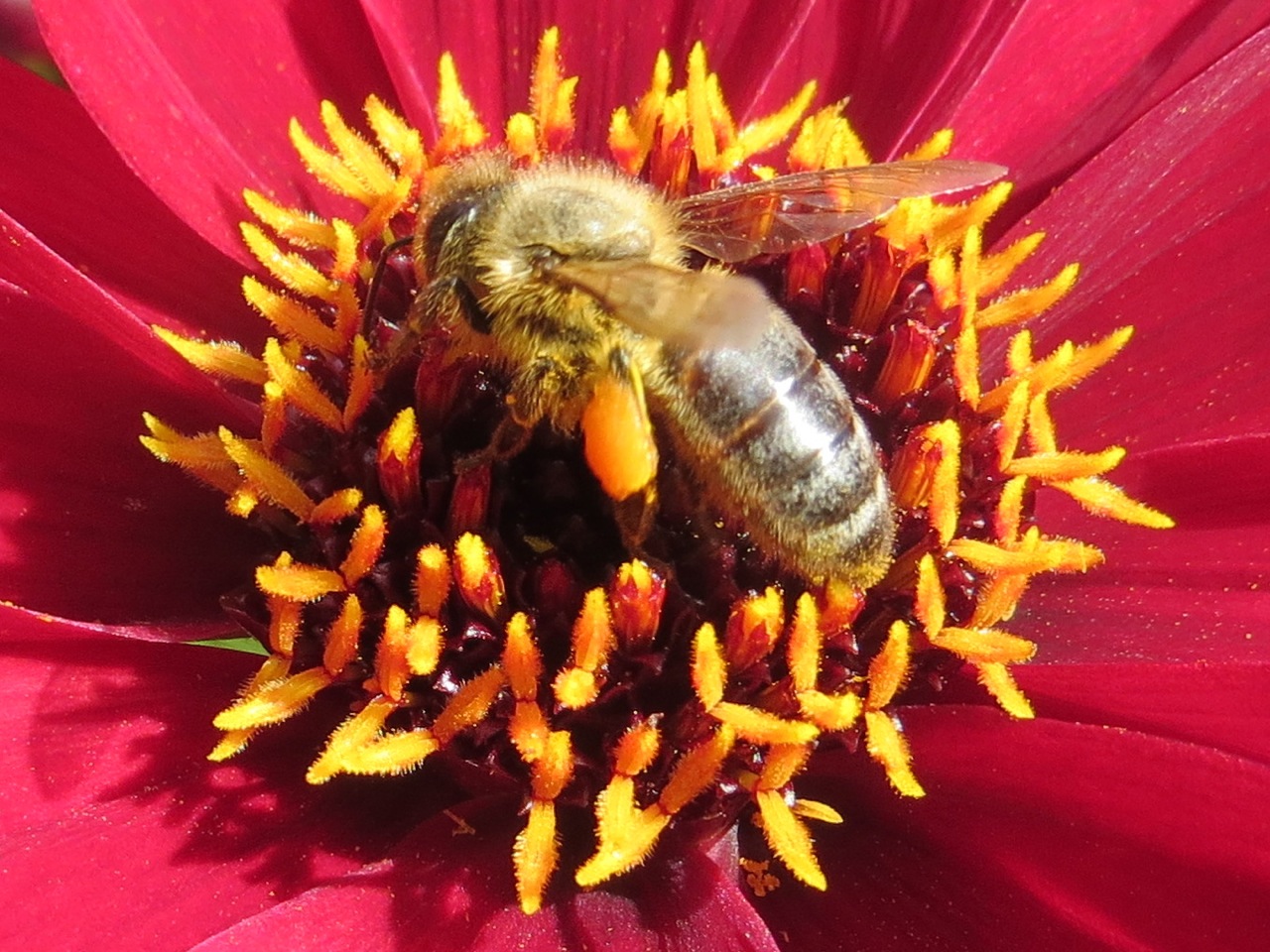
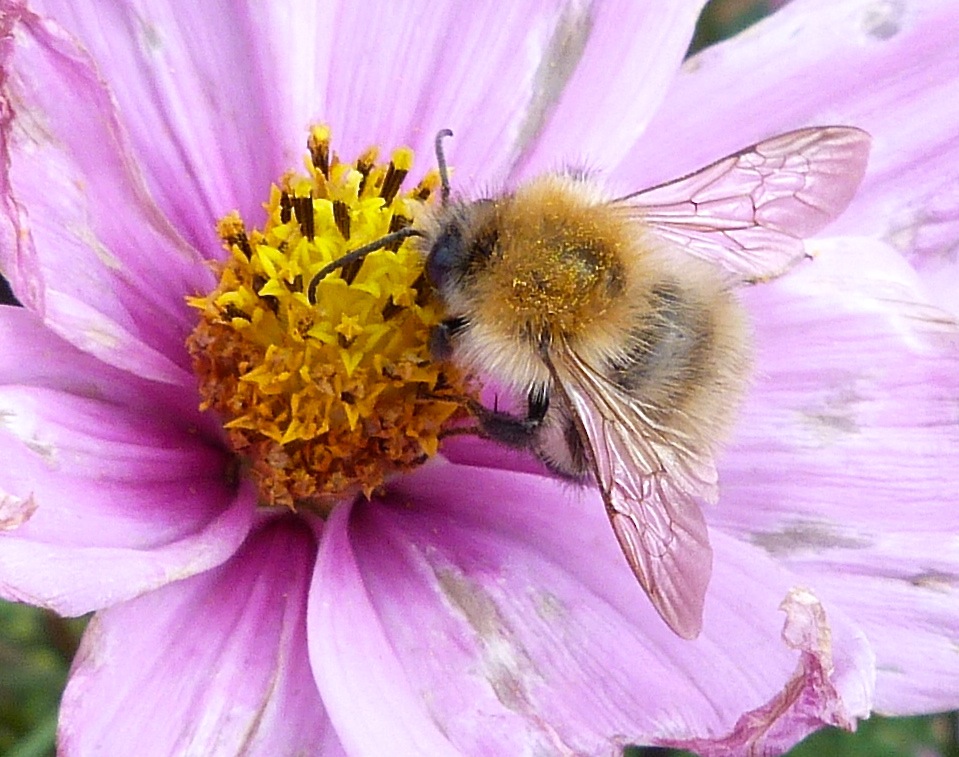
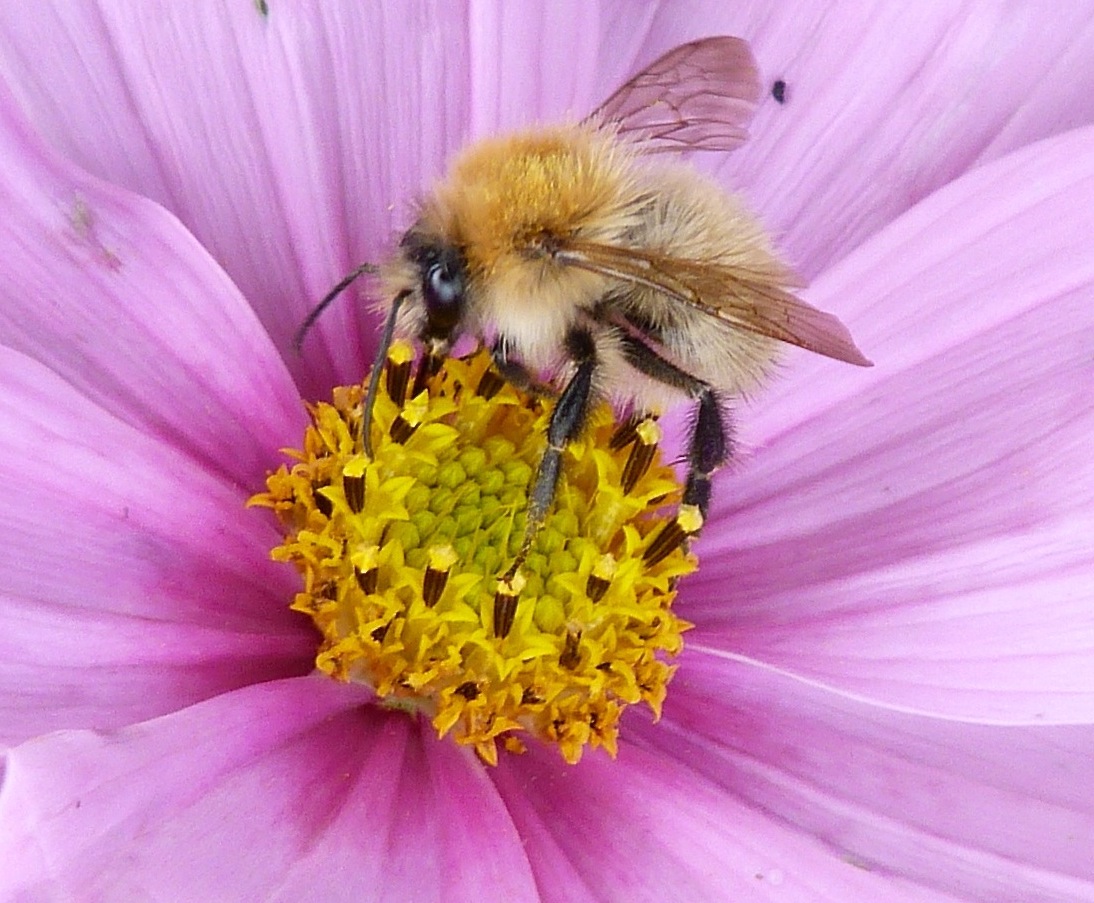
 I watched this small bee as it circled round the flower, busily filling its already bulging bright yellow saddlebags. We are fond of these little bees, which were introduced to the UK (or perhaps simply spread here) quite recently and have made themselves at home. They are one of two bee species that have chosen to live inside our house.

The location varies from year to year, but for about 3 months a year over the last few years there has been gentle bee-chatter going on in the roof-space above our bedroom, or in an old wall cavity between 2 rooms.
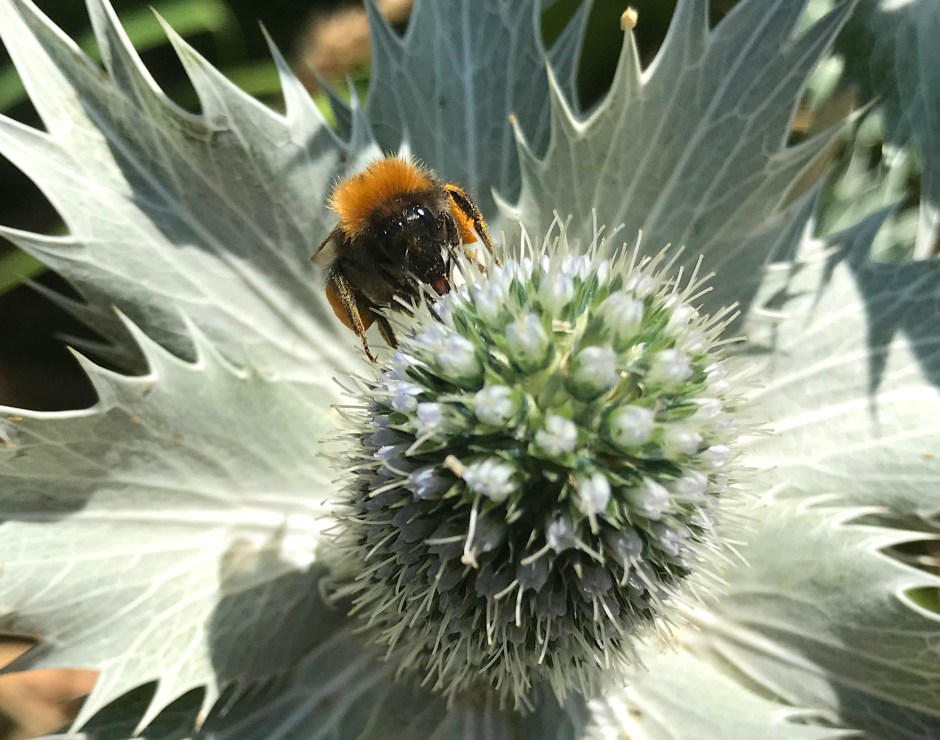
This year the tree bees decamped to the roof-space above the kitchen; and a splinter colony has recently set up a buzzing plant-produce stall in a cavity above the front porch, no doubt to the surprise of the bats that hang out there.
 You may have noticed that the bee featured here is carrying a tiny passenger, a mite, that you can see in some of the images (eg the header image). There’s a small story about these photos. I own ‘beloved camera’, ‘unreliable camera’, ‘snappy camera’ and an iPhone. **
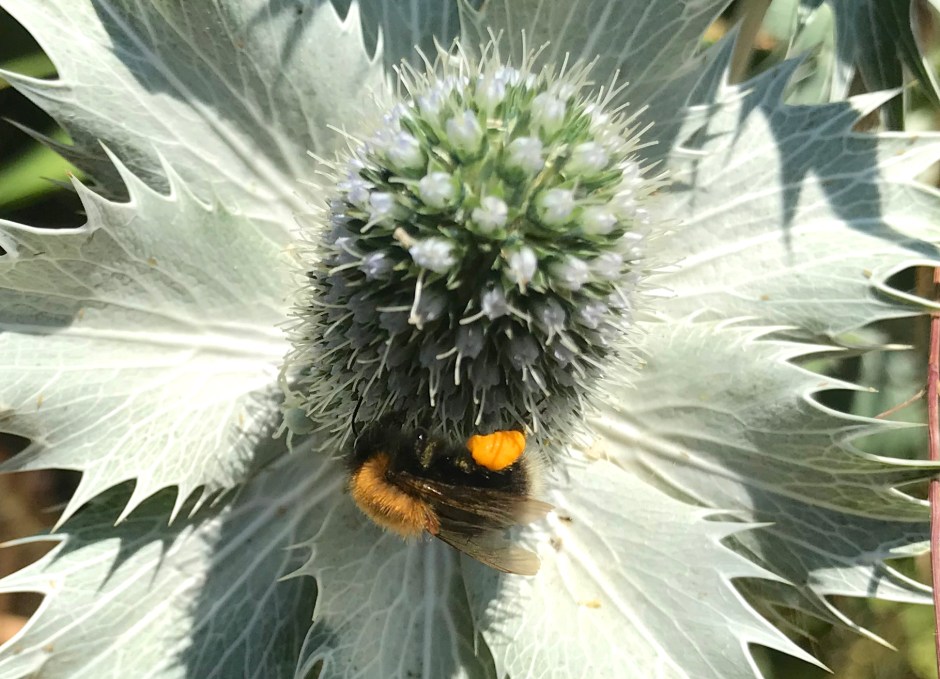
When I first saw this little bee, I had ‘unreliable’ with me (‘beloved’ being 125 miles away). It is a martyr to light sensitivity, with an annoying ‘satirical’ take on focus. Reader, I rattled off 20 shots. Then I deleted every one of them. Quickly throwing the camera behind a wall in disgrace, I reached for my phone in desperation to catch the bee at work in the sunshine. Here are the results, with a level of clarity that only ‘beloved camera’ could have matched.
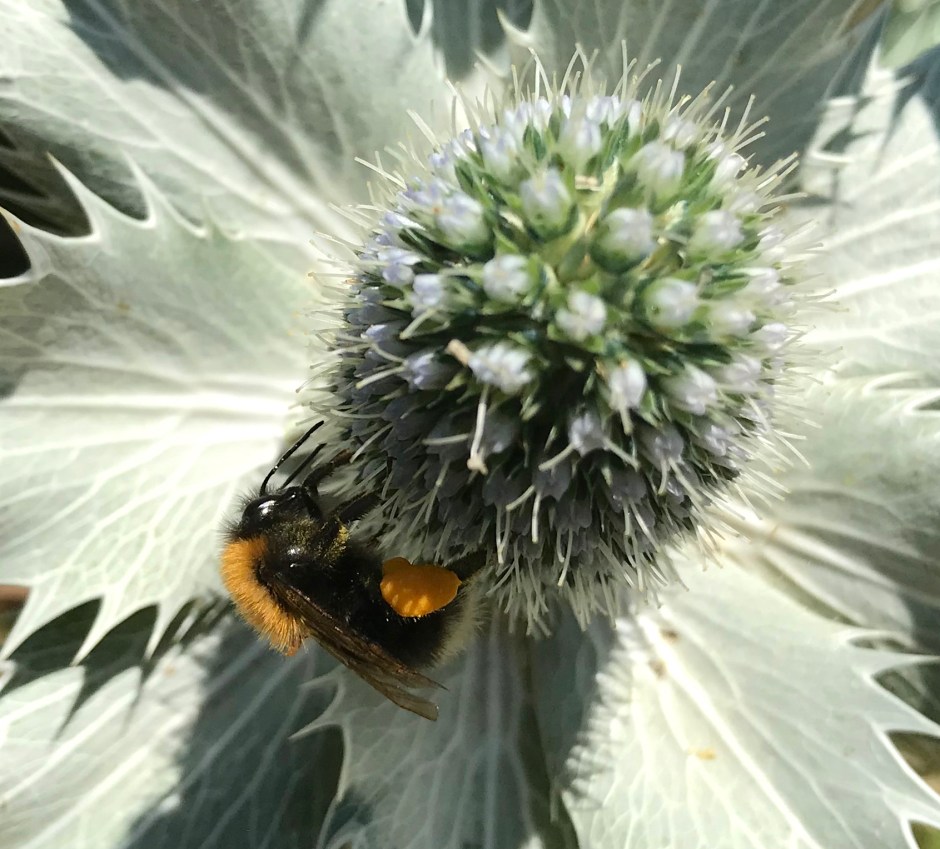
** There was ‘hated camera’ too, a DSLR that I never mastered and eventually sold back to the place I bought it for a fraction of the original cost. They saw me coming…
 All photos © Keith Salvesen Photography

This is the first year that leaf-cutter bees have discovered the bee box placed invitingly on a south-facing wall – and only in the last month. Or maybe they had and didn’t like the box. Or the other occupants. Anyway, quite soon they had tenanted the remaining holes in the prestige penthouse log. 
Last week, the LCBs were quite active, so from time to time I watched them. The first one was completing its work in the top-right log on the lower storey. Having packed in the leaves, it spent quite some time perfecting the job, leaving a smooth end to the bright green plug.


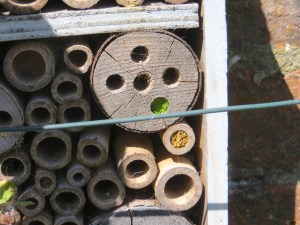
Later on I saw a bee engaged in an earlier stage of construction. It chose the same log, and initially went for the middle hole, disappearing with a strip of leaf. It then revised its accommodation plans, reversed out with the leaf and took it to the adjacent hole.


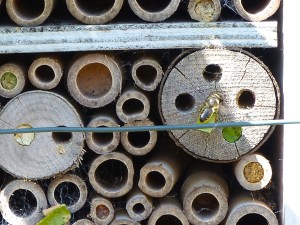
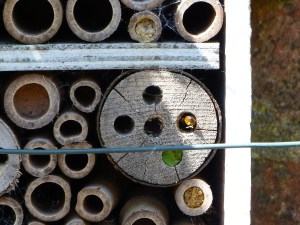
I found the bees surprisingly difficult to photograph. I had to change cameras to a ‘faster’ one, because a bee would zoom back to the hole with its leaf and dive straight in, dragging the leaf behind it; and emerge suddenly and fly off at speed. Sometimes there was a struggle to get the leaf into the hole, which helped take a shot; or I could see the bee pause in the dark but quite close to the entrance before flying off. But mostly, the comings and goings took me by surprise every time, even though I was ready for them…


I checked the plants in the vicinity for the tell-tale semi-circles cut out of the leaves. They seem to have liked a nearby rose and another plant whose name I forget (if I ever knew). They use saliva to glue the cuttings together to build the cells for their larvae. The larvae have a safe place to hatch and develop. They pupate in the autumn and hibernate during the winter. Now that the leaf-cutters have found the box, we are hoping that next year the new generation will go through the whole process again. And that I will be more handy with the camera.
NOTE: I see that these bees are often called Leafcutter bees, or Leaf Cutter bees, whereas I have plumped for a hyphen. I’m going (having retrospectively checked) with the Natural History Museum’s version…
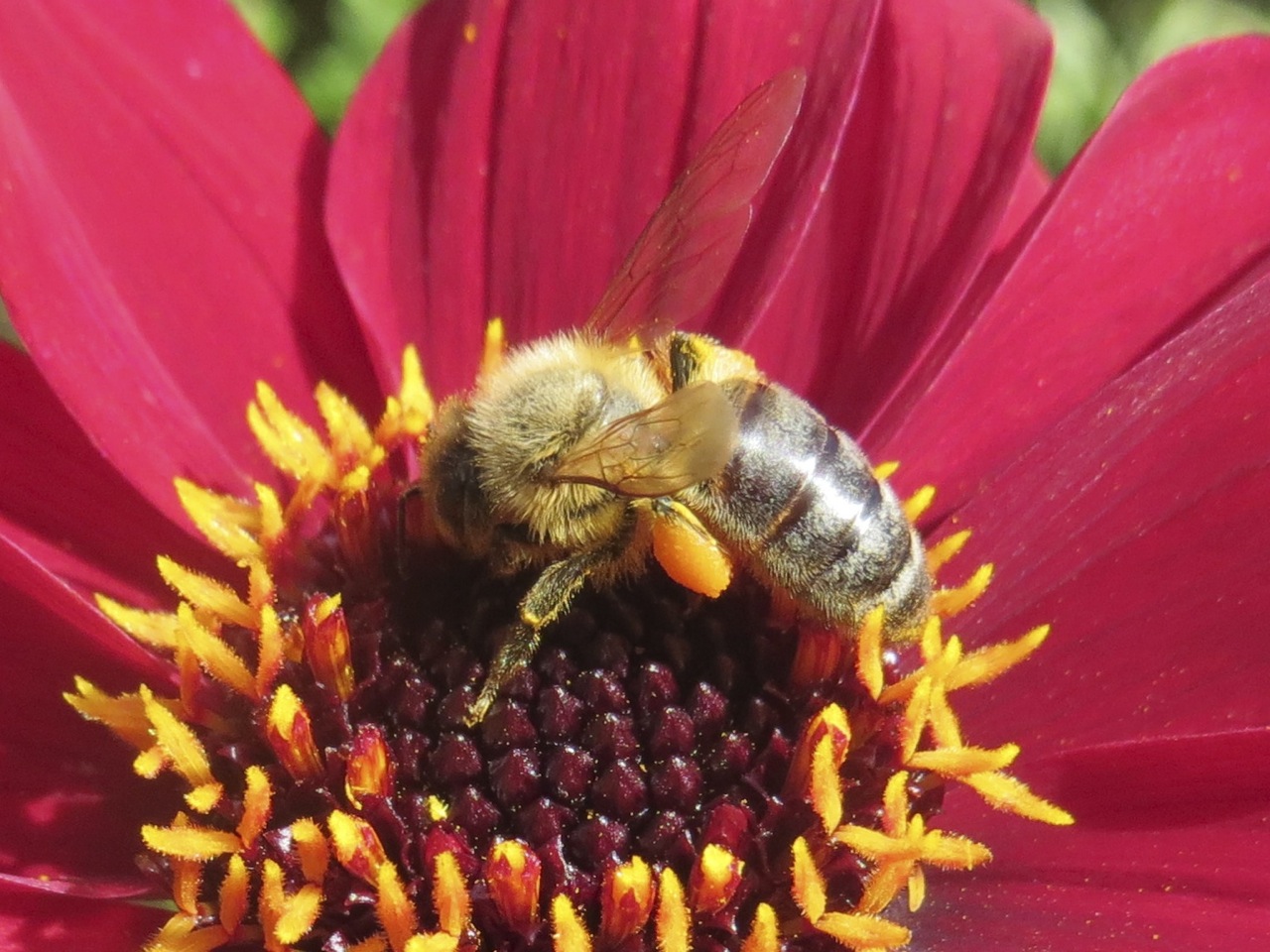
This honey bee was making the most of the late September sunshine. The colour of its pollen load suggests it had decided to target the dahlias. It managed to get a good all-over dusting too.





Whitchurch Canonicorum, Blandford Forum, Toller Porcorum and Bombus Lucorum – all very Dorset names. Except the last of course. Here are a few of them, feasting on hyssop. The first one is launching himself on his way to the next stem.

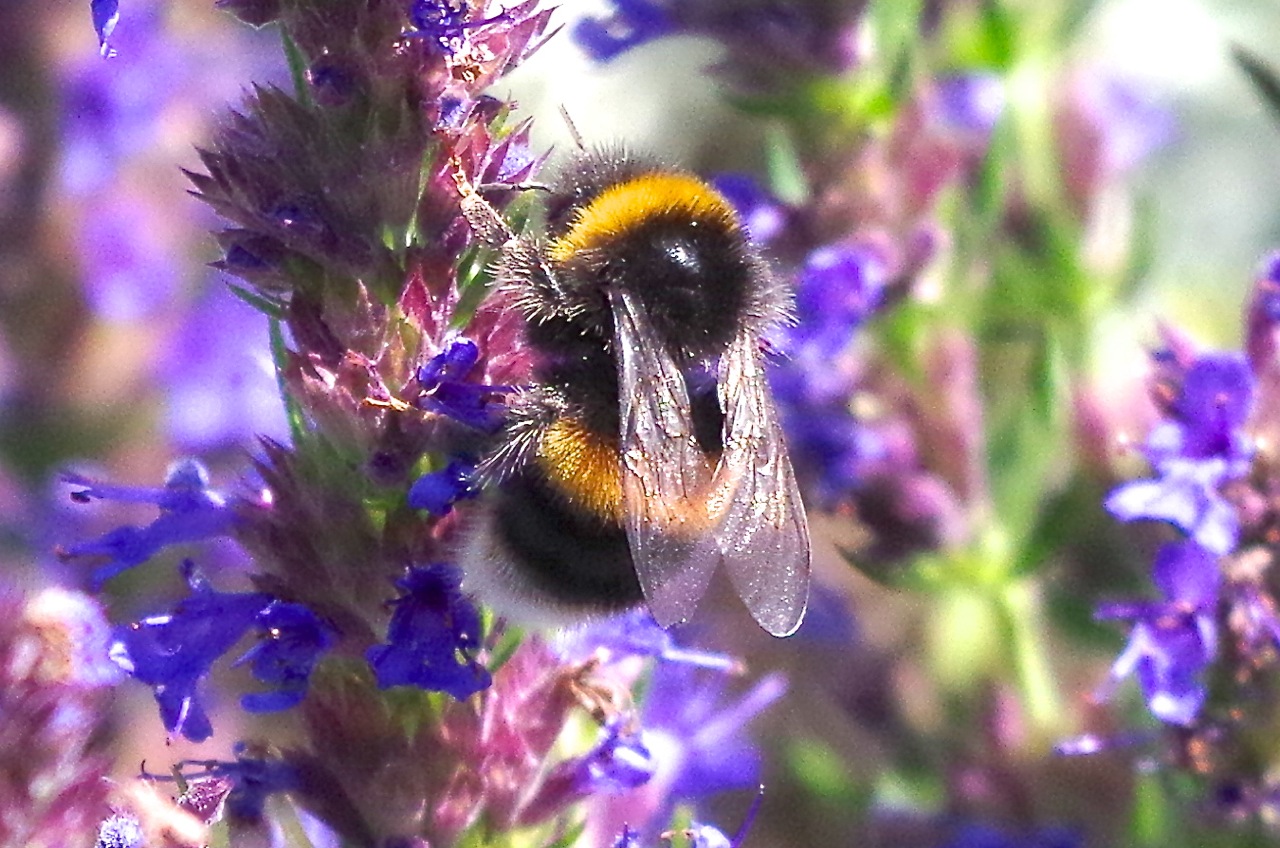

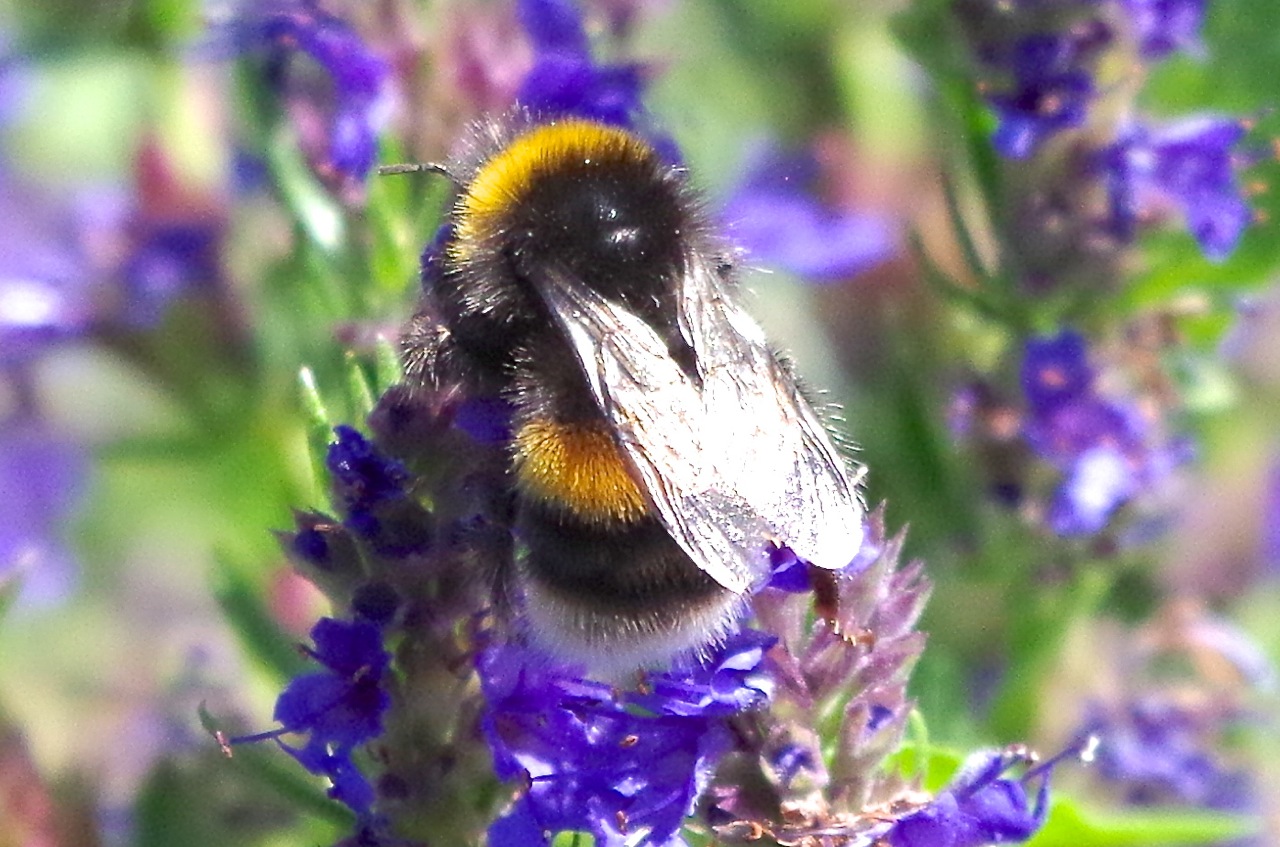


This is a small selection of bees visiting a Dorset garden during the last month or so. The favoured flowers have been Hyssop, Lavender, Alium and Cosmos. And if anyone knows the name of the pale bee in photo #4, I’d be pleased to know – it’s a real beauty.

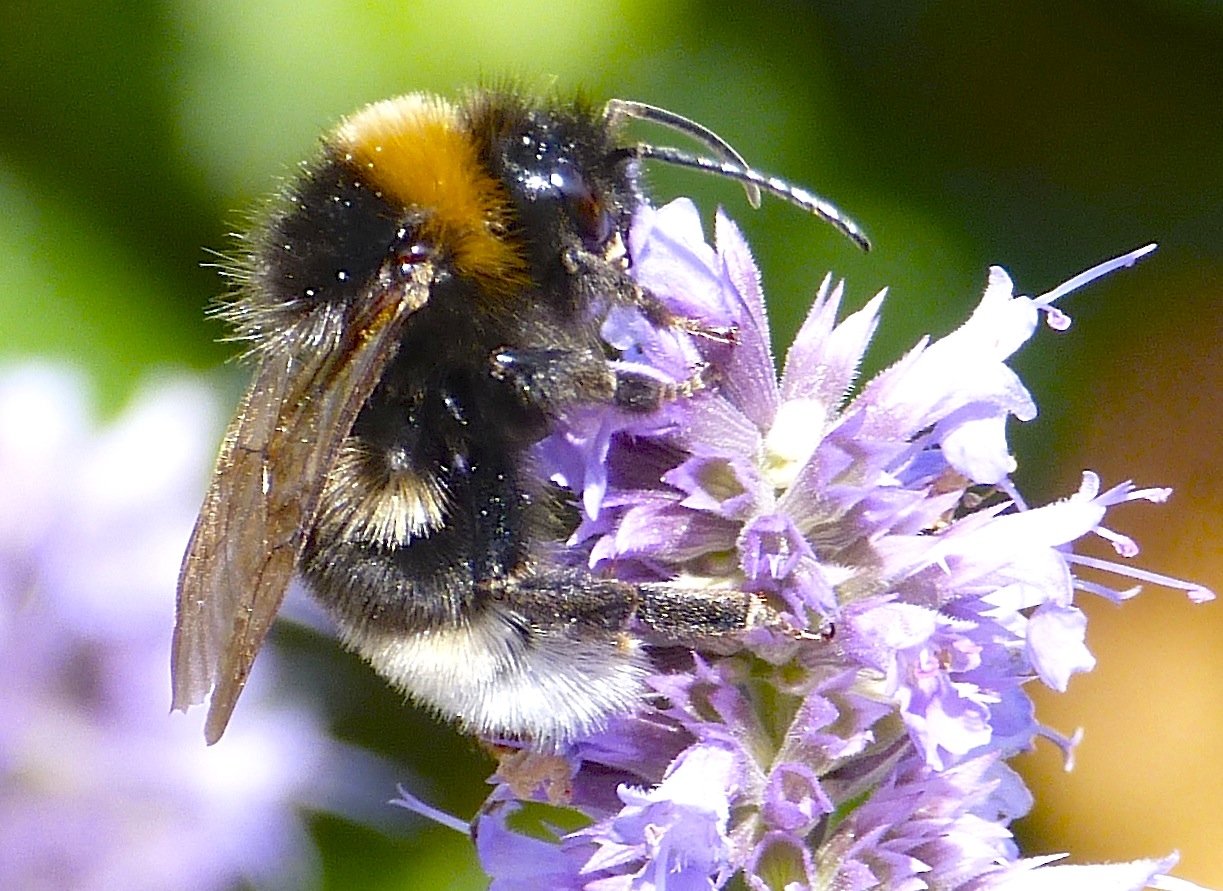


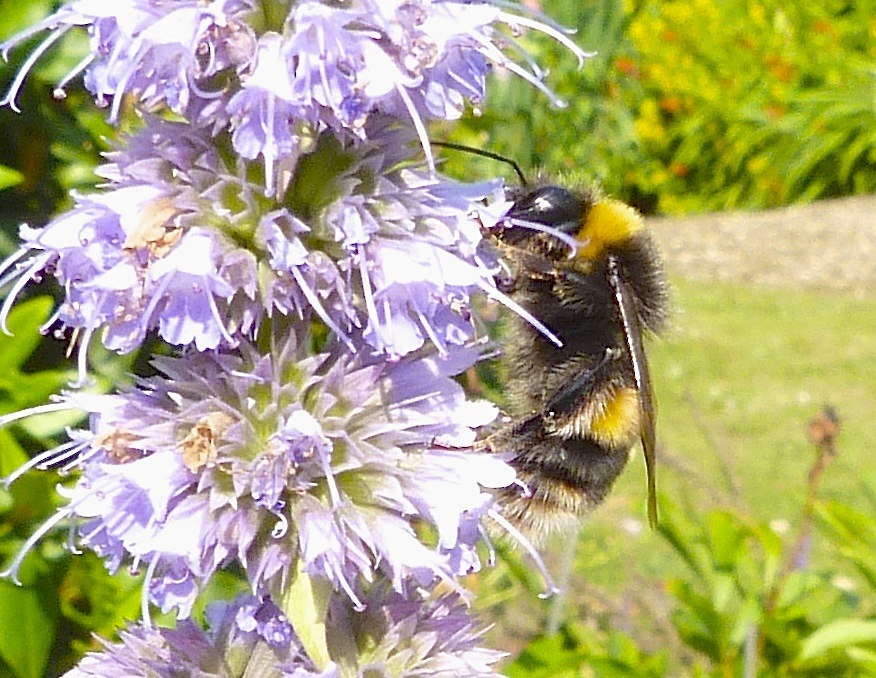
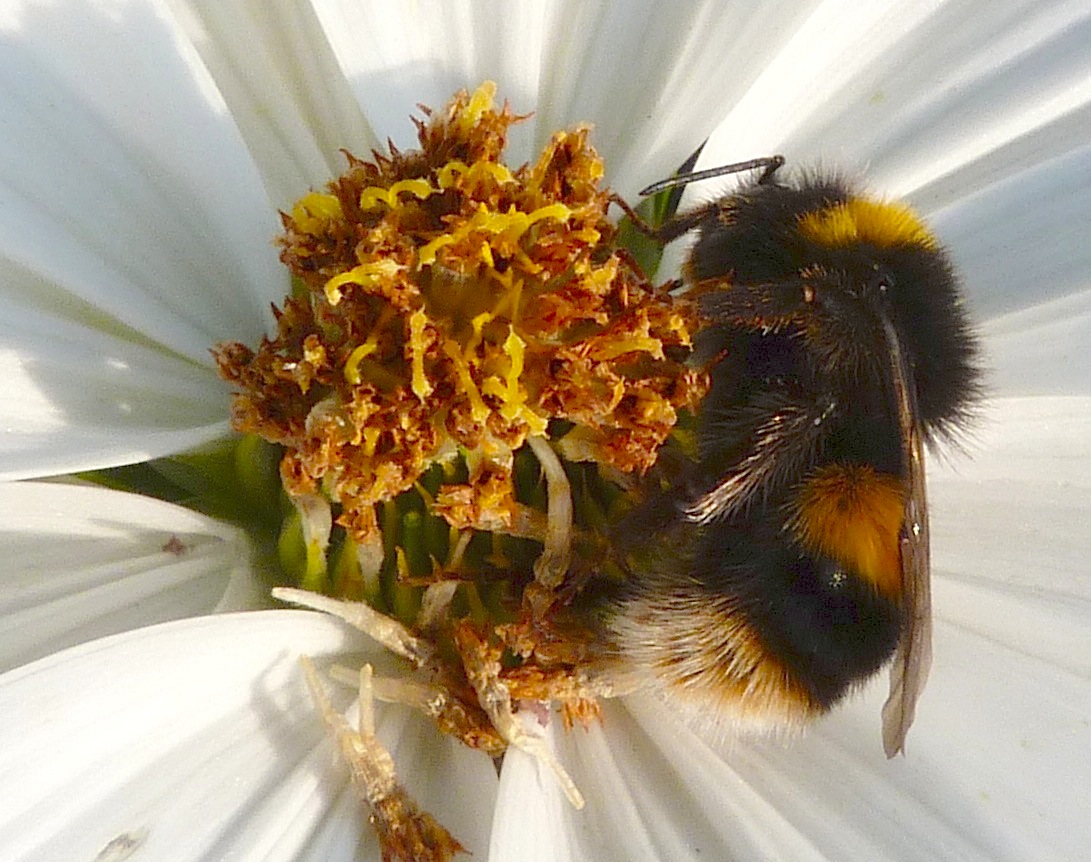


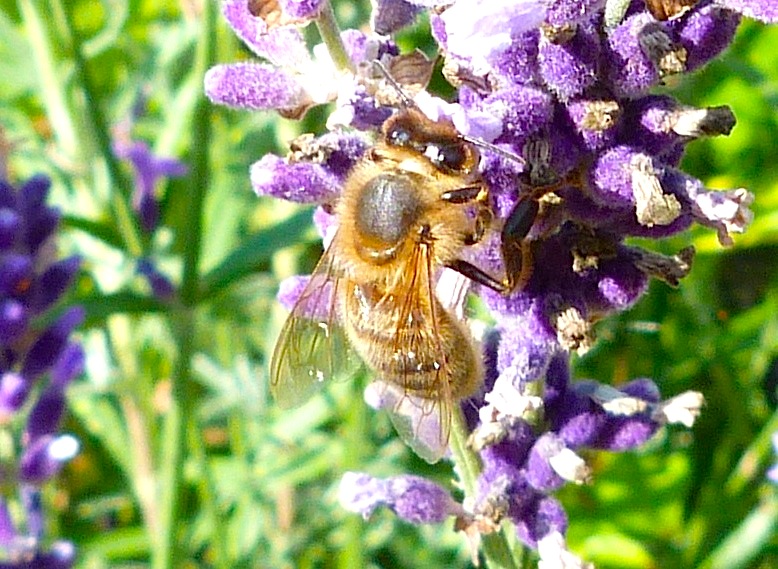

This plant at Oxburgh Hall, Norfolk was a magnet for small bees. We watched them come and go, filling up their little saddlebags. Photos of bees in flight don’t often work well. These are no exception. Still, they do catch the general bizzyness of the proceedings. The plant was lovely, not one we knew. Another new bee plant find for the year, along with Hyssop.
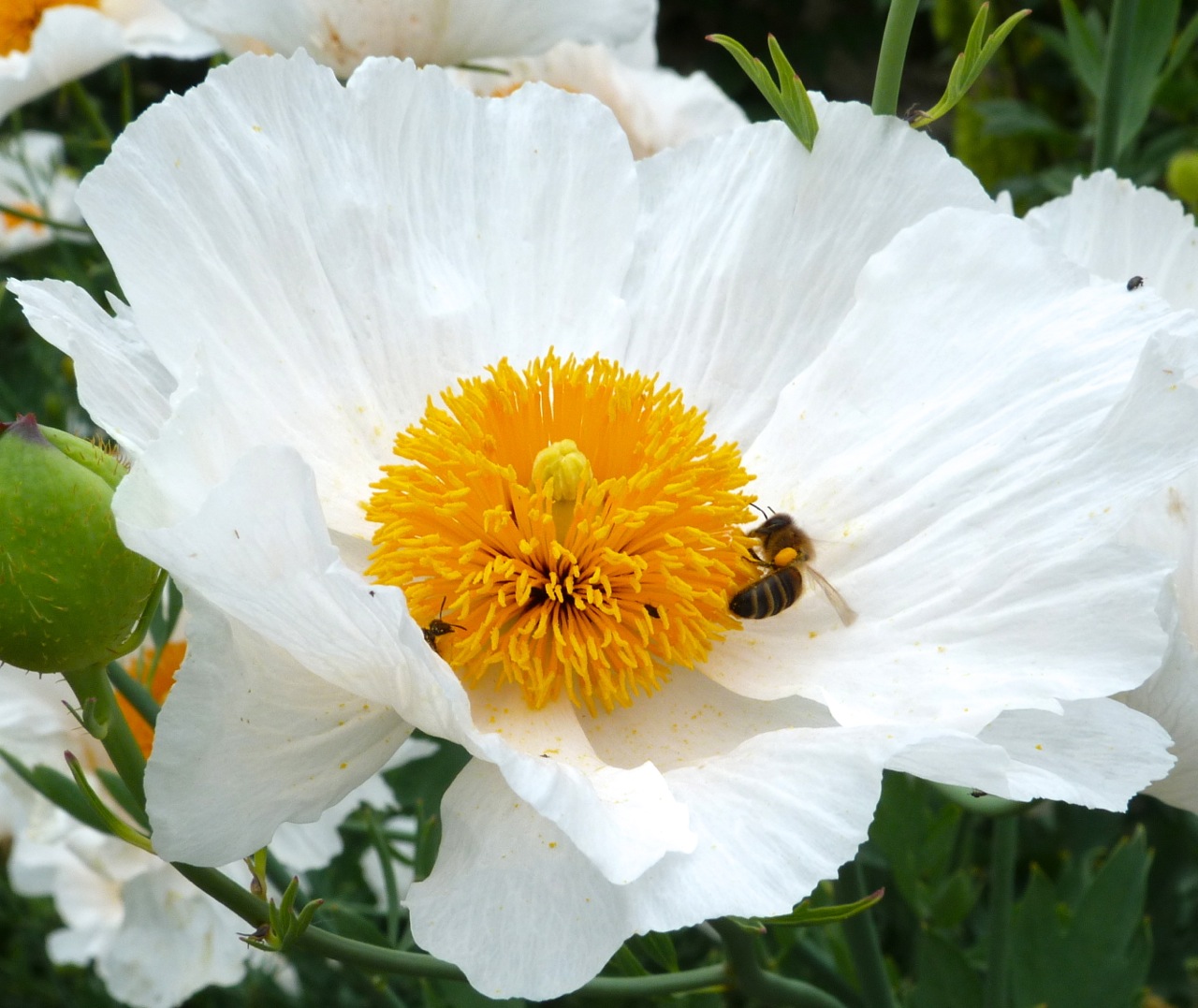

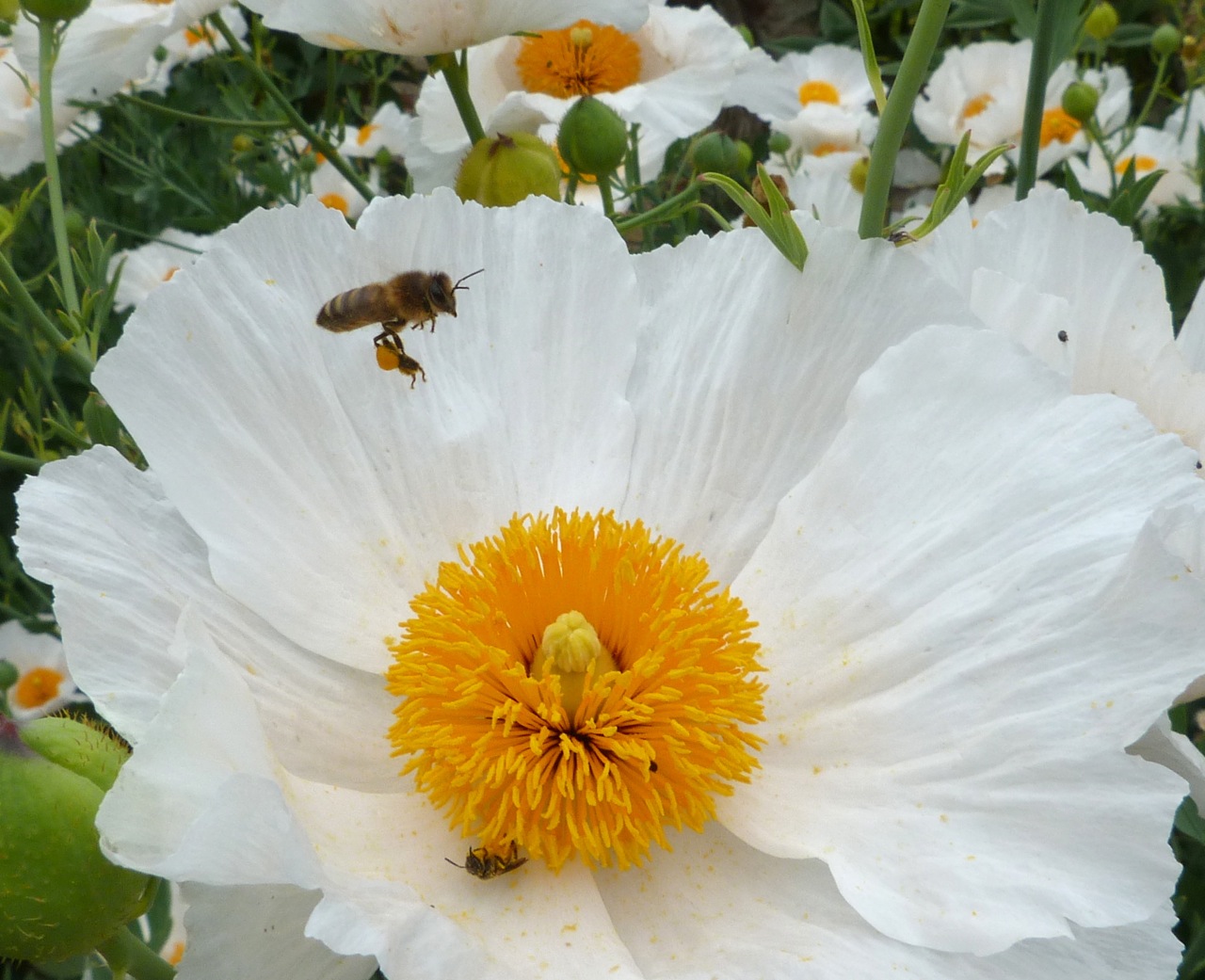


The bees are working overtime as a chill spreads over September and winter downtime looms for them. So busy are they that there is competition for individual flowers – even though there are more than enough to go round. Bumbles were out in force yesterday, and there are still butterflies around, mainly tiny Small Coppers and Whites of different sizes.
We’ve done a quick assessment of plant popularity this spring and summer that produces this league table:

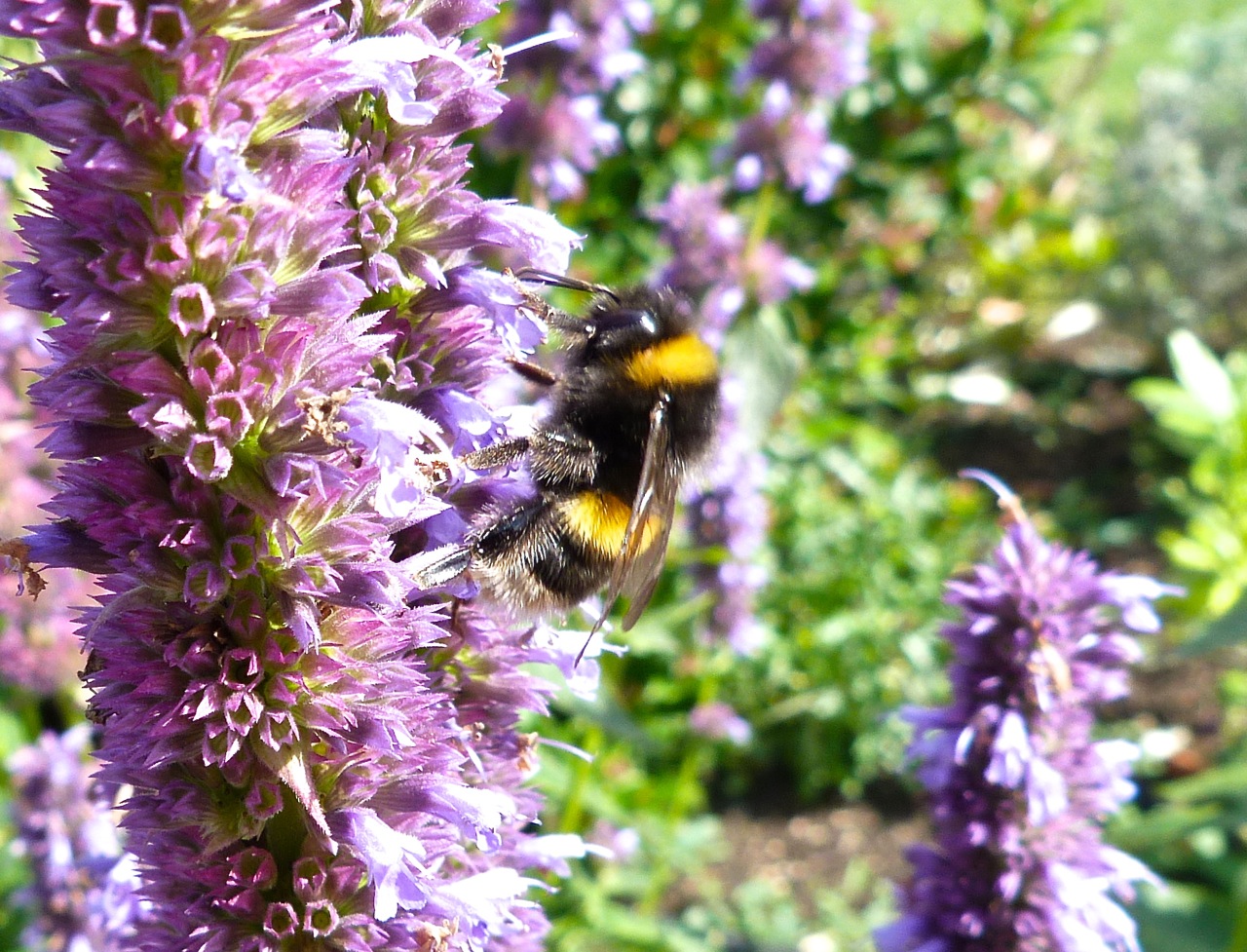


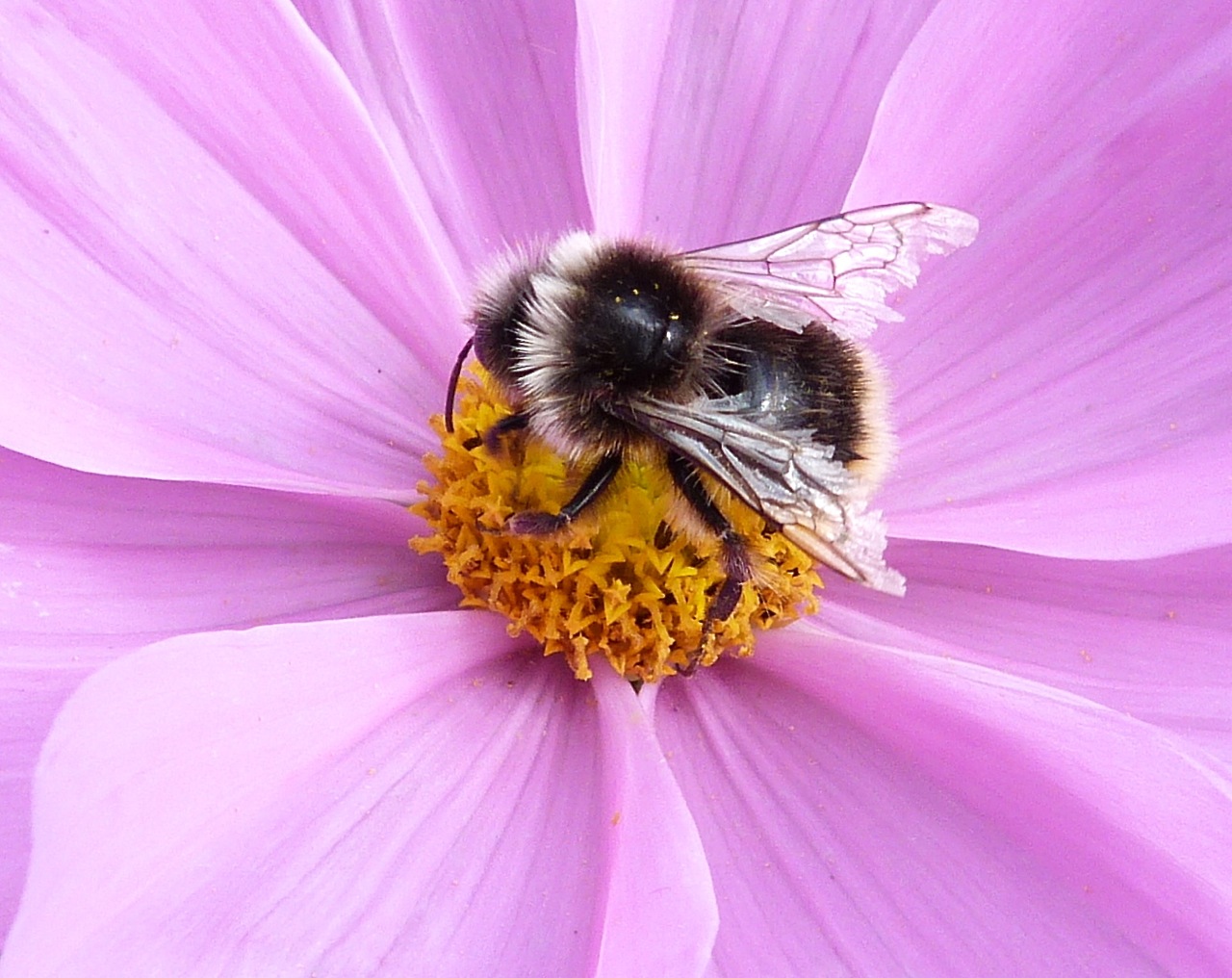

 Blurry, I know, but the intruder arrived from nowhere as I pressed the button… Why it didn’t land on one of several vacant flowers next to this one, I have no idea. Maybe fighting drunk on pollen?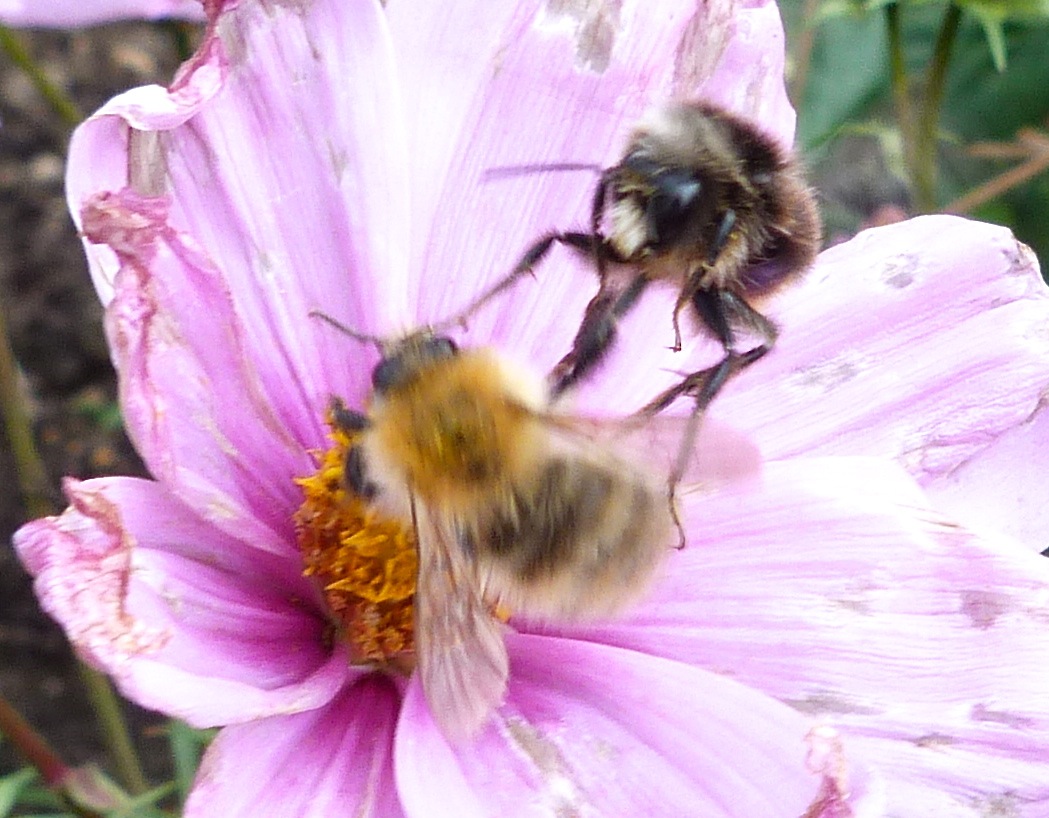
 ROLLING HARBOUR GALLERY