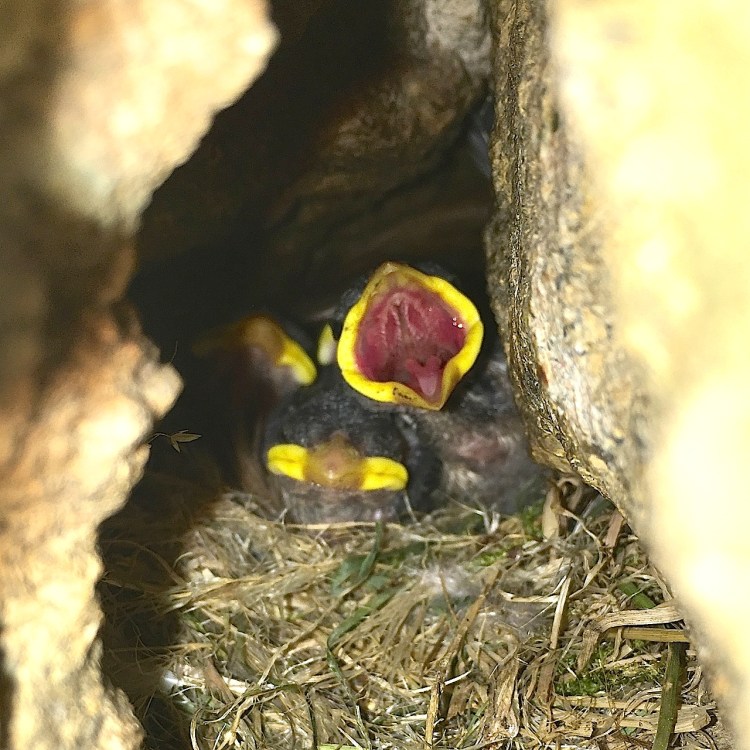
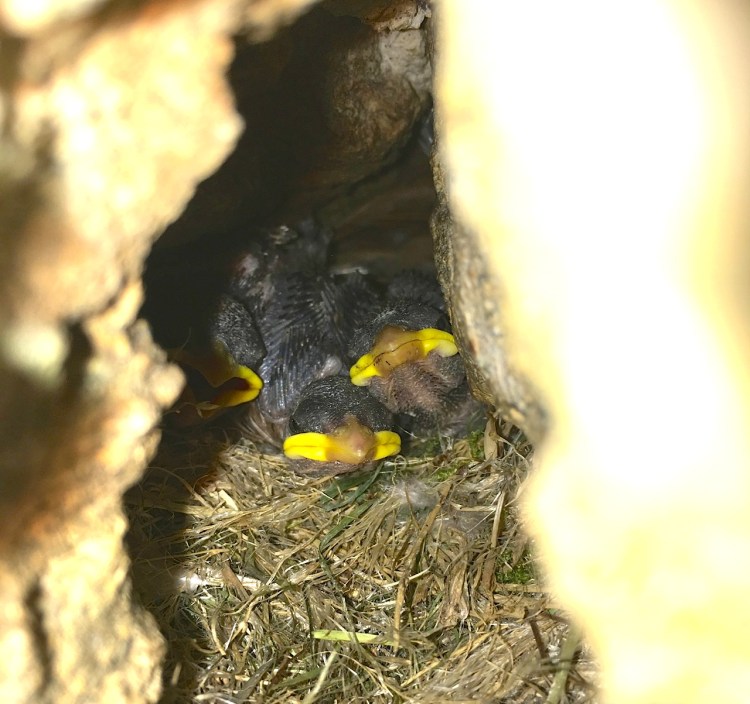
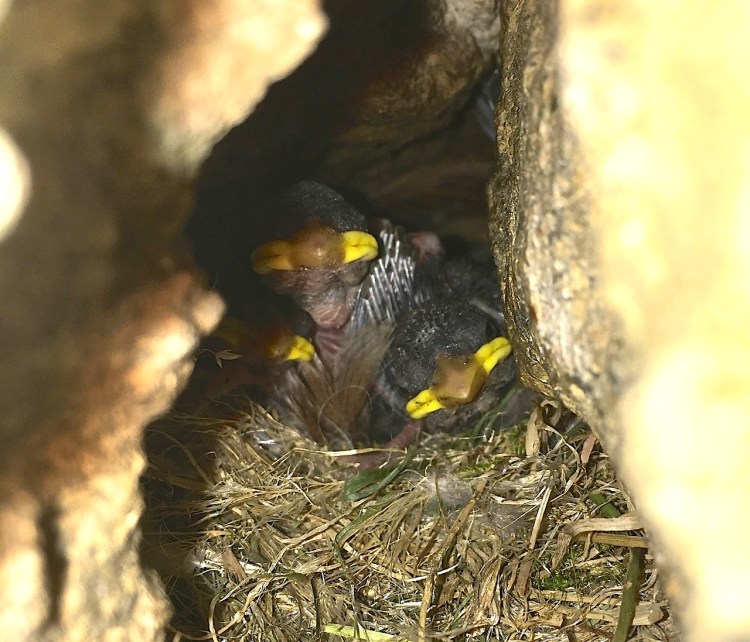
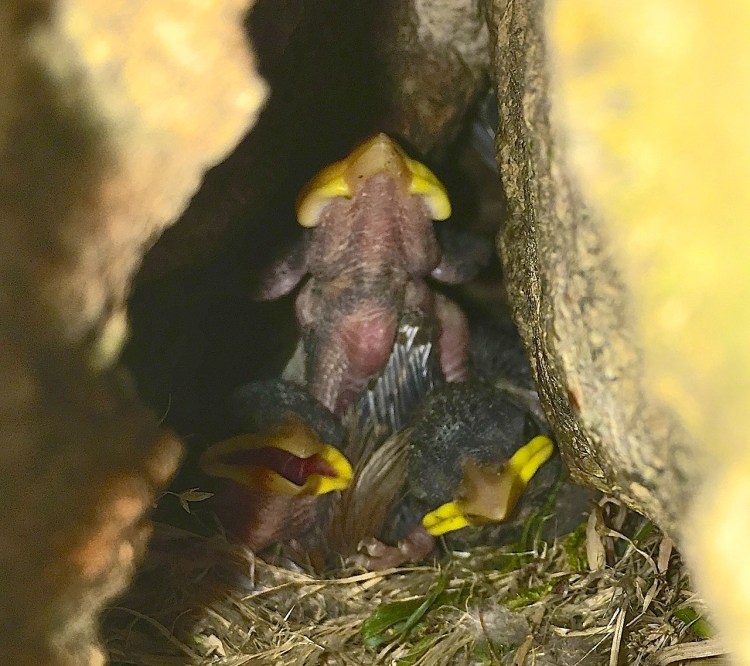
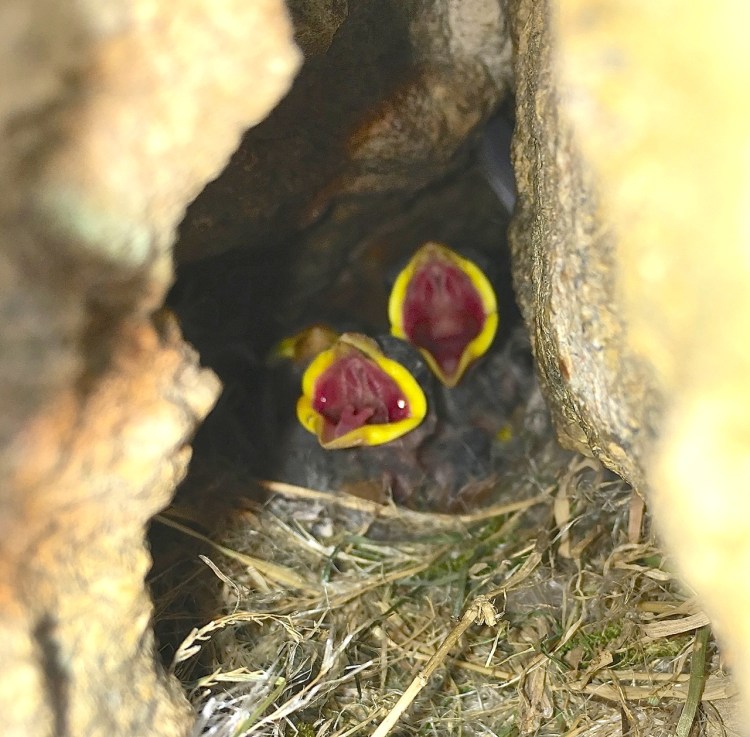
Our house provides nesting opportunities for sparrows on all sides. Somewhat ramshackle, with plenty of holes in the thick walls and under the eaves, it is perfect for the communal sparrow lifestyle. Every year we think of filling the holes, and then to decide not to. The sparrows do no harm. We’d miss them. Here are some chicks in the most easily accessible hole for photography. It is used every year, usually twice. An iPhone is best for the purpose because the flash is right next to the lens.
Author: Rolling Harbour
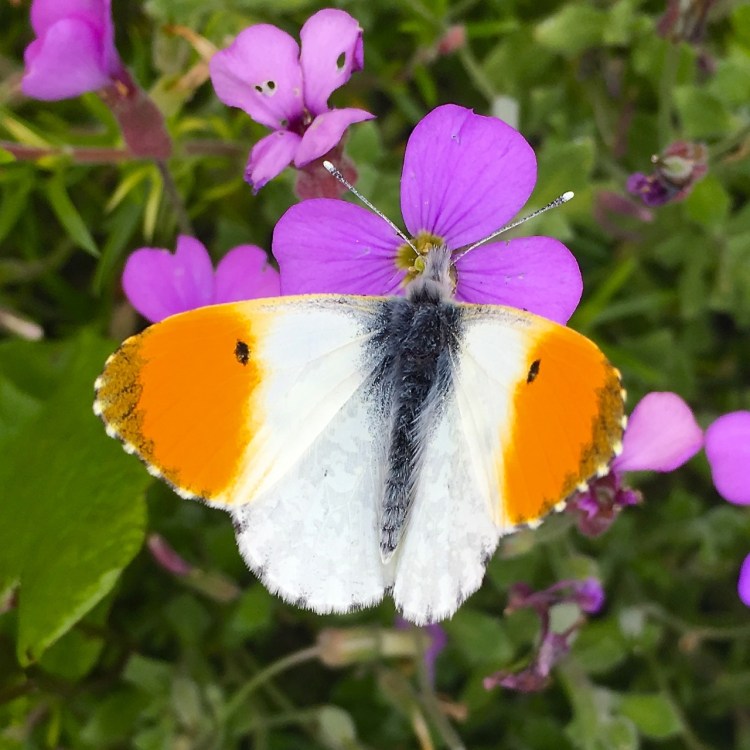
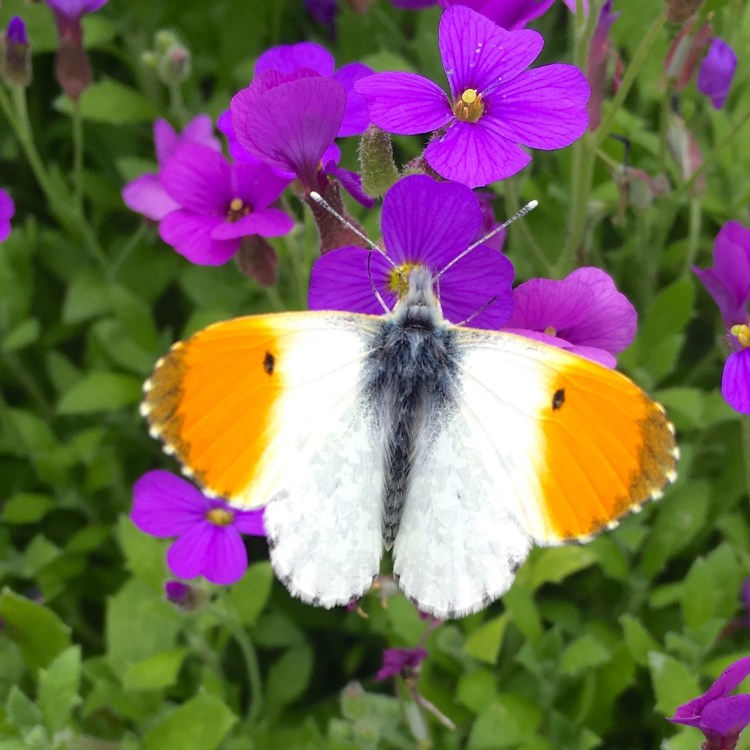
ORANGE TIP BUTTERFLY, DORSET
There’s a time and place for resorting to an iPhone for close shots. The time is when your camera is not handy – possibly 3 or 4 counties away; the place is where you are right now, when an orange tip – so often a skittish species – decides to choose a plant to land on and to stay there for a while.
The technique for getting reasonably sharp pictures with an iPhone is this: take 20 – 30 rapid shots of the subject, holding the phone at varying distances from it until you get too close and the creature flies away. This specialist process is necessary because it is impossible to be sure what the camera has actually focused on and what the optimum distance for the shot actually is. This may be a question of distance, angle or lighting – or any combination. These were the best of them – but I also got some great detailed shots of the flowers and their stems, with the butterfly a smear of orange and white.
These images are never going to make the grade in the aggressively contested photograph section of the village art and craft show (unless there’s a special iPhone group, perhaps). But they are better than I was expecting, with reasonably sharp ‘buds’, as I think the blobs on the end of the feelers are called. That’s the first thing I look at when deleting butterfly photos…

JUMIEGES ABBEY: AN ELABORATE EARLY SUNDIAL
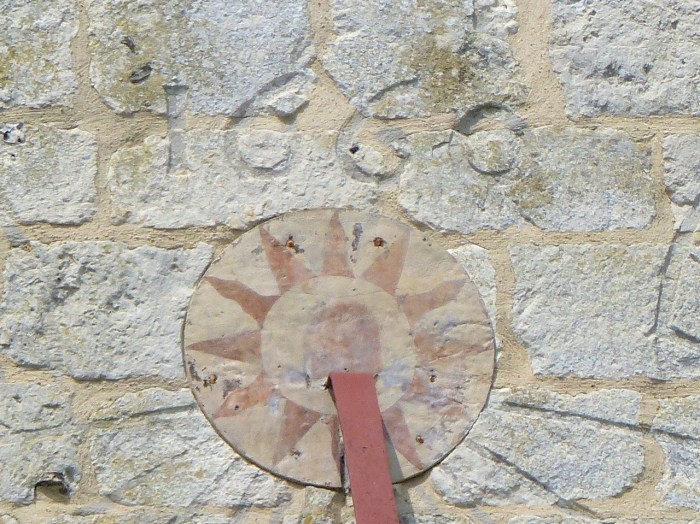
A picnic lunch at the Abbey of Jumièges, Normandy, has much to commend it – not least tranquility and a stunning view. As we sat enjoying the sunshine on our white bench, we both noticed something unusual on the nearest tower, something not mentioned in anything we had read about the Abbey. On the south wall below the 4 levels of arcaded towers you’ll see in the header image a small red item pointing down at 45º. A gnomon – and where there’s a gnomon, there’s a sundial (although the reverse is often not the case). So we went to investigate.
The Abbaye de Jumièges was a Benedictine monastery founded in 654AD. In the c9, the original abbey was burned down by Vikings, then rebuilt. A new and larger Abbey was consecrated in 1067, and it was further enlarged in the c13. Restoration work was carried out in the late c16. Subsequently, a vast sundial dated 1660 was crudely carved in the south face of the tower.
The primitive design and execution of the sundial is rather at odds with the architectural precision of the stonework and the daring of the conceit of building a hexagonal tower on two square ones, and topping it off with a circular tower… just because they could. The rustic sundial has more in common with the medieval Mass or Scratch sundials on churches, primitive devices that originally evolved simply to indicate the time of the next Mass, with the Priest moving a stick into the appropriate hole on the wall to mark the forthcoming canonical hour. From being an ‘event marker’, the addition of a gnomon and roughly scratched numerals placed higher on a church wall would later provide a community with a way to mark the hours – at least when the sun shone.
A rough medieval scratch dial above a church door near Epernay (sans gnomon)
Longburton Church, Dorset: a more sophisticated scratch dial high on the Ham stone south wall – ?c16
Returning to Jumièges, here is a closer look at the sundial, with embellishments that seem to have been carved freehand and endearingly ineptly for such a splendid and august building. Yet the time markers have clearly been carved with precision. My only negative comment on this exuberant and enjoyable timepiece is the modern gnomon that looks completely out of place to me. Maybe it’s the colour that’s the problem. Or the flat utilitarian blade of metal. Anyway, without glimpsing it from our picnic spot we would never have seen that side of the tower, and we would have missed an unusual treat.
All images: RH
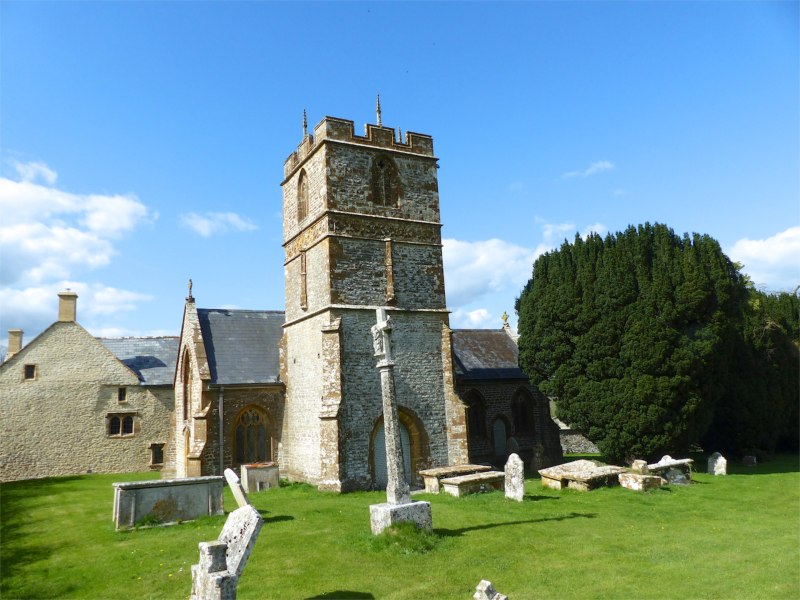
ST MARY’S, MELBURY BUBB, DORSET: A “SINGLE-TREASURE” CHURCH
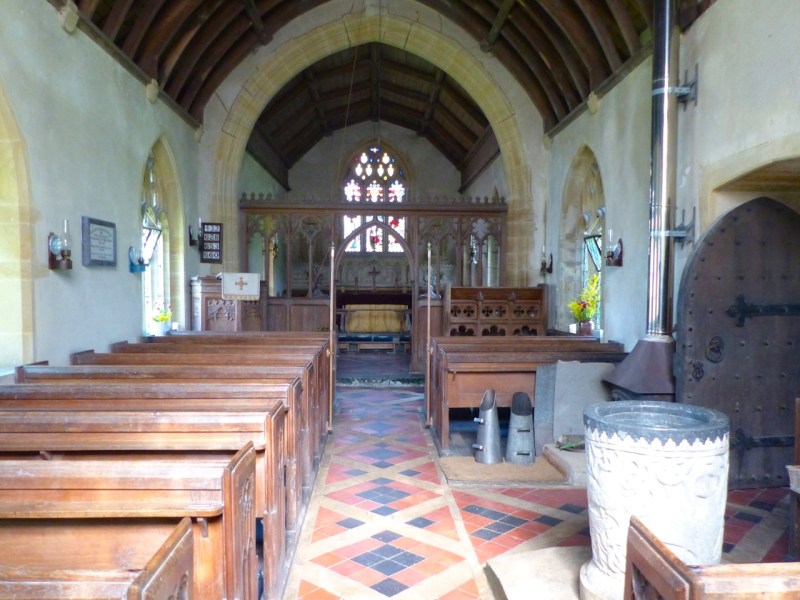
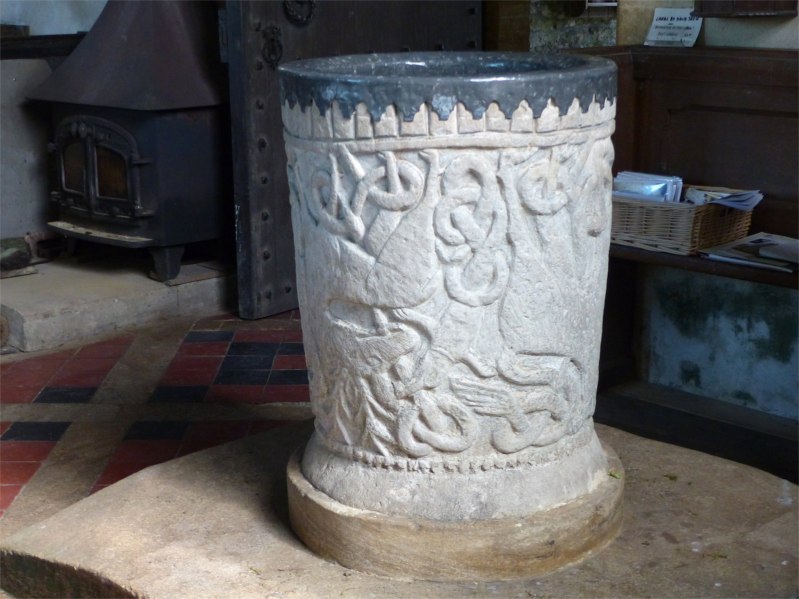
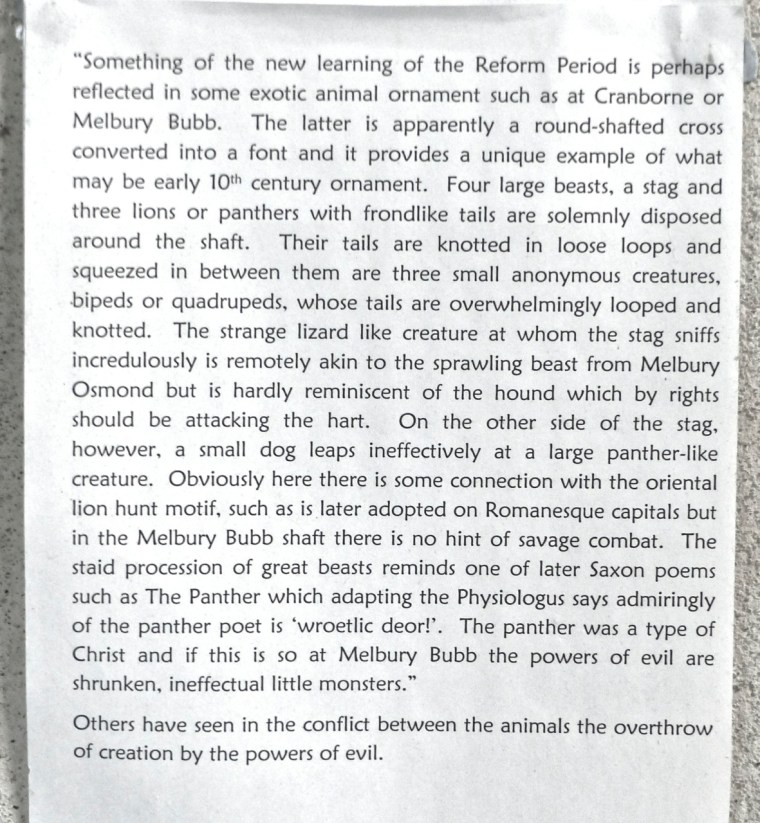
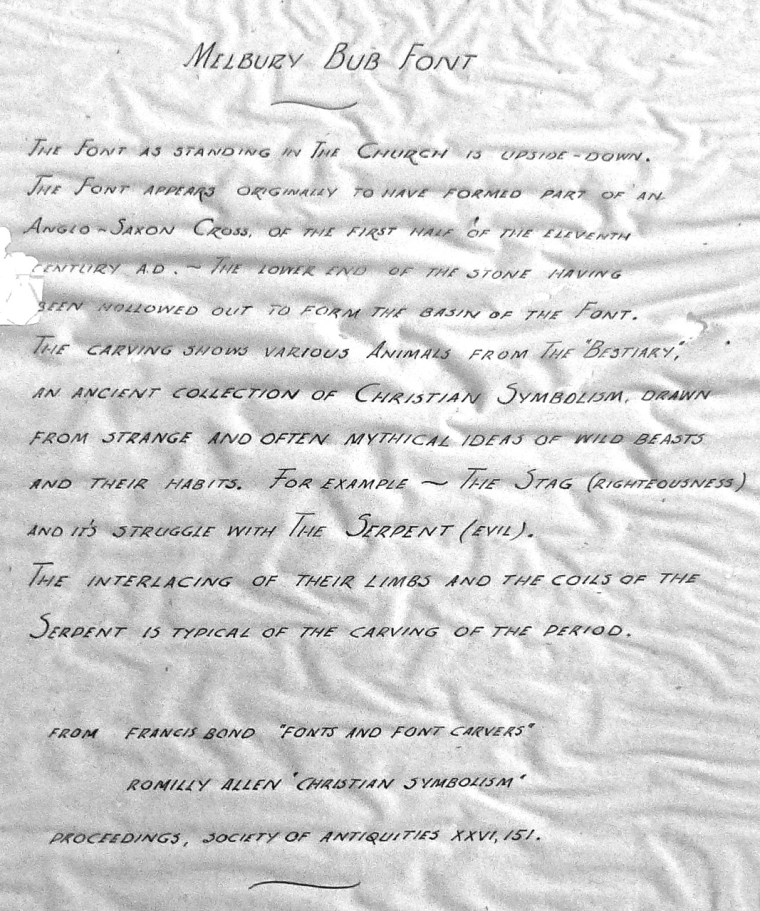
St Mary’s Church in Melbury Bubb, Dorset stands on a hillside deep in Hardy Country. In The Woodlanders, the hamlet is called “Little Hintock”. The little-known church contains a particular pre-conquest treasure – a well-preserved c10 Anglo-Saxon font of great beauty and intricacy of carving. Simon Jenkins calls St Mary’s a “single treasure church” and praises its extaordinary “lack of pretension”. This remains one of the few un-electrified Dorset churches, with oil lamps for light and a coal-fired stove in the nave for warmth. The solitary church at nearby Hilfield is another.
The interior has a carved wood rood screen and wooden ‘waggon’ roof. The stove and oil lamps are visible.

THE FONT
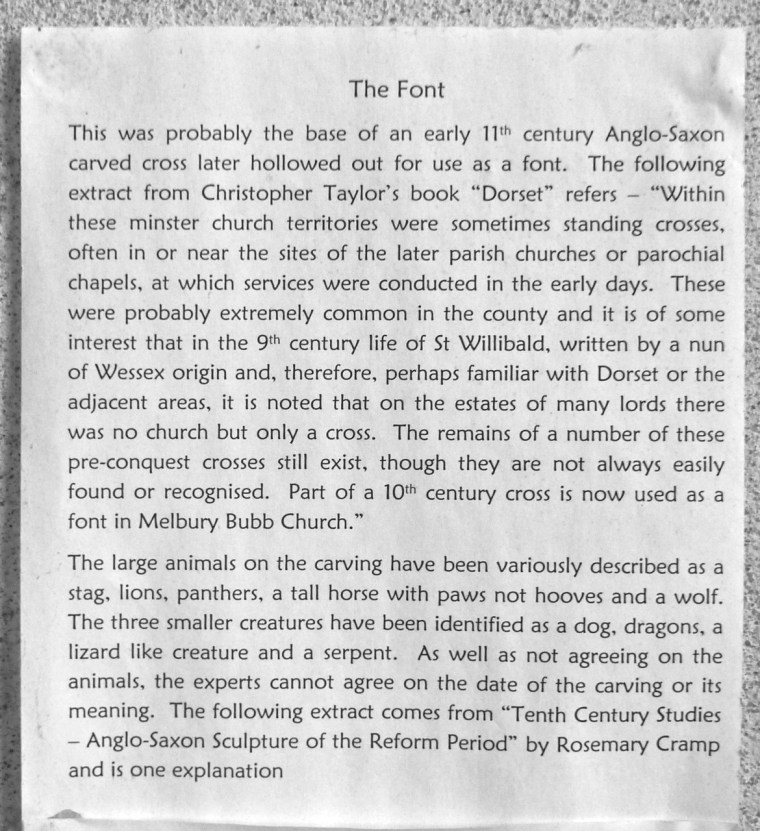
A quick glance at the font reveals that it is in fact upside down. The theory is that it is carved from the upturned base of a Saxon cross, perhaps a “preaching cross” that presumably predated the original early church building as a place of congregation and worship. The carvings appear to depict – possibly – a lion, a wolf, a horse, a stag, a dolphin or porpoise, and a couple of smaller creatures. It takes a bit of a leap of imagination, and of course the beasts may even be mythical rather than representational. However, the helpful memorial frieze on the wall certainly makes tentative identifications easier without having to crick one’s neck unduly. I thought I’d detected a fish of some sort, but it turned out to be an upside-down animal haunch… I have included photos of the documents that are on the wall by the font, which give additional information and historical interpretations about the “single treasure”
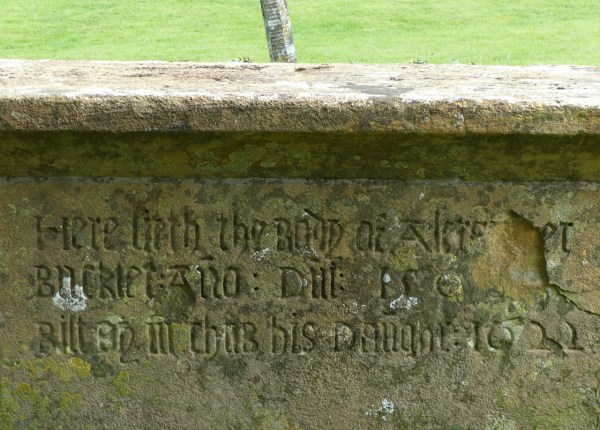
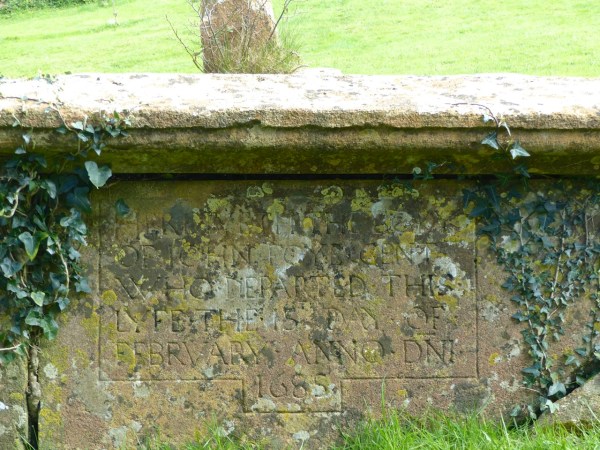
Two c17 tombs in the churchyard

Credits: all photos RH; light-touch research from church documents and Simon Jenkins ‘Great English Churches’
THE APIAN WAY IN NORMANDY: THE ULTIMATE BEEHIVE?
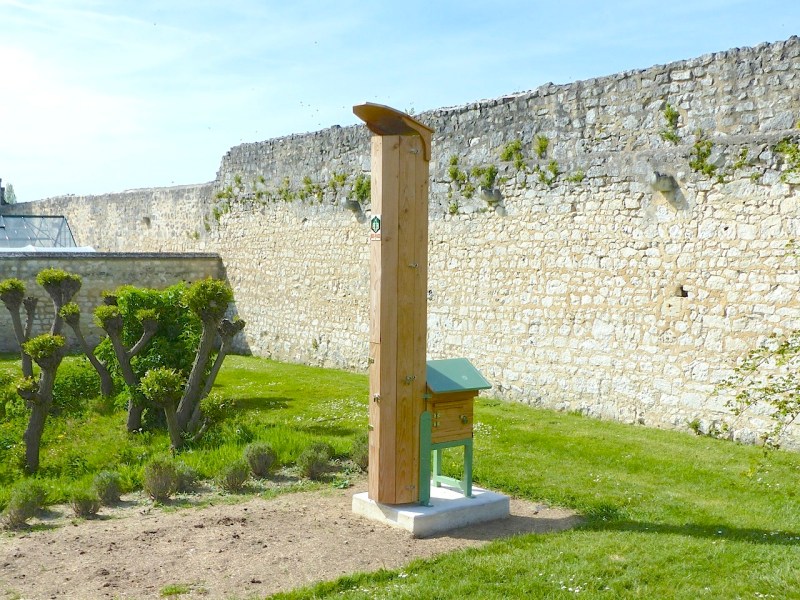
St Martin de Boscherville is a small town – more of a large village – quite near Rouen, but a world away from the bustle of the city. In many ways, it is much the same as any similar French rural community 30 or more years ago. Set in an agricultural landscape in a loop in the Seine, it has the familiar small shops for provisions, the cafe / bar, some old houses and barns, some neat modern houses and… a magnificent early Norman abbey, St Georges. It was largely spared from revolutionary destruction by being designated the parish church, as it remains today. There’s more to be written about the abbey, a favourite of artist John Sell Cotman during his Normandy tours.
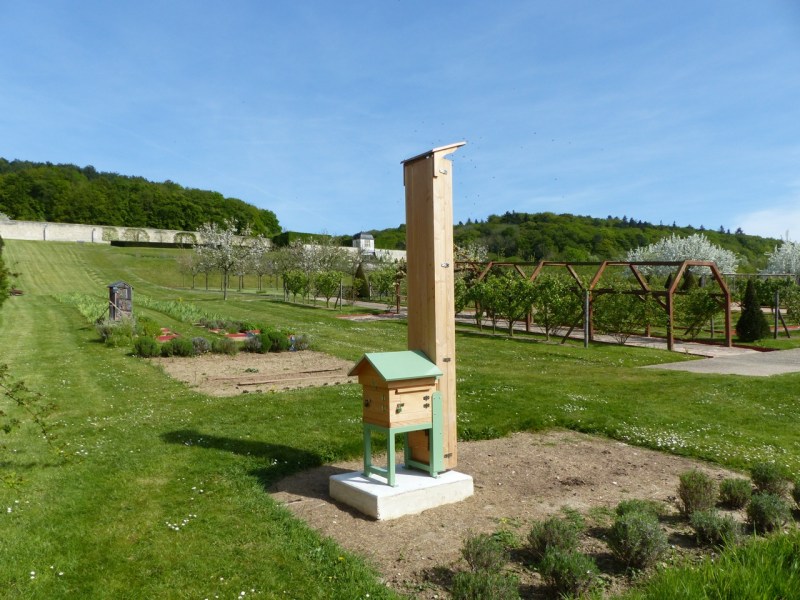
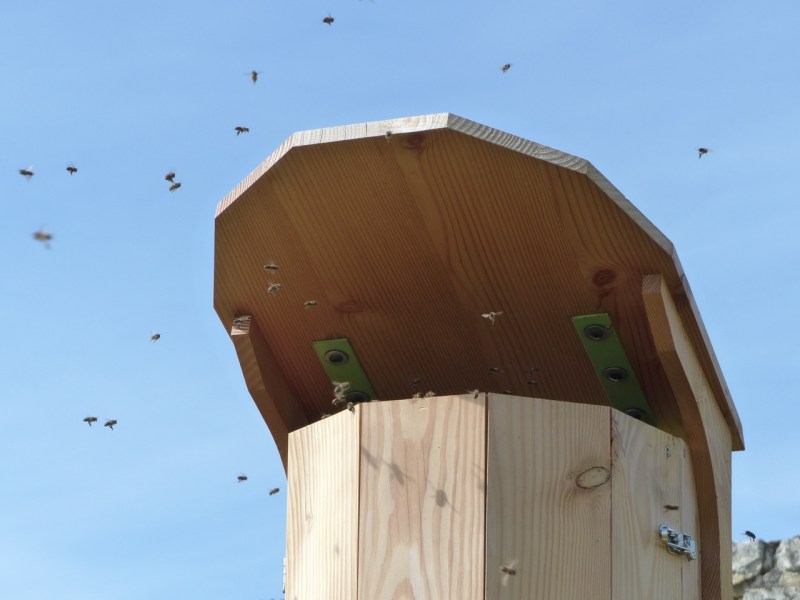
The gardens are being – have been – restored, if not to their former glory at least to an impressive standard, with well-ordered flower beds, vines, herbs and fruit trees – staples of the medieval way of monastic life. And a hive. A truly splendid ‘Bee Pass’ chimney hive that stands impressively tall. Each facet has one or more doors for access to the innards. I have posted videos below that show the workings of this unusual hive rather better than I can describe them. These hives have been installed in a number of locations in France – not least the Chateau de Chenonceau – and Germany. I’ve no idea if there are any in the UK yet, but if not, there ought to be…
Click HERE to go to the ‘Abeille Avenir’ website
Click HERE to reach the ‘Abeille Avenir’ Facebook page
All photos: RH
GIVERNY: IMPRESSIONS AND REFLECTIONS
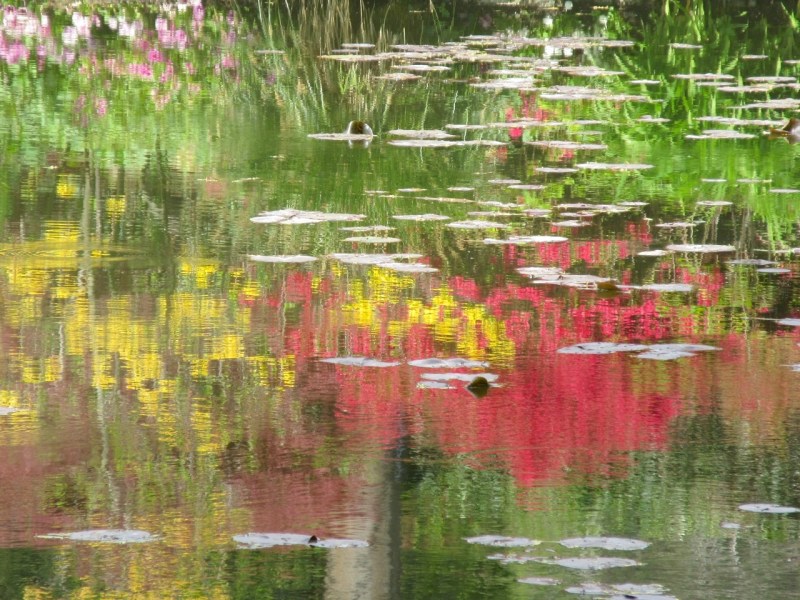
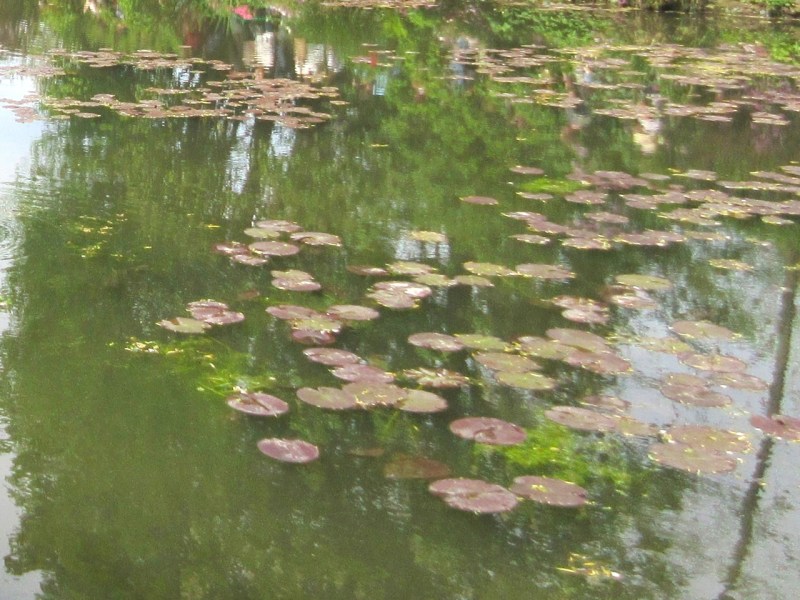
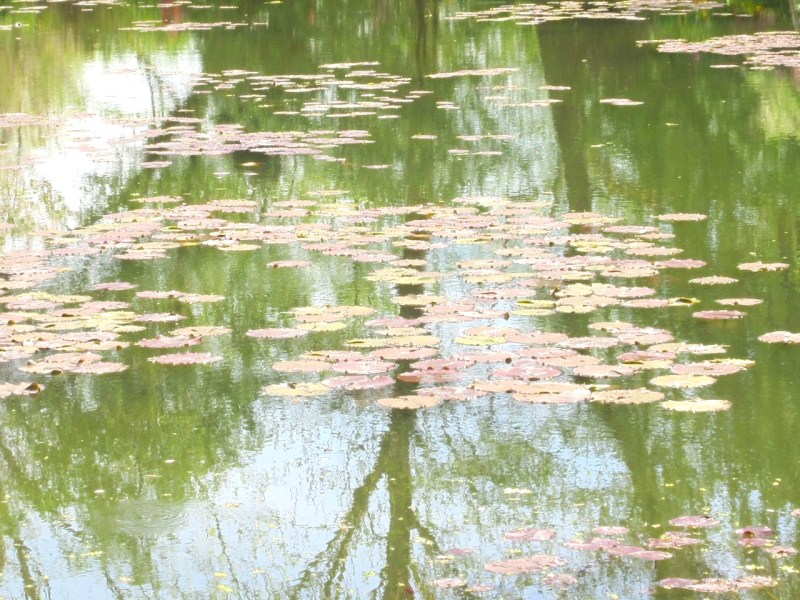
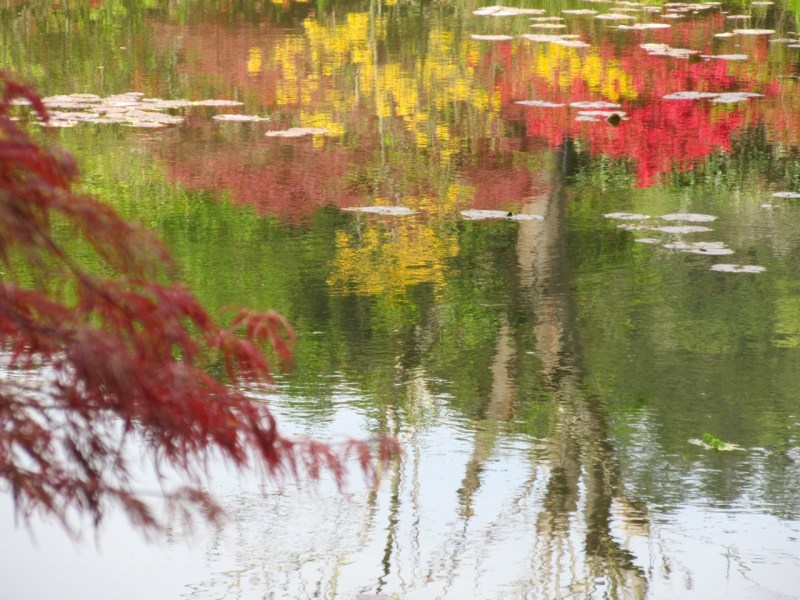
Many visitors, as they shuffle in a slow queue around Monet’s beautiful lily pond at Giverny, will have noticed a congruence between the reflections in the water and the painted impressions of the scene by an ageing artist with failing eyesight. A few will have decided to see if photography can produce an effect reminiscent at least of the great paintings. Mrs RH is one such, and these are all her photos taken a few days ago.


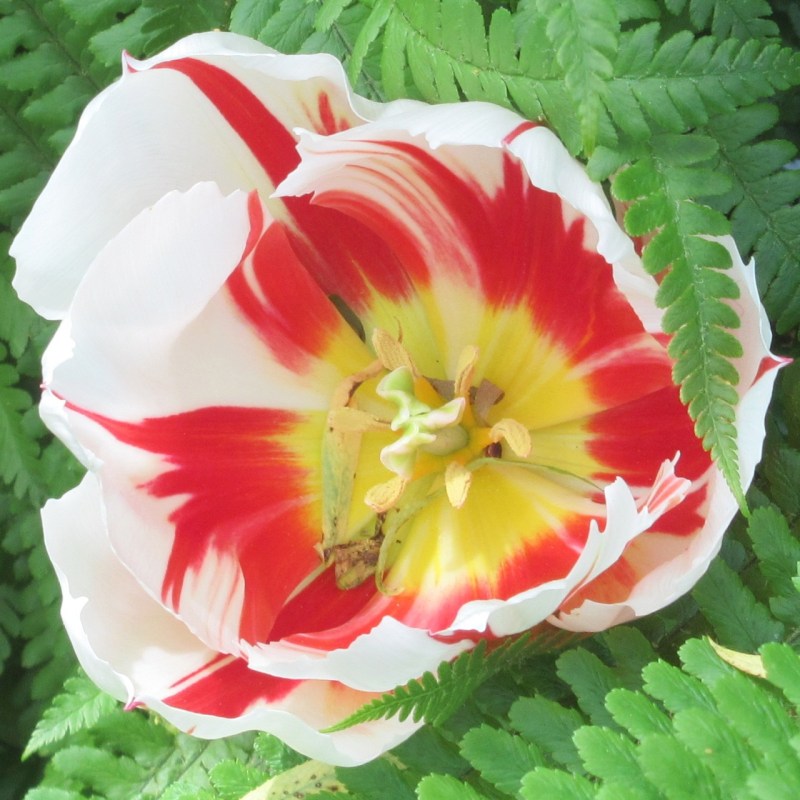
Mrs RH also had the perfect opportunity to channel her inner Georgia O’Keeffe…
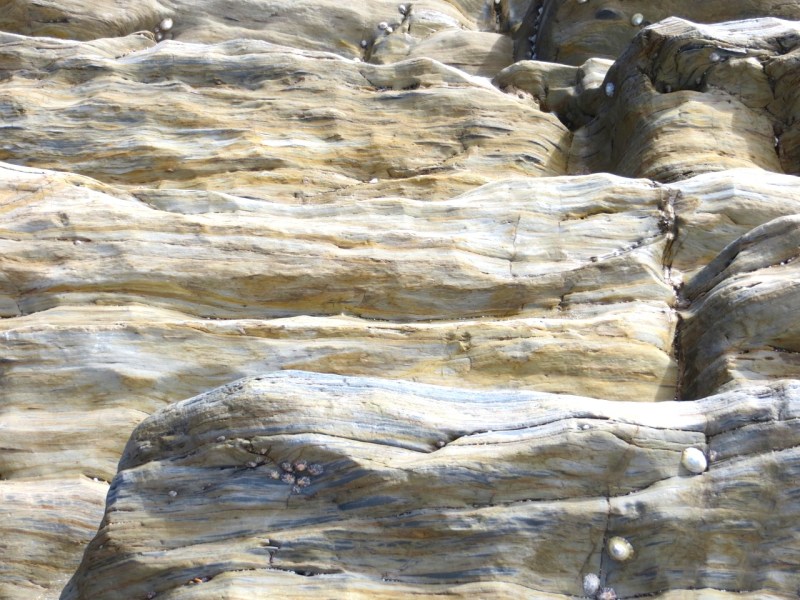
ROCK FORMATIONS AT THURLESTONE, DEVON (2)
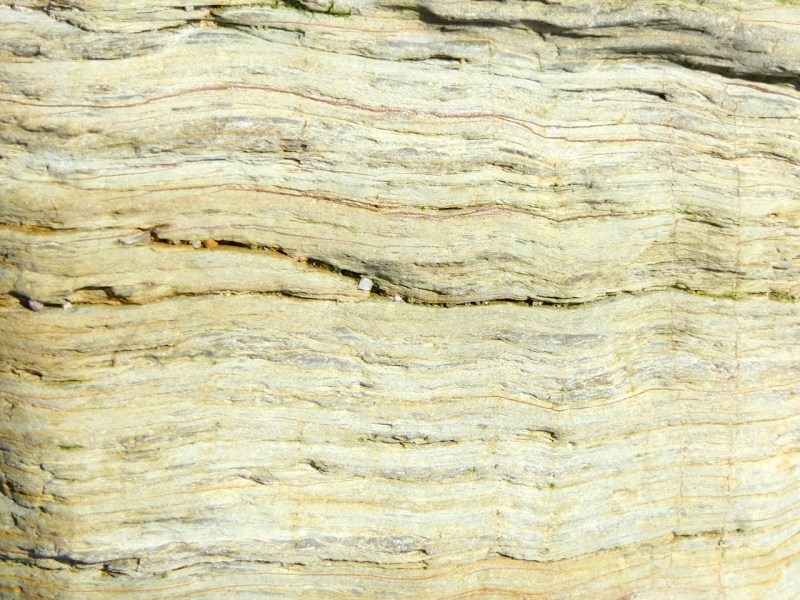
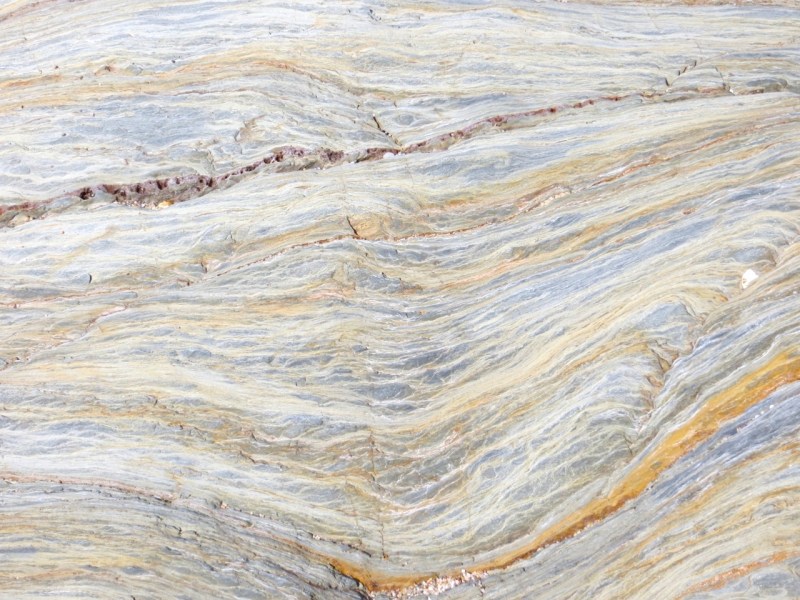
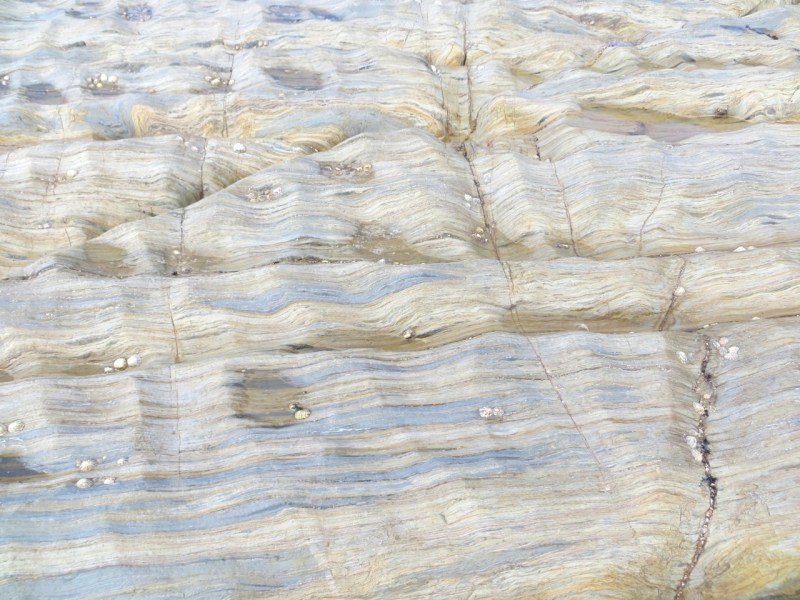
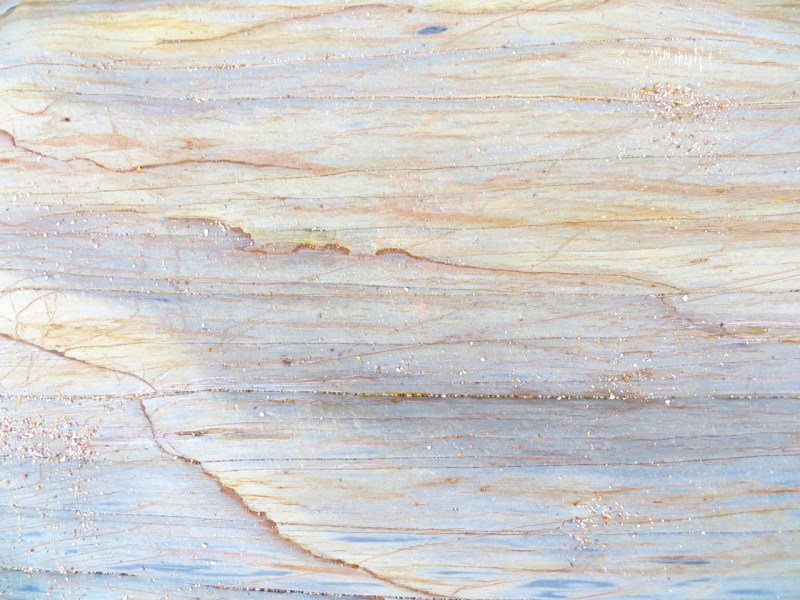
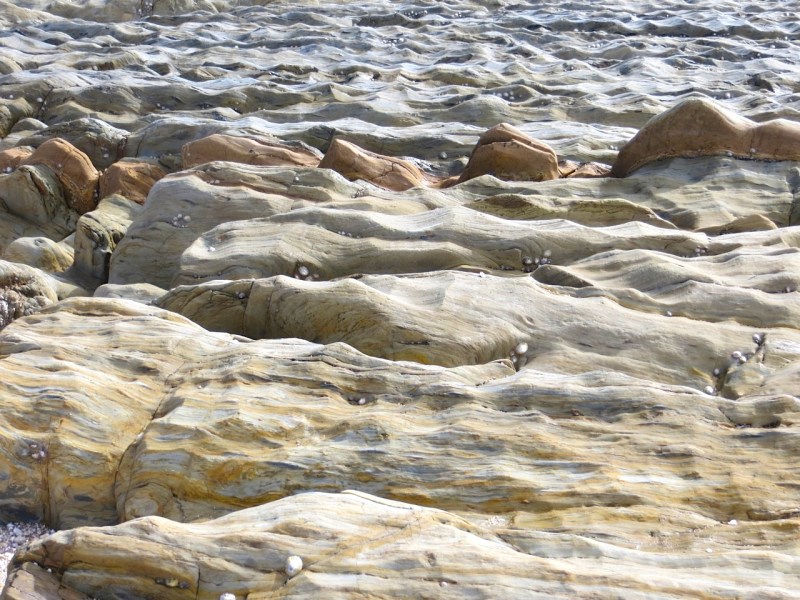
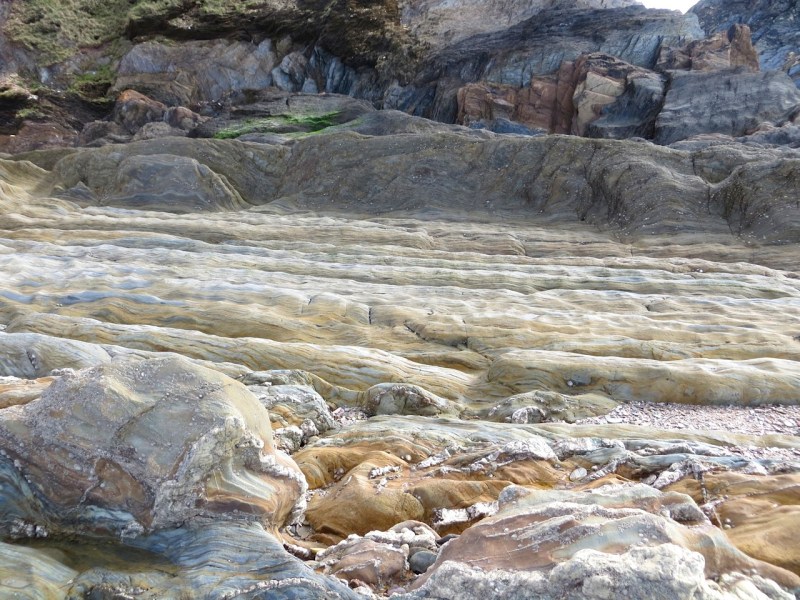
Following on from the wider views of the rocks at the east end of THURLESTONE BEACH, here are some close-up views that show the wide colour and texture variations over a relatively small area.
Thanks to Jessica Winder for confirming that the Jurassic Coast does not extend as far as Thurlestone, and ends in the Exmouth area.
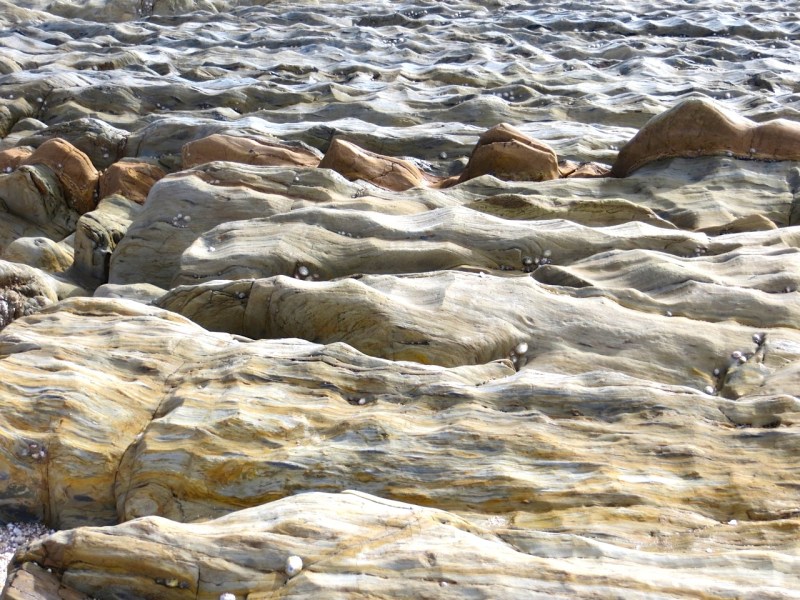
ROCK FORMATIONS AT THURLESTONE, DEVON (1)
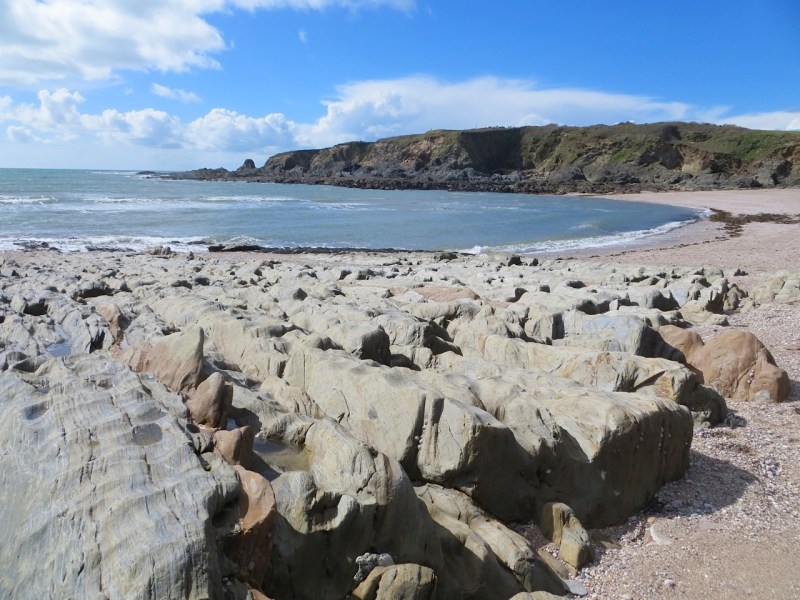
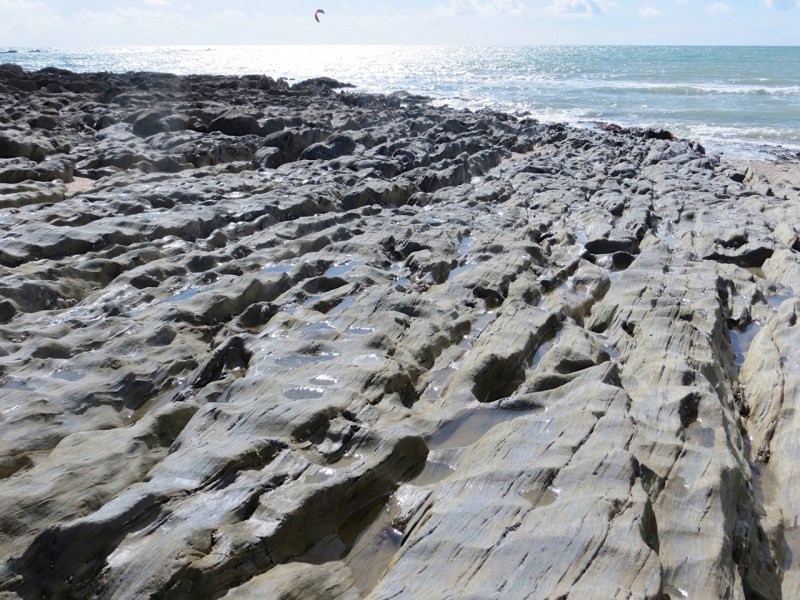
A long weekend spent at Thurlestone, Devon for a family event – a cheerful one – meant time to explore an unfamiliar area. And the rocks on the beach were quite unlike any we had seen before; certainly unlike anything on our part of the Dorset coast, 100 miles or so to the west. So I took some photos. Having no geological knowledge, I can’t say if this is part of the real – or even the flexibly tourist office-defined – “Jurassic Coast”, but I suspect not. Here are some of the strange bumpy many-hued formations.
CHINESE NEW YEAR AT CHISWICK HOUSE
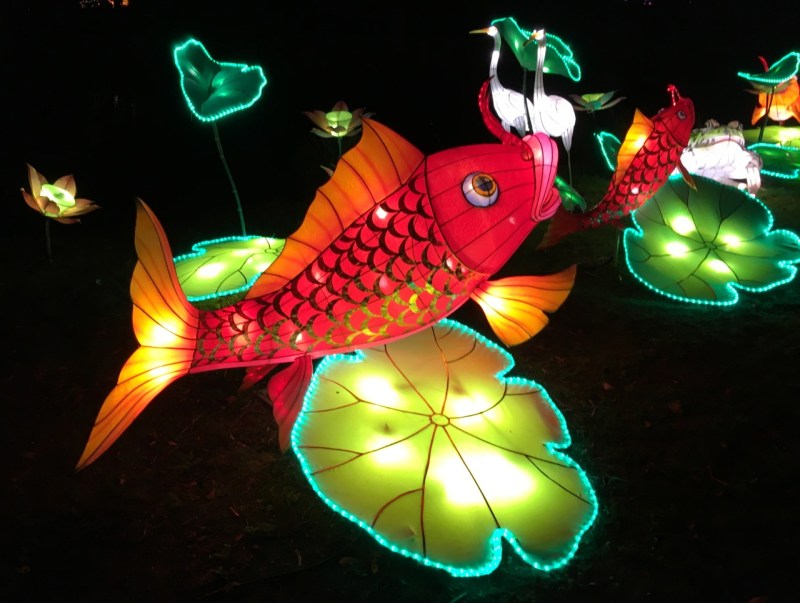
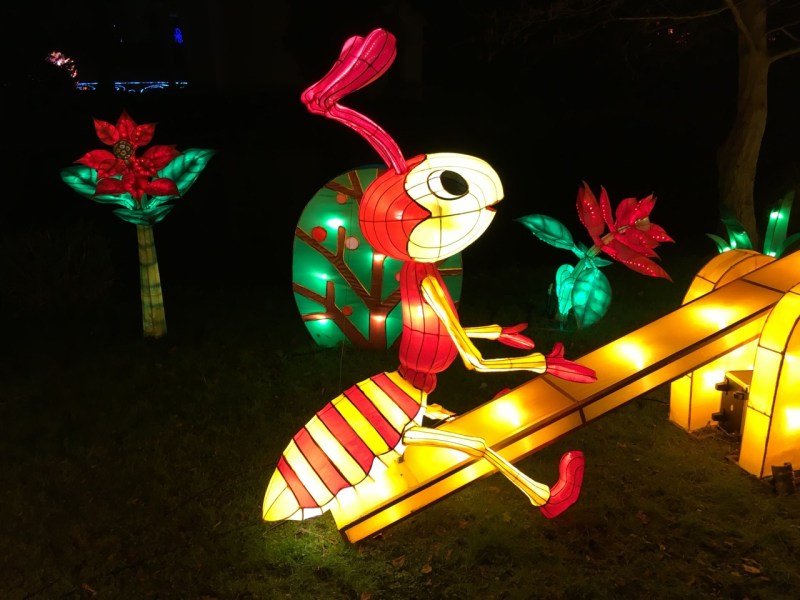
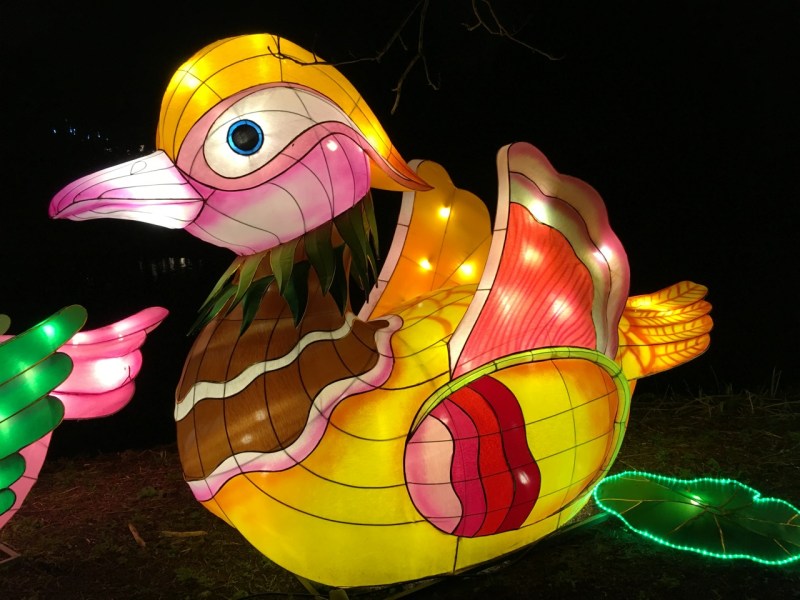
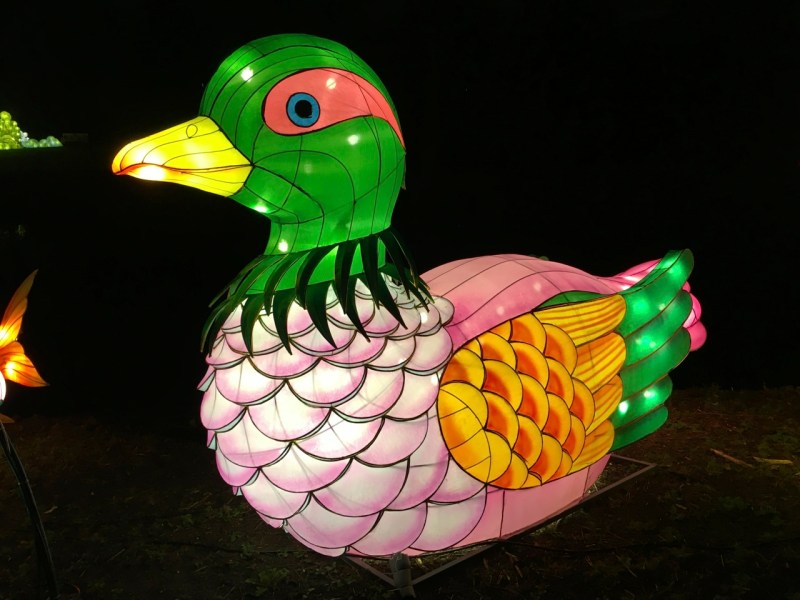
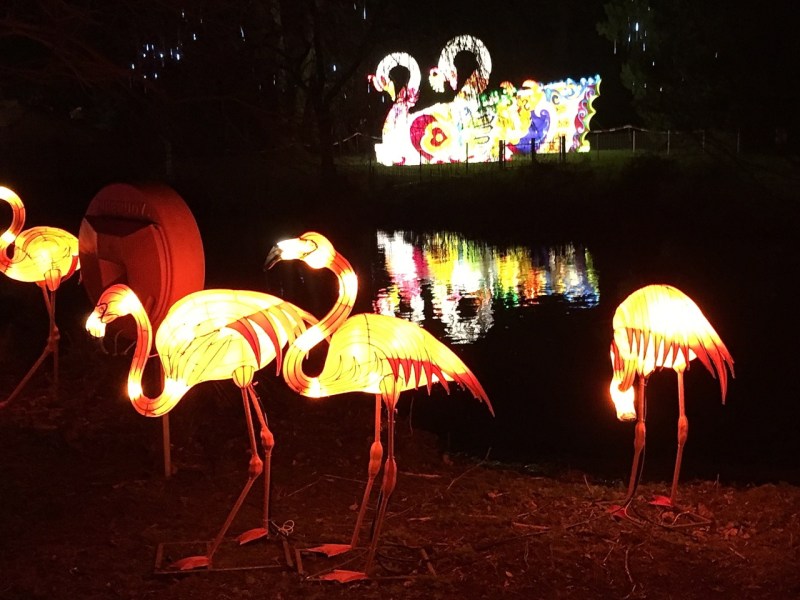
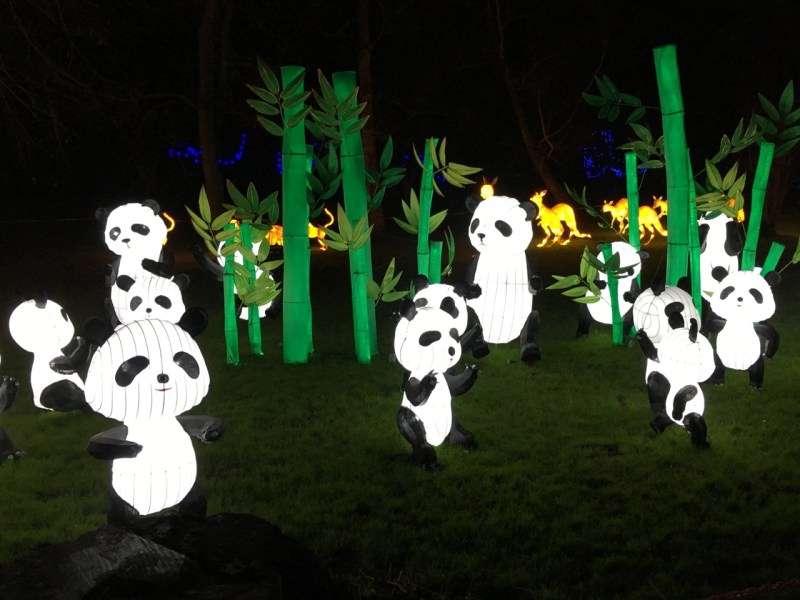
Chinese New Year was celebrated at Chiswick House with a spectacular display of large and colourful inflatable animals from around the world. The same display had previously been used at Longleat. We watched them being installed; and once the event had been opened, it was the perfect place to take children as night fell.