PENISTONE: THE BRAND NEW ‘MEDIEVAL’ MARKET HALL


Cruck Market Hall, Penistone Yorks (Keith Salvesen)

The historic market town of Penistone, South Yorkshire, lies in the foothills of the Pennines, in a farming area with its own rare breed of sheep. Records of the sheep market date from the c17. The Grade 1 listed church has a mainly c14 interior, with visible older origins. In the c19, the new railway brought prosperity and expansion; then Dr Beeching’s axe fell in the 1960s. The livestock market is long gone, but a general market still continues in a space now somewhat reduced by a Tesco store and car park. 

Cruck Market Hall, Penistone Yorks (Keith Salvesen)

THE NEW ‘OLD’ MARKET HALL

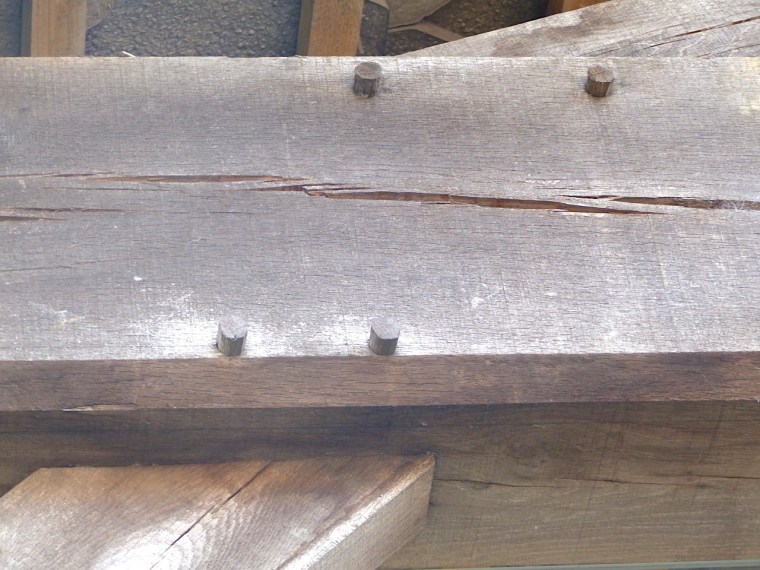
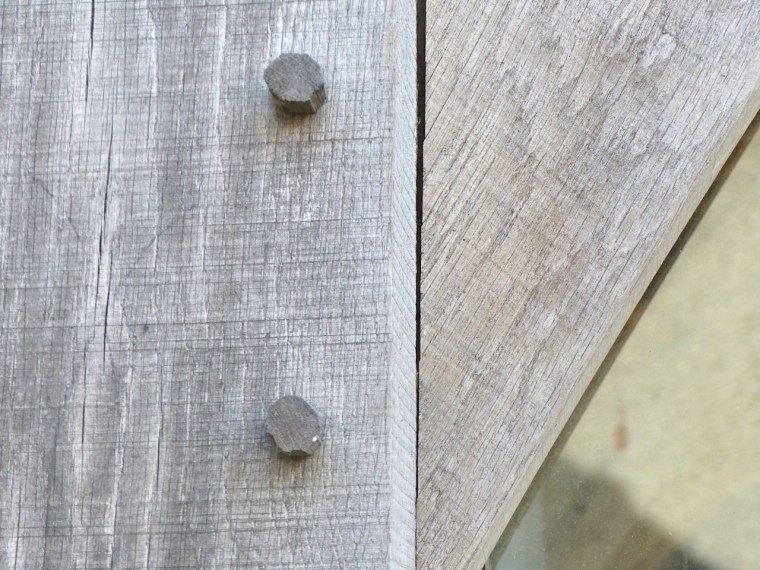
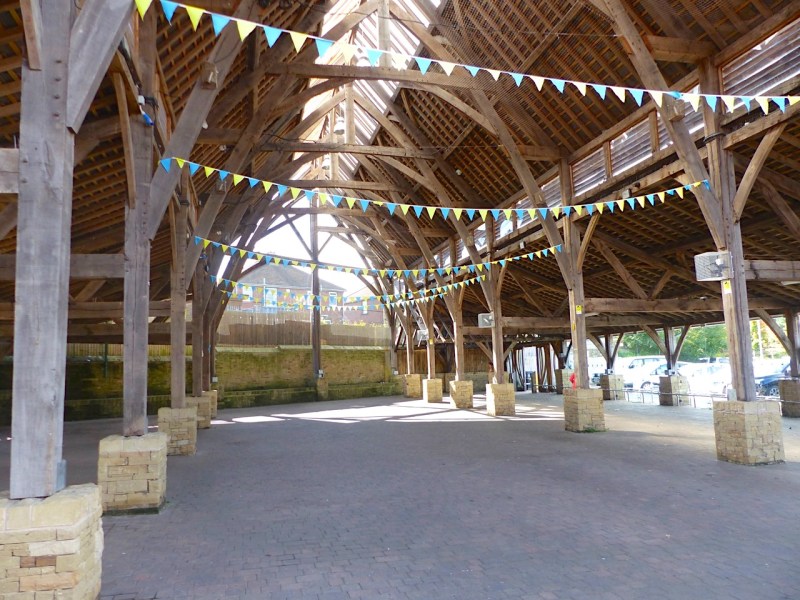
In 2011 a new and innovative building was opened in the town as a covered market hall. I say ‘innovative’, but in fact the splendid cruck building is made using techniques as old as the town’s church. Steel frame and mirror glass it is emphatically not. Built of oak by the firm Carpenter Oak of Devon, this striking building resembles a typical tithe barn of several centuries ago. The crucks, or curved timbers, bear the weight of the frames and beams that support the roof. The joints are held using stout wooden pegs. The use of such medieval building techniques in the c21 has produced a spectacular public space. The recently published Pevsner for Yorkshire West Riding includes the market hall in the entry for Penistone – and a photograph of it, an accolade indeed.

Cruck Market Hall, Penistone Yorks - wooden pegs (Keith Salvesen)

CARPENTERS’ MARKS

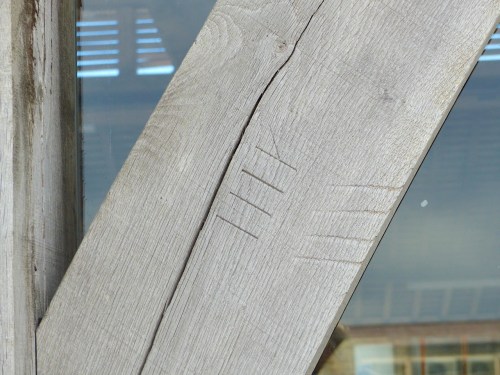
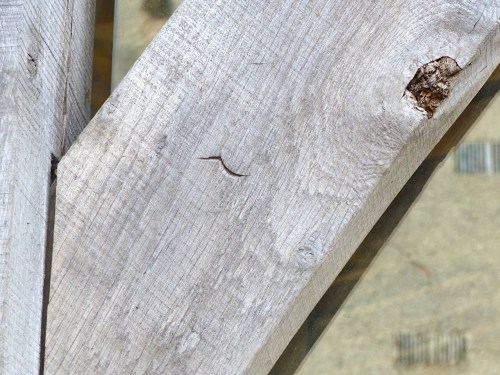
Most of the large timbers we saw were engraved with carpenters’ marks. These are traditionally used during the construction of wooden buildings. Their primary purpose is to identify the timbers, the component parts of the frame. Modified Roman numerals are mainly used. Some marks relate to positioning for joints or peg-holes. Sometimes individual carpenters will ‘make their mark’; but this is not such a common practice as it is with masons.

Examples of location markingsCruck Market Hall, Penistone Yorks - carpenters' marks (Keith Salvesen)Cruck Market Hall, Penistone Yorks - carpenters' marks (Keith Salvesen)Cruck Market Hall, Penistone Yorks - carpenters' marks (Keith Salvesen)Cruck Market Hall, Penistone Yorks - carpenters' marks (Keith Salvesen)

An interior timber denoted by a ‘roof’Cruck Market Hall, Penistone Yorks - carpenters' marks (Keith Salvesen)

A couple of different marks from the front of the hallCruck Market Hall, Penistone Yorks - carpenters' marks (Keith Salvesen)Cruck Market Hall, Penistone Yorks - carpenters' marks (Keith Salvesen)

Only one thing detracted slightly from the pleasure of this new old building. Most of the handsome oak pillars inside have already been disfigured by graffiti, much of it lewd or anatomical in the classic c21 manner…

Cruck Market Hall, Penistone Yorks (Keith Salvesen)

Acknowledgements: Carpenter Oak, Devon; Pevsner ‘Buildings of England’ series (West Riding); and a nod to Kate Rusby, well-known & outstanding folk singer, who was born nearby

AN UNUSUAL MAZE AT PAUL, CORNWALL & A VIEW TO DIE FOR


St Michael's Mount from Paul Churchyard, Cornwall (Keith Salvesen)

Paul is a small village west of Penzance, Cornwall. It sits high on the hill above its more famous neighbour, Mousehole. Paul’s historic parish church, St Pol de Léon, has origins reputedly dating from late fifth century. The medieval building was (to my ignorant surprise) badly damaged in a raid by the Spanish in 1595, several years after the Armada. Mousehole also suffered great damage in the same raid. Until visiting Paul this summer, I had no idea that the Spanish had ever managed to breach England’s defences. So I checked online and was quickly led to the BATTLE OF CORNWALL, of which I had never heard. So now I know… I hope Hispano-Kernowek relations have improved.

Paul, Cornwall: the extended churchyard (Keith Salvesen)

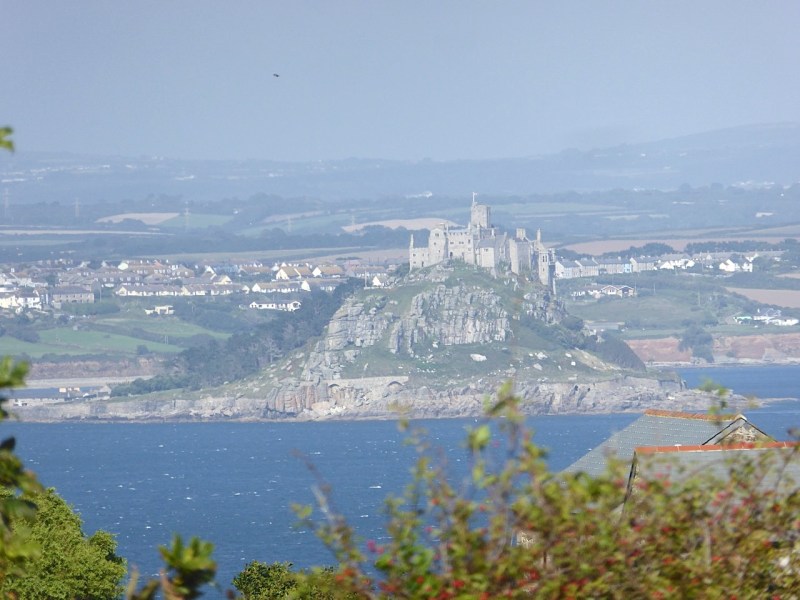
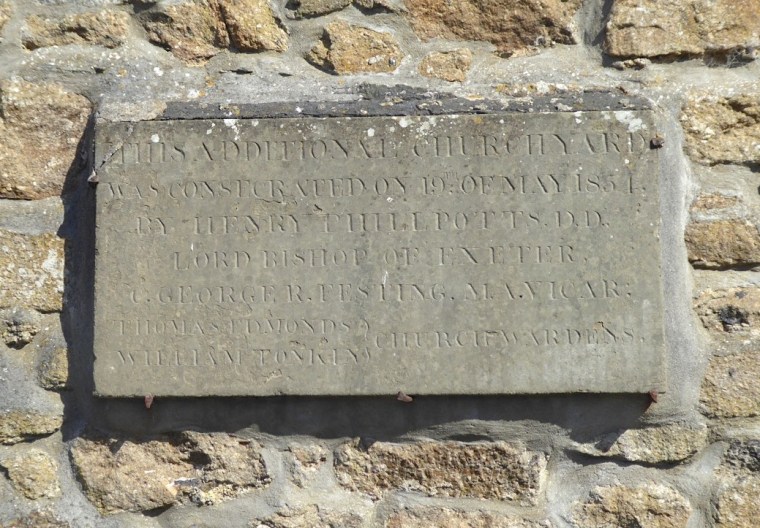
The Church merits its own post in due course. For the moment, the maze-collector in me found a different interest in a nearby extension to the churchyard. An engraved stone set into a wall, and a small diagram nearby, led me to a path and a large area of hillside with extensive views out to sea, and east towards St Michael’s Mount.  

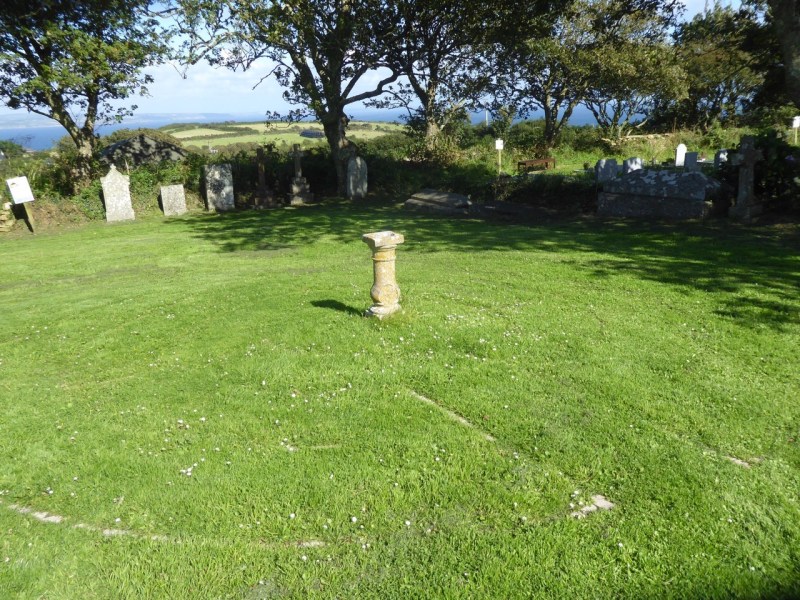
Near the more recent gravestones was a sundial; and closer inspection revealed that it was at the centre of a small, overgrown maze outlined on the grass in granite. How I longed, interferingly, to have a strimmer handy. But apart from tracing some of the pattern with my foot, I restrained my quite unreasonable urge to disclose the maze…

Paul Churchyard Cornwall: sundial & maze (Keith Salvesen)Paul Churchyard Cornwall: sundial & maze (Keith Salvesen)Paul Churchyard Cornwall: sundial & maze (Keith Salvesen)


BOX TREE MOTH: SEEK AND DESTROY…


BOX TREE MOTH: SEEK AND DESTROY…

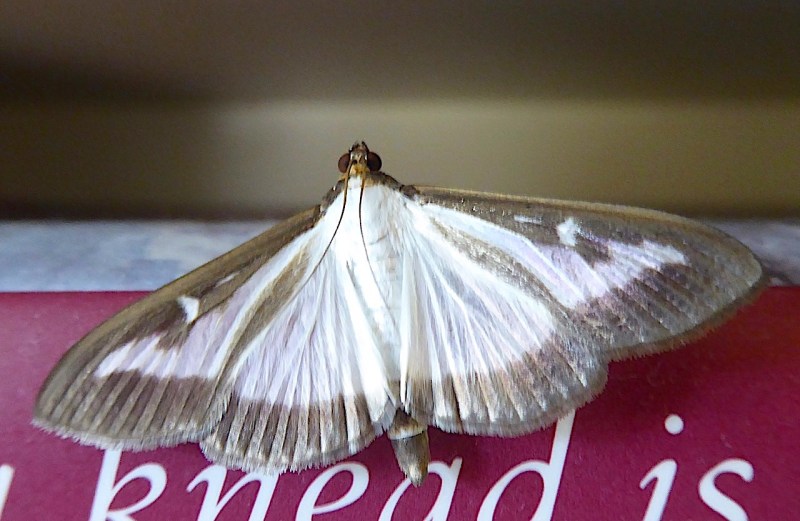
Here’s a moth species new to me, that I couldn’t locate on any UK Moth ID site. Then I found out why. The Box Tree Moth Cydalima perspectalis is native to East Asia. It’s an introduced species to Europe, first recorded as recently as 2006 in Germany; 2008 in UK; and nearly everywhere else since. It thrives on Box Buxus colchica, and to an extent the species may have spread with exports of the bush. And it’s plainly a busy reproducer… and now it’s here, it’s probably a stayer.

Box-tree Moth, UK - rapacious intruder (Keith Salvesen)

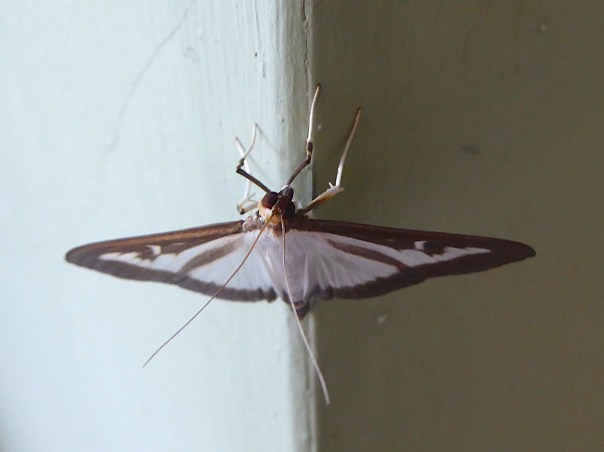
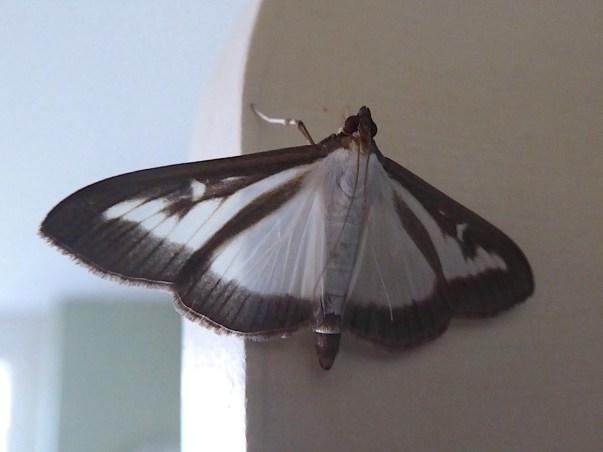
A few days ago we had one in the kitchen (bonus points for recognising the cookery book it chose to land on). I took some quick photos for ID, failed to find a match online, and resorted to the excellent Moths UK FB page, where mothmaticians quickly respond to images uploaded for ID. I later found out that one of our sons has had two infestations this summer, resulting in total loss of two small rows of box.

KNOW THY ENEMYBox-tree Moth, UK (Keith Salvesen)Box-tree Moth, UK (Keith Salvesen)

The moth lays its eggs on the undersides of Box leaves. The caterpillars feed so rapaciously on the leaves and shoots that they may simply destroy the entire plant. And there are two or three generations gorging each season. Furthermore, there are no natural predators (such as the Asian wasps that target the larvae in their native lands). Maybe in time that will change, with birds and other predator species learning a taste for the things.

Cydalima perspectalis MHNT Imago wiki.jpg

There’s also a quite different brown morph / colour variant of the Box Tree Moth to contend with, which I imagine is just as effective in destroying the host plant.

Box-tree Moth, UK - Wiki

There are apparently various methods of dealing with the problem, mainly involving chemicals, bacteria, nematodes, and pheremone traps. All seem to require intensive repeat applications. Some of these solutions may presumably have an adverse effect on other wildlife. 
Box-tree Moth, UK - Caterpillar (Wiki)
As far as ‘mistake’ species are concerned, the ones that have accidentally (or through escape or deliberate release) colonised places far from where they belong, I reckon a case-by-case approach is needed. Harmless to humans, other life-forms, ecology and the environment? Bring them on. Harmful in any of those respects, parasitic, fast-spreading, predator-proof, potentially ineradicable? Expunge them ruthlessly.
 
I take one of these views about the Box Tree Moth. Look out for the eggs, the caterpillars, the imagos. Report them. Or DIY. A box bush might be a good place to start. 
Top 3 photos from the kitchen; the others thanks to Wiki. There’s a mass of stuff on these critters and their little ways online if you want to find out more. Not trying to be controversial here, btw, but I’d be surprised if you can’t name half a dozen species of animal, bird and plant that are invasive to the UK / Europe, damaging to the new host territory – and would be best eradicated.

ELEPHANT HAWK-MOTH CATERPILLAR IN DORSET


Elephant Hawk-moth Caterpillar, Dorset (Keith Salvesen)

This fearsome creature was within an inch of being crushed by my heedless foot… but luckily it made a surprisingly agile lurch to one side just in time. I had no idea what it was, other than the largest caterpillar I have ever come across. Everyone else will know, of course, that it is the childhood form of what will become an elephant hawk-moth Deilephila elpenor. I haven’t knowingly seen one of those either.

NOTE Aug 2023. This post from 2017 on this largely defunct site was has attracted a lot of hits this month. It  gives an excellent example of APOSEMATISM, defensive appearance and / or behaviour designed to repel predators. The Wiki link above will take you to a very good article on this topic, and is highly recommended if you want to know how animals of all kinds have developed many and varied protective methods

These caterpillars have three ‘poses’. The first is the usual day-to-day one, as it goes about its business with its little snout – or ‘trunk’ – extended. Note the four prominent ‘eye’ markings behind the head. 

Elephant Hawk-moth Caterpillar, Dorset (Keith Salvesen)

At the threat of danger, the caterpillar assumes its ‘elephant’ pose, tucking away its snout and humping its front end so that the 4 ‘eyes’ glare intimidatingly. From the front, there is the hint of a mouth, with two sharp eyes above it.

Elephant Hawk-moth Caterpillar, Dorset (Keith Salvesen)

From above, the creature looks like a formidable, probably toxic adversary, to be given a wide berth.
Elephant Hawk-moth Caterpillar, Dorset (Keith Salvesen)
The third pose is a so-called snake pose, whereby the caterpillar curves its body, and, as I found, continues to do so back and forth accompanied by alarmingly quick ‘head’ movements, as if squirming menacingly. I backed away, before bravely putting it on a laurel leaf to move into better light in order to inspect it further. At the back, there’s a backward-facing hook or spike – in common with most hawk-moth species I think.
Elephant Hawk-moth Caterpillar, Dorset (Keith Salvesen)

I haven’t investigated how the eyes are constructed, but the white parts are plainly holes rather than surface marking

Elephant Hawk-moth Caterpillar, Dorset (Keith Salvesen)

I had to look up what the actual moth looks like, and courtesy of wiki I can reveal what everyone probably knows already – like this:

Elephant Hawk-moth wiki

 Had I wanted to straighten it out, the caterpillar would have been over 2 inches long. Quite wide, too. All-in-all an impressive beast.

A SUNDIAL AT CHASTLETON HOUSE,


Chastleton House, Oxfordshire: the Sundial

Chastleton House is a fine Jacobean house in Oxfordshire dating from the early c17. In 1991 it was acquired by the National Trust, having been owned by the same family for some 400 years. Its most recent claim to fame is to have featured as ‘Wolf Hall’ in the recent BBC series.

Chastleton House, Oxfordshire: the Sundial

There are fine gardens at Chastleton, kept pleasantly unmanicured. And there is a sundial. I can’t find a date for it – the NT does not give one – but I like the unusually tall slender column that supports the dial.

Chastleton House, Oxfordshire: the Sundial

I was hoping to find some more information online, with little luck. I found a photograph that showed the dial unfixed from the base, and clearly some restoration has been done to remedy that. I’m not sure the rusting bolts were ideal. If I find any other information I will add it in due course.

Chastleton House, Oxfordshire: the Sundial

A BEE HOUSE IN DORSET


Bee House & denizens, Dorset

It took a year before there were many settlers in the new bee house. To begin with, there were just some transients; tiny bees that stationed themselves at the mouth of a hole, retreating from time to time to the depths. I’ve no idea what type of bee they were, but they didn’t leave any building works. And then there were a few wax caps to wonder about. 

The first resident occupied the penthouse.Bee House & denizens, Dorset

The box began to weather a bit during that first winter, and to fall apart slightly. That summer, we had mason bees in many of the holes, with around 60% occupancy – plus some waxed caps. The timber homes were clearly preferred to the bamboo sticks, and the first to fill up. Later, we noticed the first leaf cutters moving in, their green plugs slowly turning brown as the leaves withered.

Bee House & denizens, Dorset

This year, by the end of May, business was thriving. The house was weathered and had no doubt completely lost the heady scent of Garden Centre. The upper storey was more popular than the lower; maybe the horizontal stem of a cox apple tree growing against the old wall was a disincentive for potential downstairs dwellers.

Bee House & denizens, Dorset

Bee House & denizens, DorsetBee House & denizens, Dorset

Two months later, as July fades into August, there are a few changes, but overall the house is much the same. So far, there have been no leaf cutters. And no little ‘peeping’ bees either. I’m disgracefully uninformed about the types of bee to which we offer a home. We’ve replanted much of the garden to benefit honeys and bumbles – with a consequent increase in butterflies and hitherto unknown types of moth. The solitaries are still a bit of a mystery. Time I got a grip, I think. Still, the apples are looking very promising…

Bee House & denizens, DorsetBee House & denizens, Dorset

All photos: Keith Salvesen / Rolling Harbour

ROSY FOOTMAN: A MOTH, NOT A FLORID FLUNKEY


Rosy Footman Moth, Dorset (Keith Salvesen)

Until last weekend I’d never heard of, let alone seen, a ROSY FOOTMAN. I’m beginning to discover and enjoy the ornate to downright bizarre names that moths tend to be given. They have this in common with fly-fishing flies – the previous day I had caught a plump wild brown trout on the River Frome with a ‘Tups Indispensable’*.

Rosy Footman Moth, Dorset (Keith Salvesen)

High on an inside wall above a mirror, I saw a small pink item. On closer inspection, I could tell it was a moth, and one I had never seen before. I had to fetch a small stepladder to inspect it and (with some difficulty) to photograph it, . Meet a Rosy Footman.

Rosy Footman Moth, Dorset (Keith Salvesen)

The Rosy Footman is apparently a moth of southern England, in particular the southern-most counties from Kent to Cornwall. They fly in July and August. With such very particular markings, they are unmistakeable, but clearly I’d failed to notice one ever before… I’m glad I have now.

Rosy Footman Moth, Dorset (Keith Salvesen)

* For those concerned about these things, I use barbless hooks. I netted the fish, unhooked it still in the water and released it in about 30 seconds to fight another day. Or preferably to produce more wild stock.

HYBRID BIRDS OF PREY IN IRELAND: A GYRFALCON / SAKER FALCON CROSS


Gyrfalcon / Saker Falcon cross / hybrid, Russborough, Co. Wexford

During a recent short trip to Dublin, we hired a car for a day to explore the Wicklow Mountains and to visit Russborough House in Co. Wicklow. This wonderful country estate has a fabulous collection of paintings and furniture – and has been the location for some spectacular burglaries. One was by Bridget Rose Dugdale, for example, for those with long memories. It is also home to the National Birds of Prey Centre of Ireland, which we had time to visit briefly.

Gyrfalcon / Saker Falcon cross / hybrid, Russborough, Co. Wexford

I took some photos of several uncaged birds that were tethered out in the open. Many were, or at least looked, familiar. They were unlabelled and when I came to check IDs later, including on the centre’s website, some of them didn’t add up. Eye-colours were wrong. Facial and frontal markings were unusual. And so on.

Gyrfalcon / Saker Falcon cross / hybrid, Russborough, Co. Wexford

I emailed some low-res imaged to the centre, and they quickly explained the reason: we had been looking at hybrids. This post shows one example, a juvenile female gyrfalcon crossed with a saker falcon. Here are wiki pics of each of the pure-bred birds.

GyrfalconGyrfalcon / Saker Falcon WikiSaker Falcon Gyrfalcon / Saker Falcon wiki

So now I realise that there’s a whole extra angle to bird of prey ID that I had never before considered…Gyrfalcon / Saker Falcon cross / hybrid, Russborough, Co. Wexford


PALE TUSSOCK MOTH, DORSET


Pale Tussock Moth, Dorset (Rolling Harbour)

Until a few days ago, I’m not sure I’d ever before seen a pale tussock moth Calliteara pudibunda that was on a wall inside our house. I took it outside and put it gently onto an old garden bench. 10 minutes later it was gone. As is so often the case I only had an iPhone with me at the time, so the photo above is a bit rough and ready. On the other hand, you get a good idea of the subtle and pretty colouring and marking of this moth – and as you see, it was intriguingly furry, with spotted legs.

P1150354.jpg

I flicked through a couple of slightly basic butterfly / moth books we have, but could find nothing like this creature. So I checked out the FB page of UK MOTHS to find a match. Sure enough, others had queried the ID of this species so I discovered the name easily enough. I don’t think it is particularly rare. There were also plenty of other fascinating and indeed extraordinary-looking moths that are apparently quite common in the UK. A FB page that’s well worth taking a look at.

The pale tussock is a moth of spring / early summer, and its appearance seems to be distinctive enough to avoid confusion with other moth species. The other feature, only deployed once I’d got it outside the house, are its feathery antennae (below).Pale Tussock Moth, Dorset (Rolling Harbour)

To make up for my rather poor photos, here is a really good one to make up for it, showing a pale tussock in all its glory…

Pale Tussock Moth (Kurt Kulac - wiki) Photo credit: Kurt Kulac / Wiki

BLUE TIT BREEDING SUCCESS IN A LONDON GARDEN… AT LAST


Blue Tit - Terracotta Bird Ball - Nest

About 10 years ago I was given a terracotta ‘bird ball’ as a birthday present. Over the years it has been hung in several shady positions around the garden. We have seen blue tits give is a cursory once-over in April. It’s been ‘perch on the top, head through the door, quick discussion, fly off never to return’. This year it was different: late April interest and preliminary inspections, followed by moving in, furnishing, egg-laying, incubating, hatching, frantic activity, tiny squeaks and cheeps… then we went away for four days. Bad timing – we had missed the main event. 

The nest is now empty, the occupants all flown. With some difficulty, I managed to get a shot of the little nest made of dry grass and moss. The birds left the nest very tidy, with just a single tiny thank-you feather left behind… 

Blue Tit - Terracotta Bird Ball - NestBlue Tit - Terracotta Bird Ball - NestBlue Tit - Terracotta Bird Ball - NestBlue Tit - Terracotta Bird Ball - NestBlue Tit - Terracotta Bird Ball - Nest