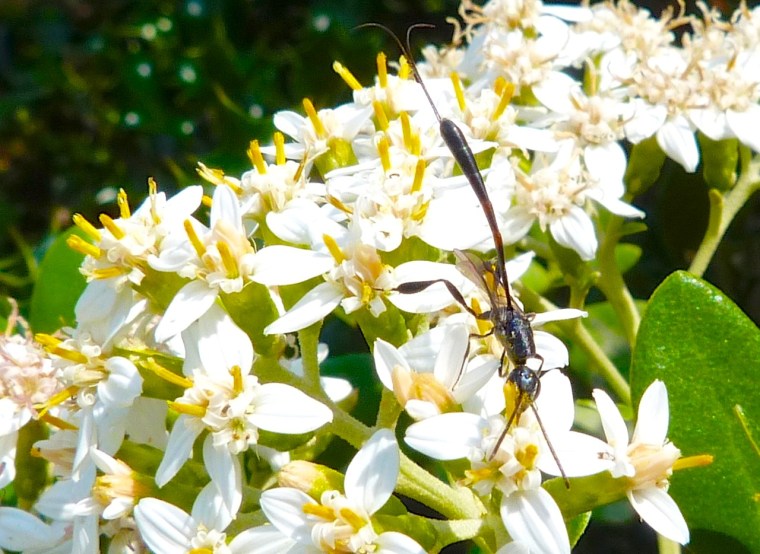
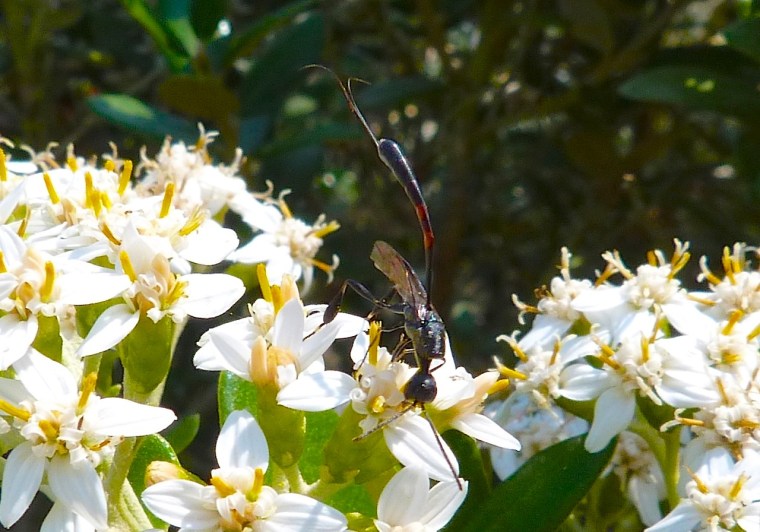
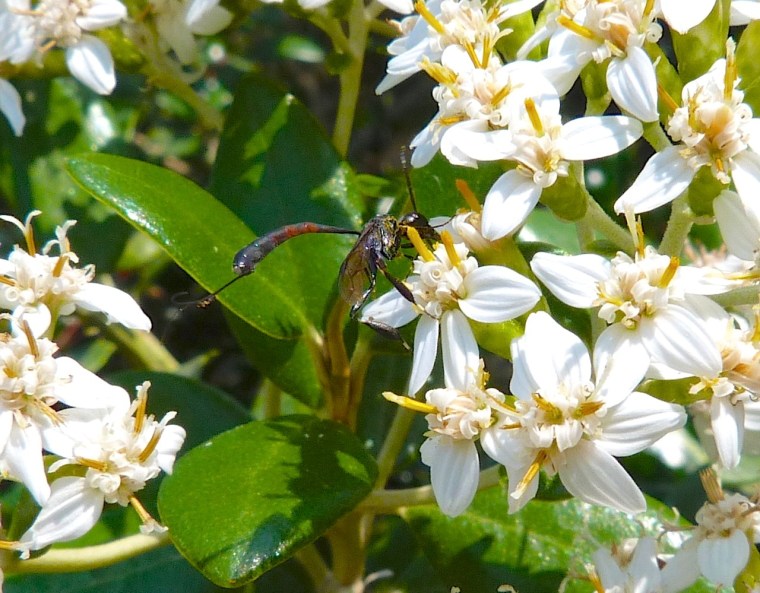
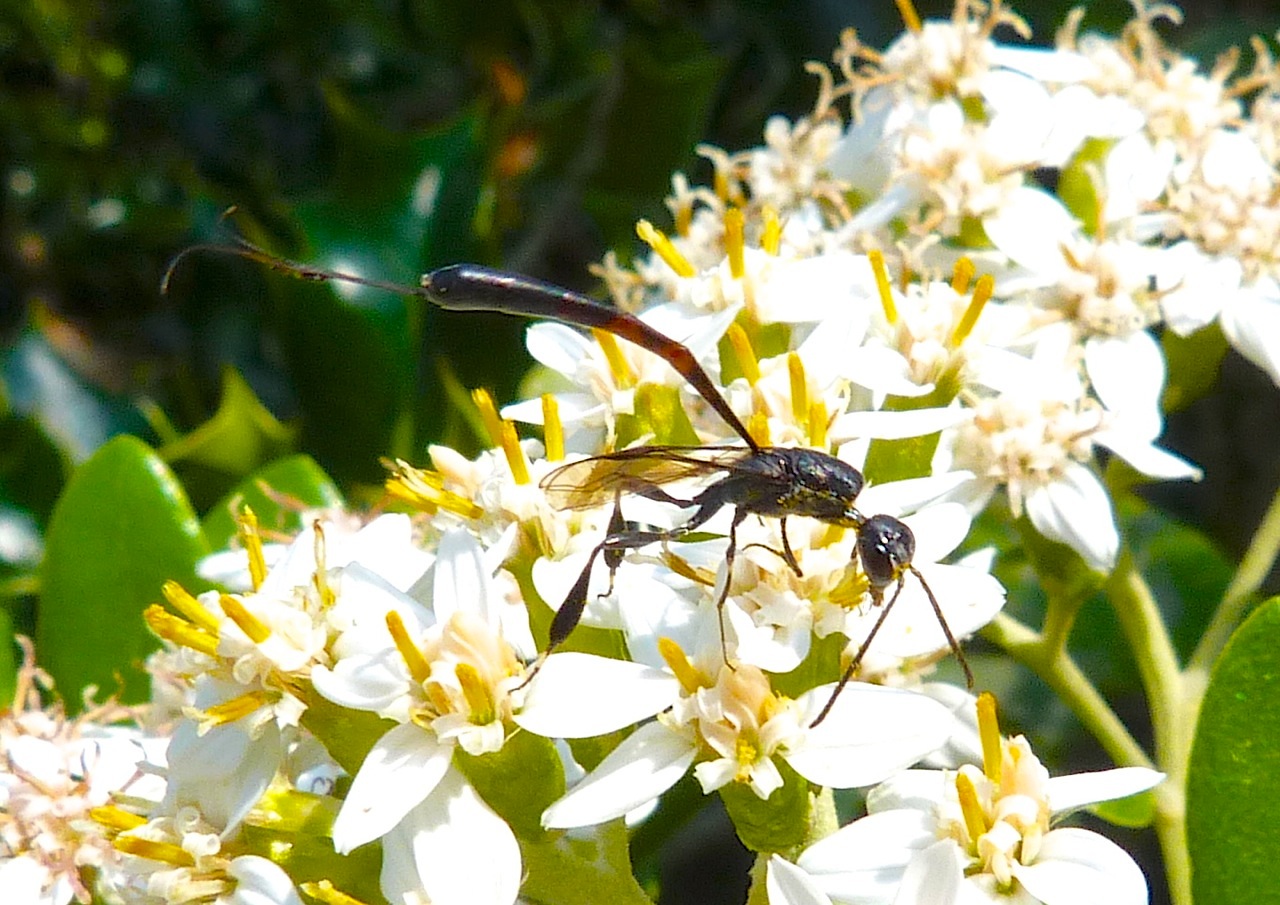
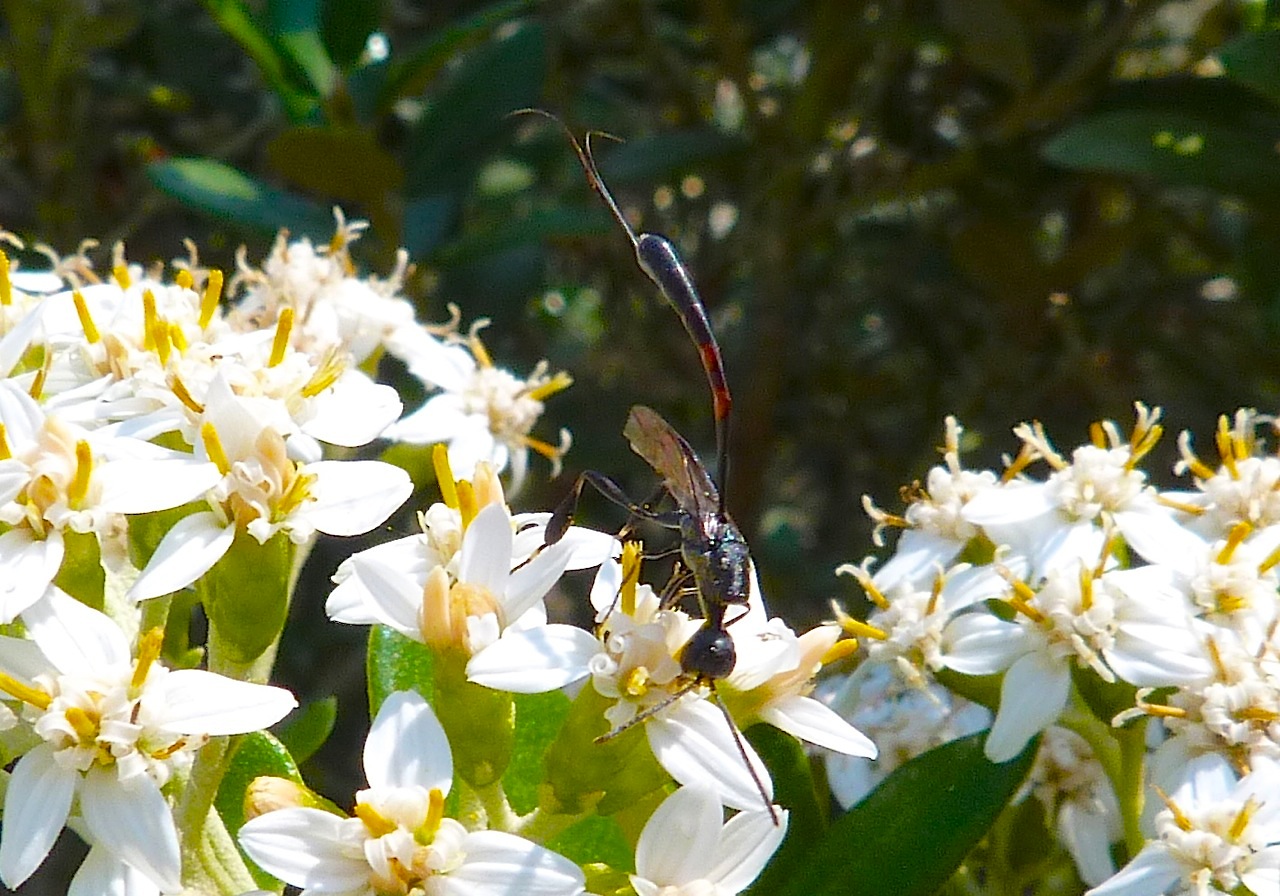
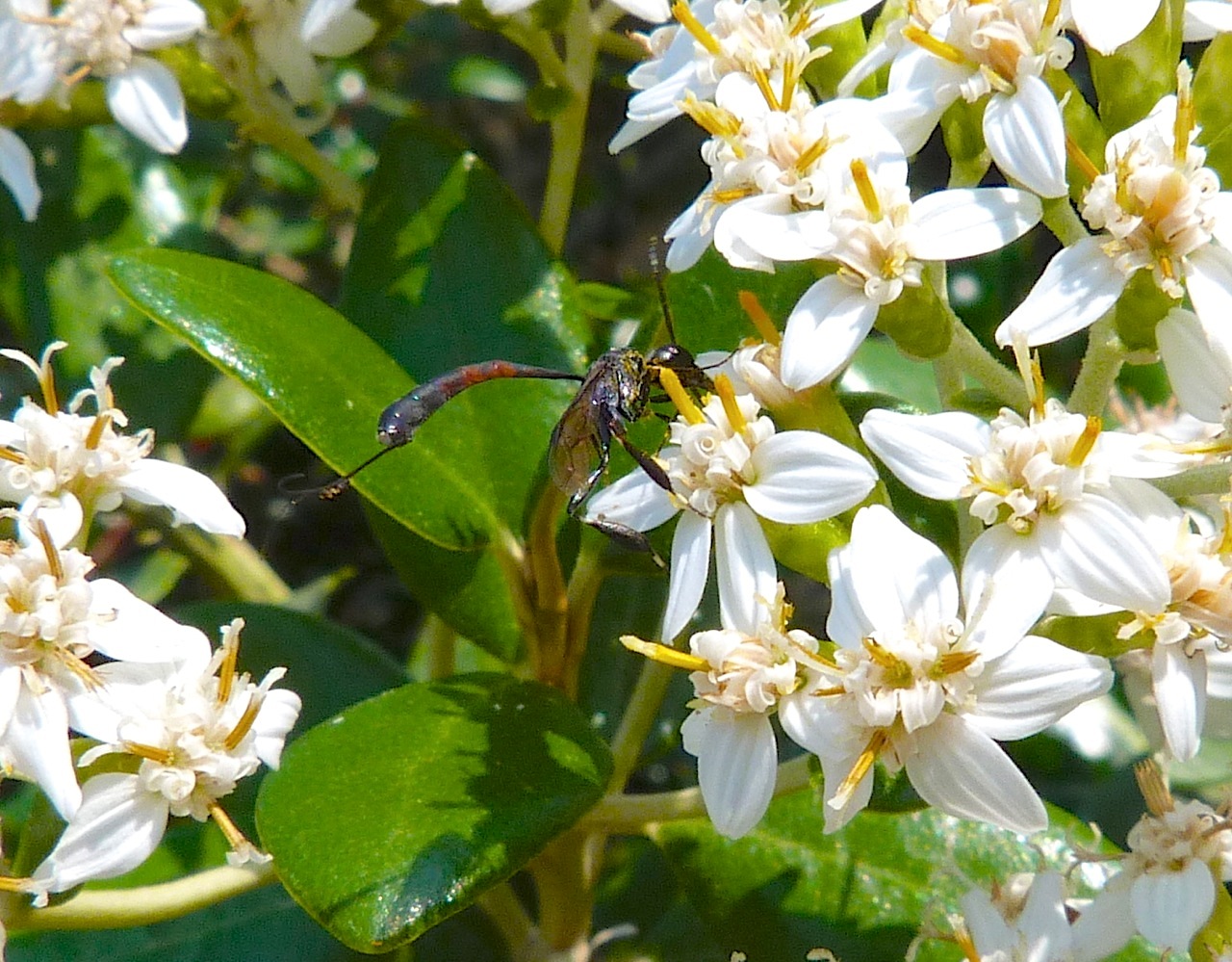
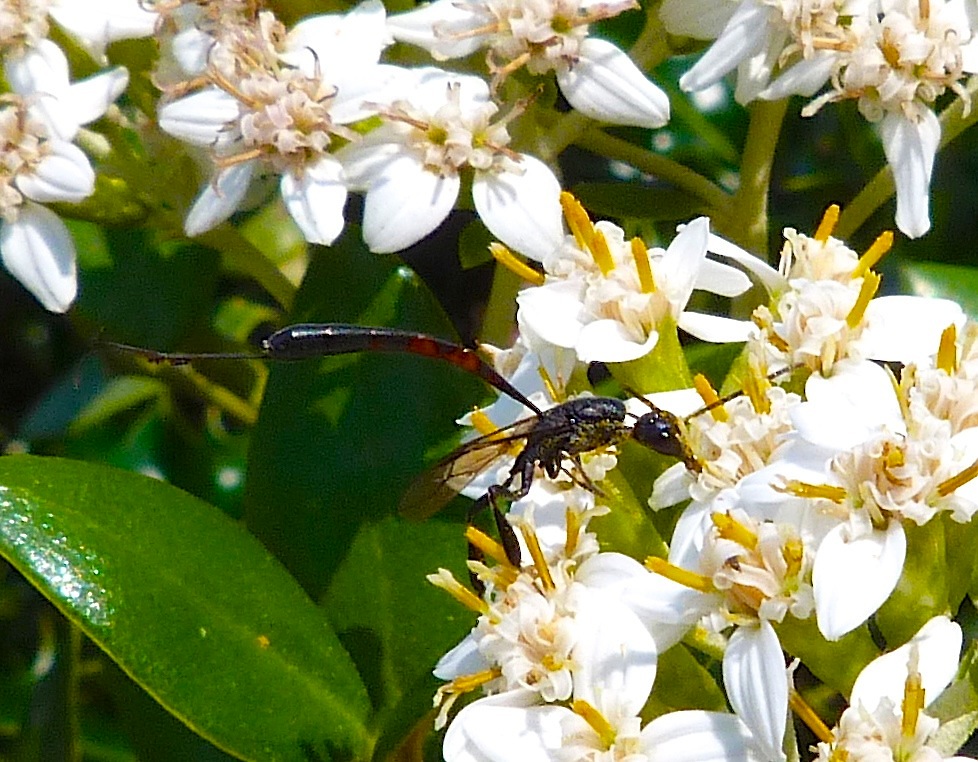
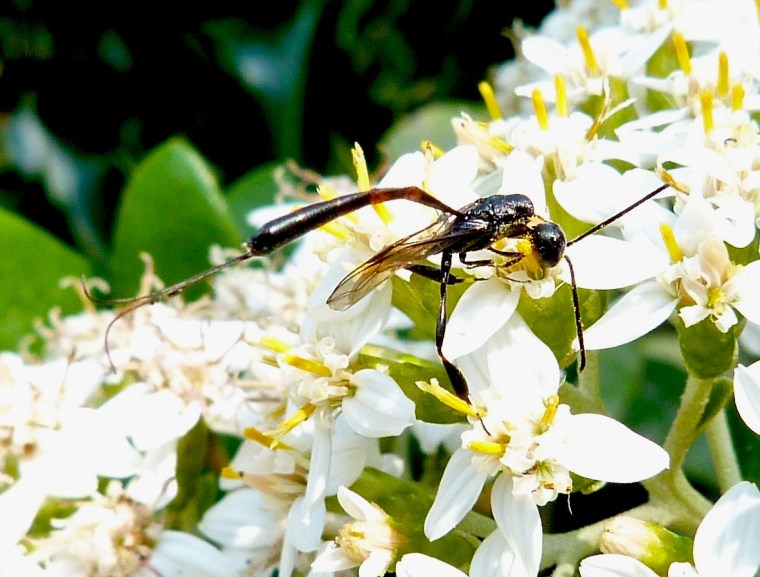
 It doesn’t take much to stump me in the natural world, even with online resources. But what the heck is this little bugger I photographed today? It’s probably obvious; maybe it’s an insect in an intermediate state of metamorphosis. Or something. But I’ve never seen one before. Or if I have, I didn’t notice it. The last time I found a mystery insect (not in the UK), it turned out to be a spider or pepsis wasp, also known as a tarantula hawk, which has the second most painful sting of any insect. I posted about this creature in my main blog HERE, but here is an excerpt dealing with the sting and the ‘pain scale’. The sting of these wasps is among the most painful of any insect, though the most intense pain lasts on a few minutes. Entomologist Justin Schmidt bravely submitted himself to the stings of various insects and described this pain as “…immediate, excruciating pain that simply shuts down one’s ability to do anything, except, perhaps, scream. Mental discipline simply does not work in these situations.” Schmidt produced his SCHMIDT STING PAIN INDEX The pain scale, based on 78 species, runs from 0 to 4, with 4 given for the most intense pain. Spider Wasps of the species Pepsis – i.e. Tarantula Hawks – have a sting rating of 4.0, described as “blinding, fierce, shockingly electric. A running hair drier has been dropped into your bubble bath” Only the bite of the Bullet Ant (not found on Abaco!) is ranked higher, with a 4.0+ rating, vividly described as “pure, intense, brilliant pain. Like fire-walking over flaming charcoal with a 3-inch rusty nail in your heel”
ADDENDUM (within 2 hours of posting!)
I knew someone would ride to the rescue. Jessica Winder of the excellent blog http://natureinfocus.wordpress.com has come up with the answer – see Comments for details. Suffice it to say that this creature has the Monty Pythonesque name Gasteruption Jaculator (there are other… no. Im not going down that road). It is a parasitic wasp. WIKI says “The head and thorax are completely black. The head is strongly rounded, the thorax is elongated in a sort of long neck, which separates the head from the body. The abdomen is strongly stretched, broader at the posterior end and placed on the upper chest. The colour of the abdomen is black, with reddish-orange rings. The tibiae of the hind legs are club shaped. In the female the ovipositor is usually very long with a white tip. In resting position, these wasps slowly and rhythmically raise and lower the abdomen. The females of this parasitic wasp lays its eggs by its long ovipositor on the body of larvae of solitary bees or wasps. On hatching its young larvae will devour grubs and supplies of pollen and nectar of its victim. The adults grow up to 10–17 millimetres (0.39–0.67 in) long and can mostly be encountered from May through September feeding on Apiaceae species.”