PORTLAND, DORSET (2): CHESIL BEACH & THE FLEET
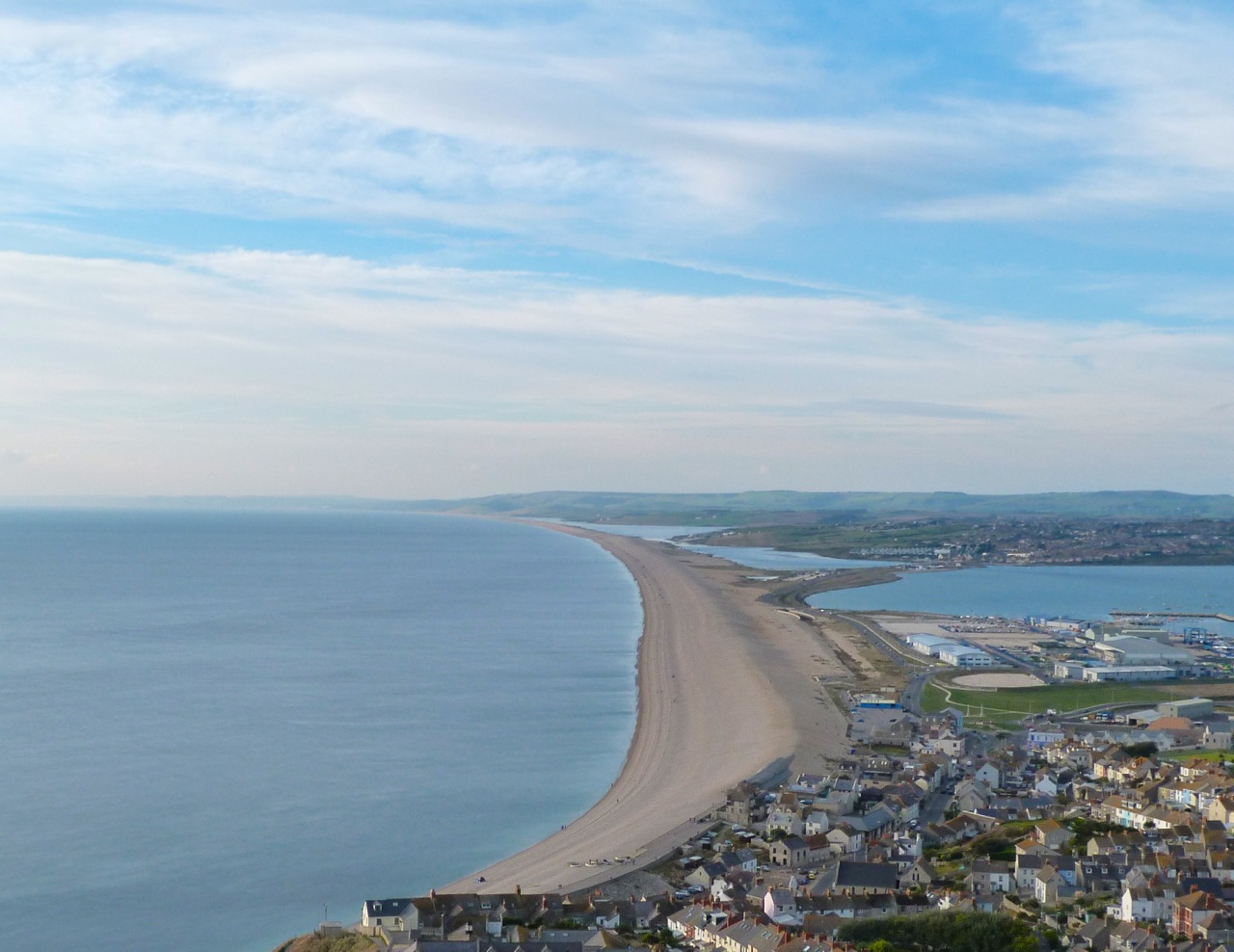
The Chesil Beach, or Chesil Bank, is a dramatic 18-mile curve of steeply banked shingle stretching north-west from Portland (the southern-most point of Dorset) to West Bay via Abbotsbury. The formation contains a long tidal lagoon known as the Fleet.*

Before a causeway road was constructed, the bank connected the mainland to the Isle of Portland, creating a form of TOMBOLO (strictly, it is a ‘barrier beach’). The uninterrupted shingle strip of Chesil beach is up to 50 feet high in places. The stones are large at the Portland end, gradually reducing in size until, by the western end at West Bay, they are pea-sized. It is said that in the past (and maybe still) local people were able to tell the location on the beach that a particular pebble had come from. This knowledge was supposedly helpful for the accurate landing of contraband at dead of night, smuggling being a popular occupation along the Dorset coast (and maybe still).
Chesil Beach, the Fleet and the Isle of Portland, from the north-west over Abbotsbury![]()
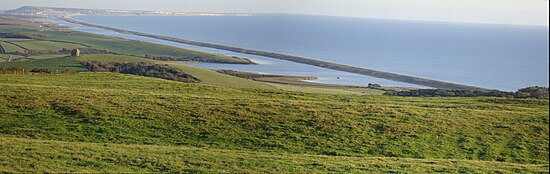
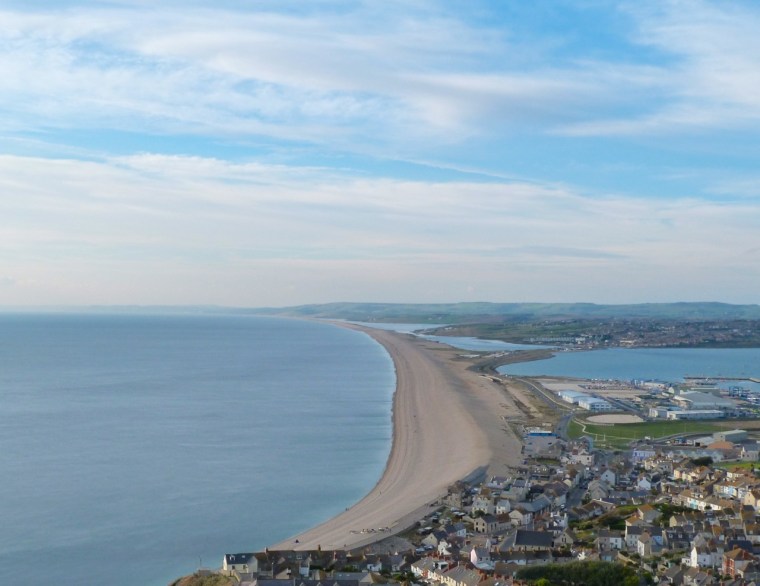
Chesil Beach looking north-west from a viewpoint on Portland
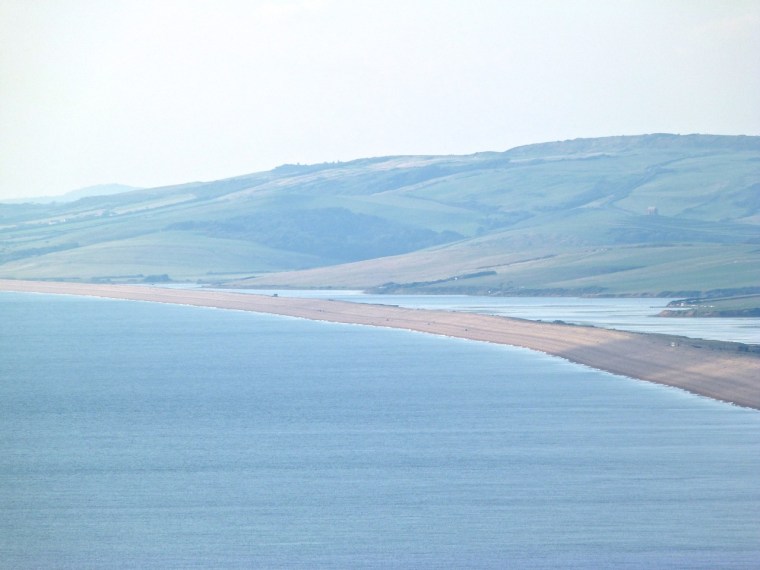
A long shot of the same view, showing the Fleet lagoon
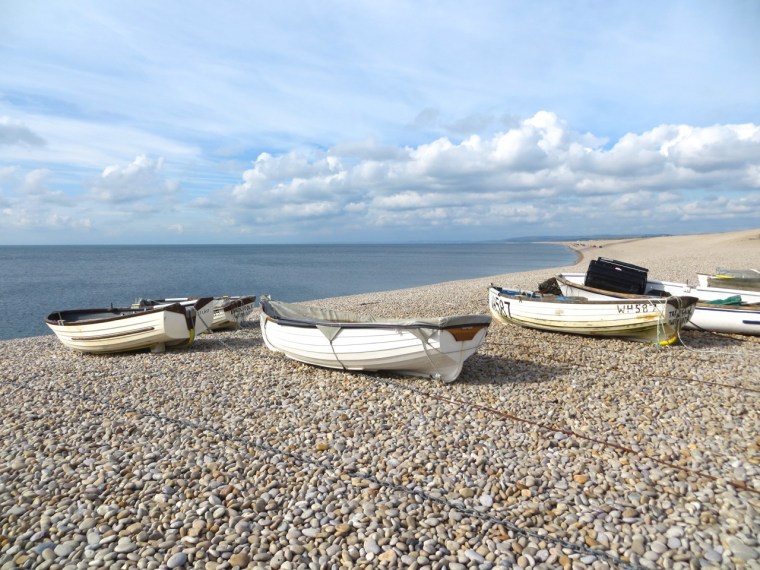
Boats on top of the beach at Portland
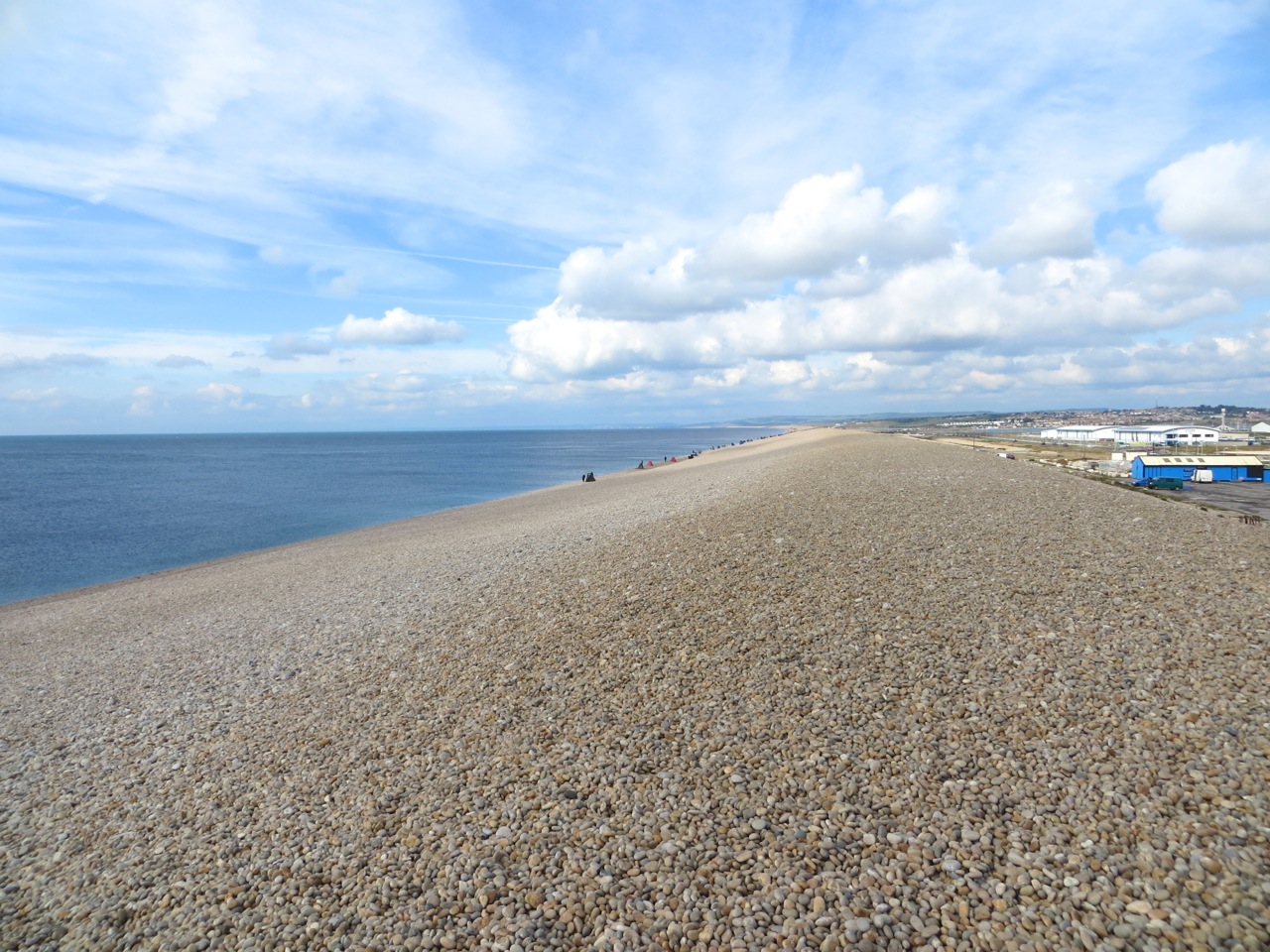
This view shows the breadth of the beach at the Portland end – solid shingle throughout
Further along, fishermen line up all along the water’s edge
The rake of the beach on the seaward side. It’s much steeper on the landward side.
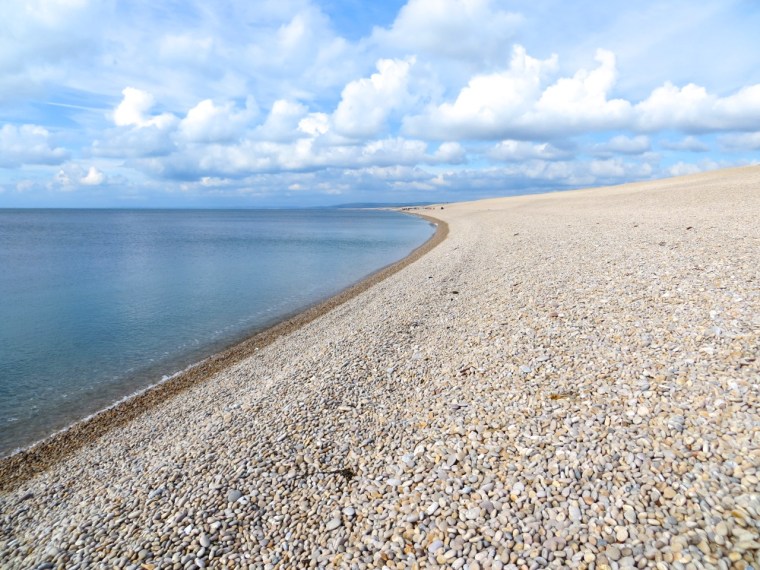
We sat on a tide-shelf above the waterline – the top stones bone dry, the next layer down wet.
Everyone will be familiar with the gentle swoosh sound of small shingle as the waves come and go. On Chesil Beach, the wave interaction with the large pebbles produces a remarkable clattering and clacking sound that is mesmerising to listen to. Luckily I remembered the video button on my camera, so here’s a very short movie to demonstrate this.
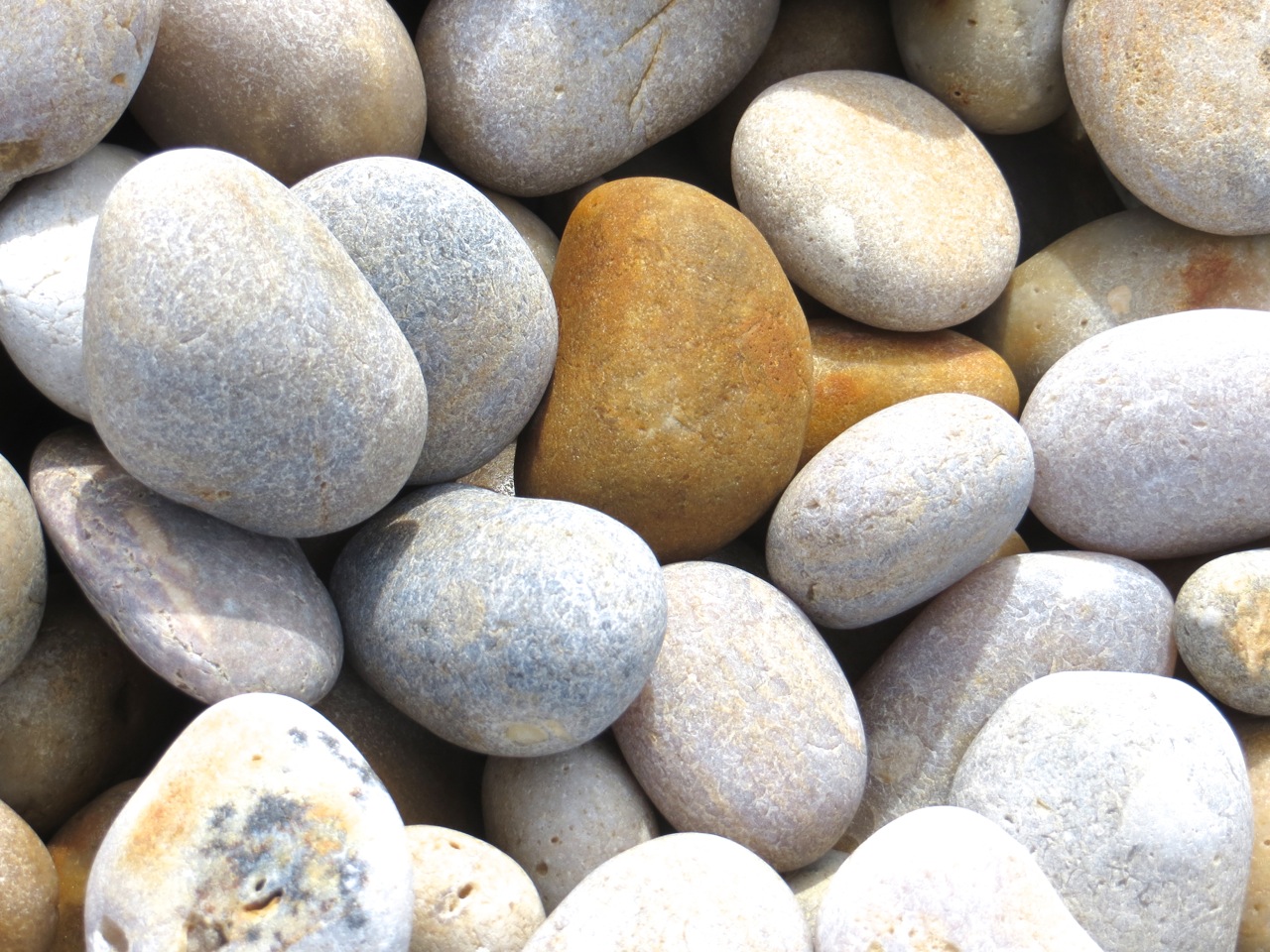
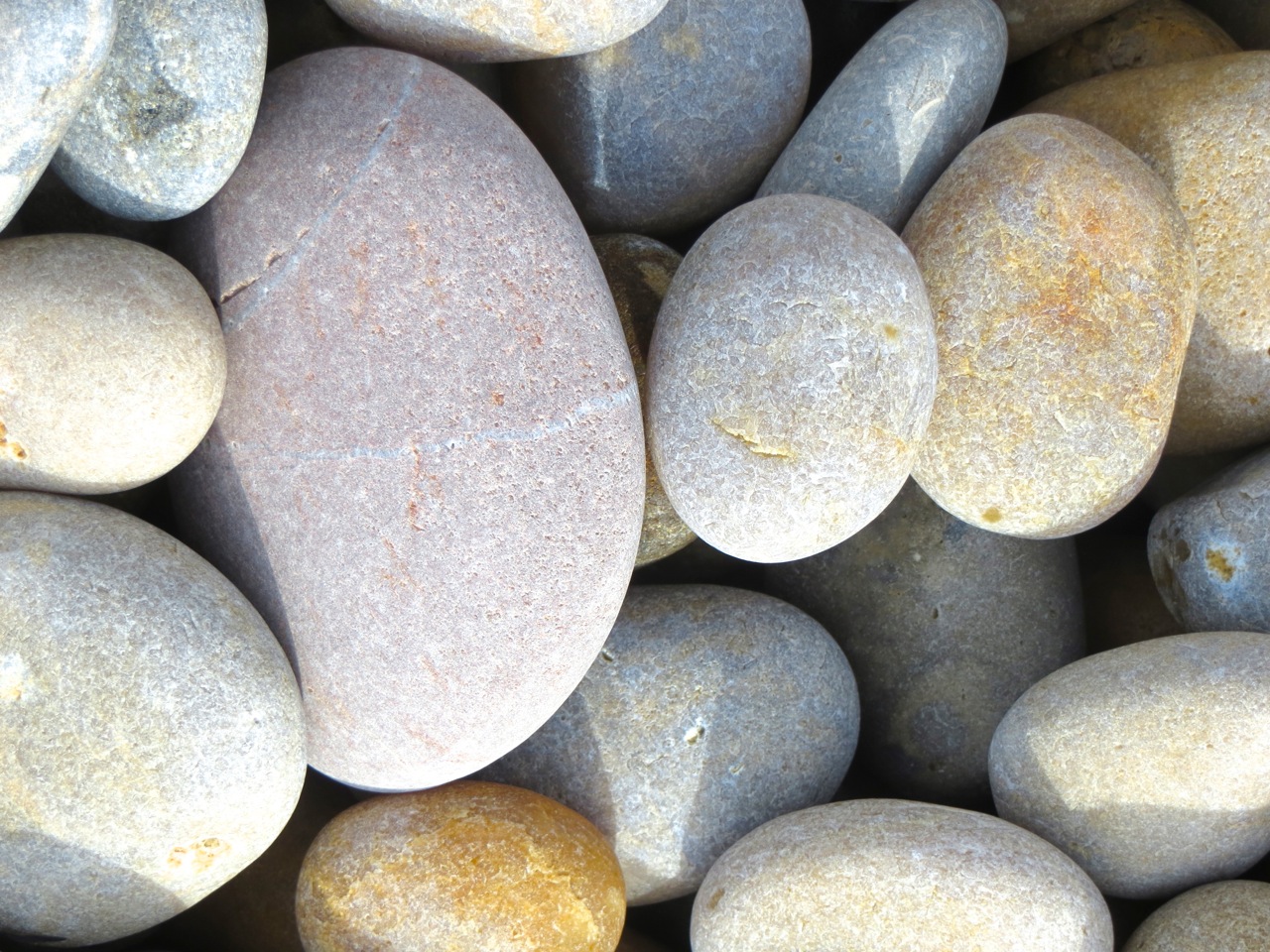
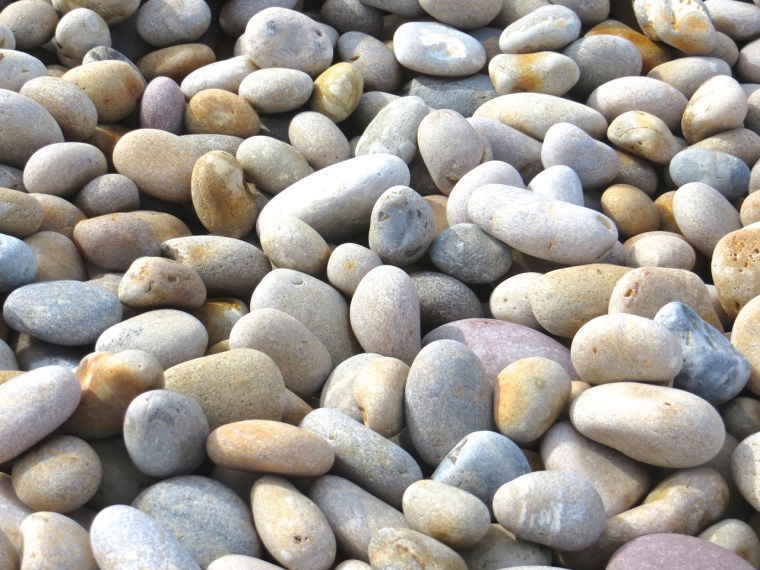
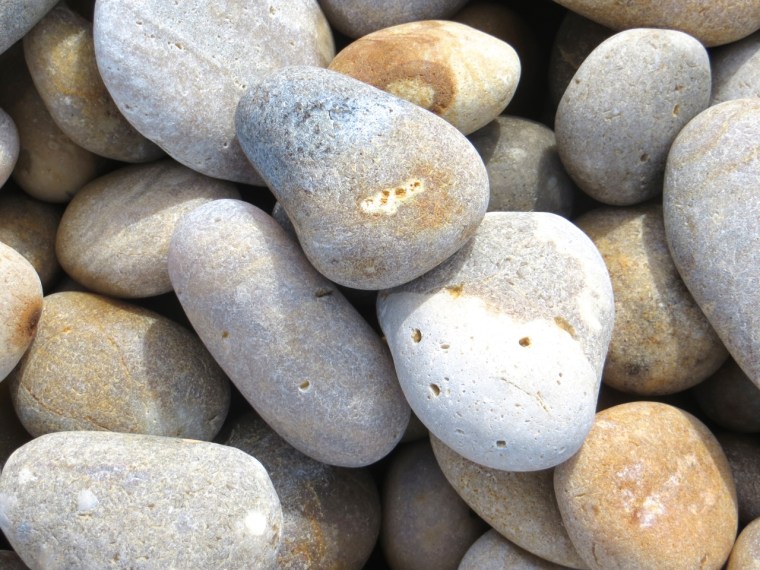
Here is a collection of photos of the stones around us as we sat by the sea. The apparently uniform colouring of the beach from a distance turns out to be a blend of many soft, subtle colours and shades – not least because the stones are of different materials. The geology of the beach would make a good post for another occasion, but not by me!
Close-up of the bottom left corner above
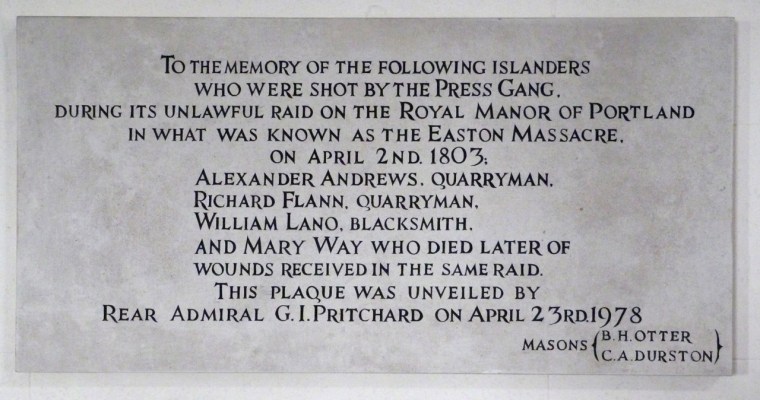
Finally, a reminder of the area’s more turbulent past – a time of press-gangs, blackjacks and daggers swiftly drawn in candlelit taverns. A portland stone plaque in the Church of St George, Portland gives eloquent testimony to an era of lawlessness.
Later, and perhaps in consequence, Portland became the centre of the Knuckleduster-making industry that flourished on the island until the passing of the Prevention of Crime Act 1953, which defined and prohibited “the carrying of offensive weapons without lawful authority or reasonable excuse”. The industry, already in sharp decline in the 1930s, was by then nearly defunct, with only one craftsman still active on Portland. In 2012, a large and elegant sculpture to commemorate this unusual aspect of Portland’s history was installed in a prominent position, commanding a fine view over the the Chesil Beach to Weymouth and the mainland beyond.
The ‘Knuckleduster Memorial’ also marked Weymouth & Portland as the Olympic Sailing venue
* I’m reluctant to endorse the enthusiastic marketing of large swathes of the Dorset seaboard as ‘The Jurassic Coast’. There are fossils in many places. They are fun to look for. More fun to find. Best not to turn it into a Theme Park. I’ll leave it at that.
COX APPLES: FIRST HARVEST (2013)
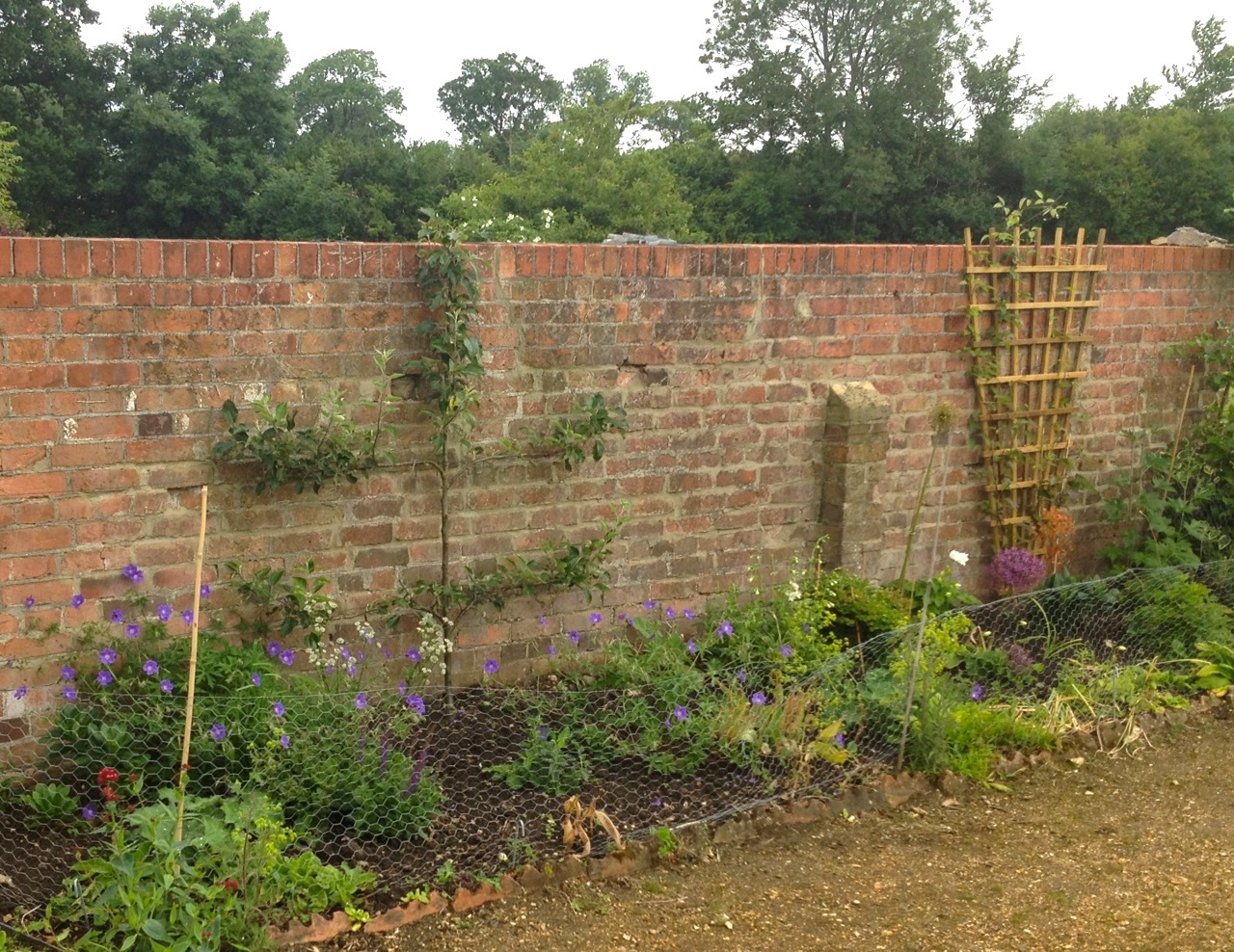
We are gradually restoring a very overgrown garden in Dorset. Part of the work has involved uncovering old walls that were smothered in rampant ivy, in places to a depth of nearly 2 feet; and the beds hidden underneath. This was followed by some approximate repointing ‘à la rustique’. The next stage was to remove the ‘dead’ soil and replace it with fresh topsoil mixed with compost; then to begin the planting. Here is part of the project, in May, showing a new espalier Cox apple tree on the south-facing side of the wall. The wire compound is to keep rabbits out – mostly successfully. The COX’S ORANGE PIPPIN, a classic eating apple, was first grown in 1826 as a hybrid of the Ribstone Pippin. This variety is small, crisp and juicy, with a slightly sharp tang. Completely delicious, in fact.
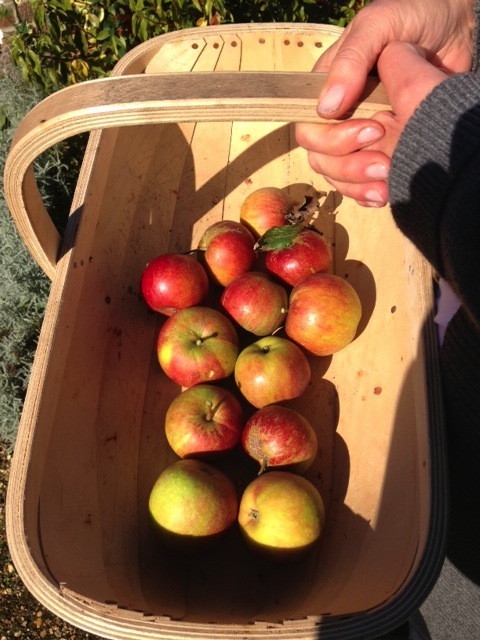
The tree luckily took to its situation and in due course began to produce some promising-looking fruit. Cox’s ripen in October, and should only be picked if the pips rattle when the fruit is shaken. We were amazed to have grown two dozen apples (there were also a couple of outliers that had been eaten, apparently by ants). A few on the lower branches are still not ready to pick – they were rather shaded by plants that grew during the summer. Some we have eaten straight off the tree. Here are a few that we harvested a couple of days ago.
Testing for the ‘pick me now’ rattle
First Harvest. Next year we will train a third row near the top of the wall. More apples.
PORTLAND, DORSET (1) THE LIGHTHOUSE AT PORTLAND BILL
Portland is a ‘tied island’ at the southernmost point of Dorset, linked to the mainland by a 5 mile strip of steeply banked stones and pebbles called the Chesil Beach (or to the older among us, Chesil Bank) that runs northwest towards Abbotsbury and West Bay. There is now a road, of course. The bank’s formation is known as a ‘tombolo’, where a spit joins to land at both ends, creating a tied island and often a lagoon (here known as the Fleet).
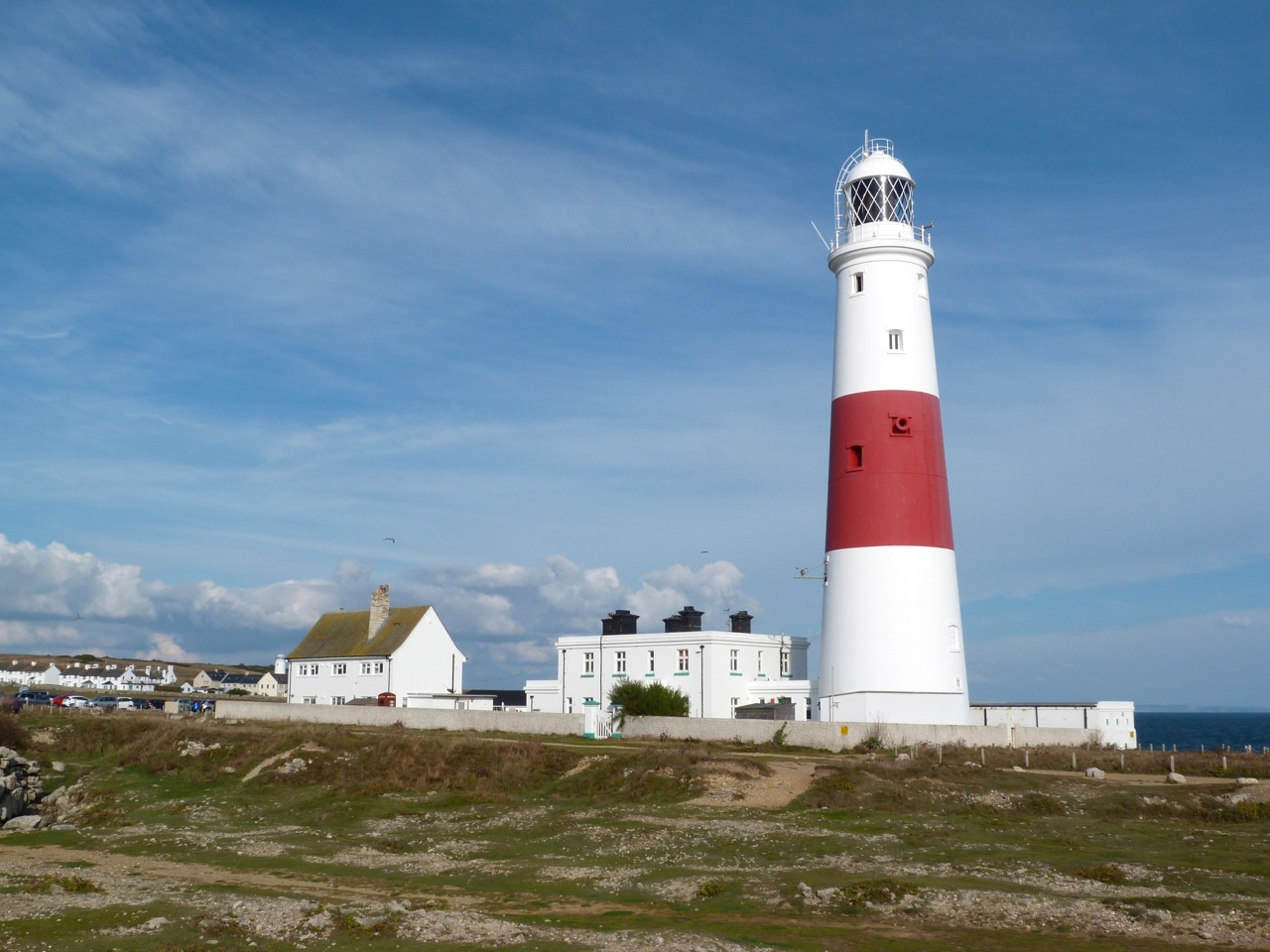
I’ll be posting about Chesil Beach and other aspects of Portland in due course. Meanwhile, I’ll focus on the southern tip of Portland, known as Portland Bill. There are 3 lighthouses there. Two were operationally replaced in 1906 by a classic red-and-white striped edifice, and are now, respectively, holiday apartments; and a bird observatory. The ‘new’ lighthouse stands guard over a strong tidal race caused by the underwater continuation of the Portland rock ‘shelf’ and the Shambles sandbank further offshore.
Portland is one of the ‘Sea Areas’ familiar from UK shipping forecasts, located between Wight and Plymouth. The lighthouse, 115 ft high, is a prominent navigational landmark for the English Channel.
Since 1514, Trinity House has been the organisation with responsibility for lighthouses and the safety of UK shipping generally since the grant of a Royal Charter by Henry VIII. The Portland light bears the Trinity House arms.
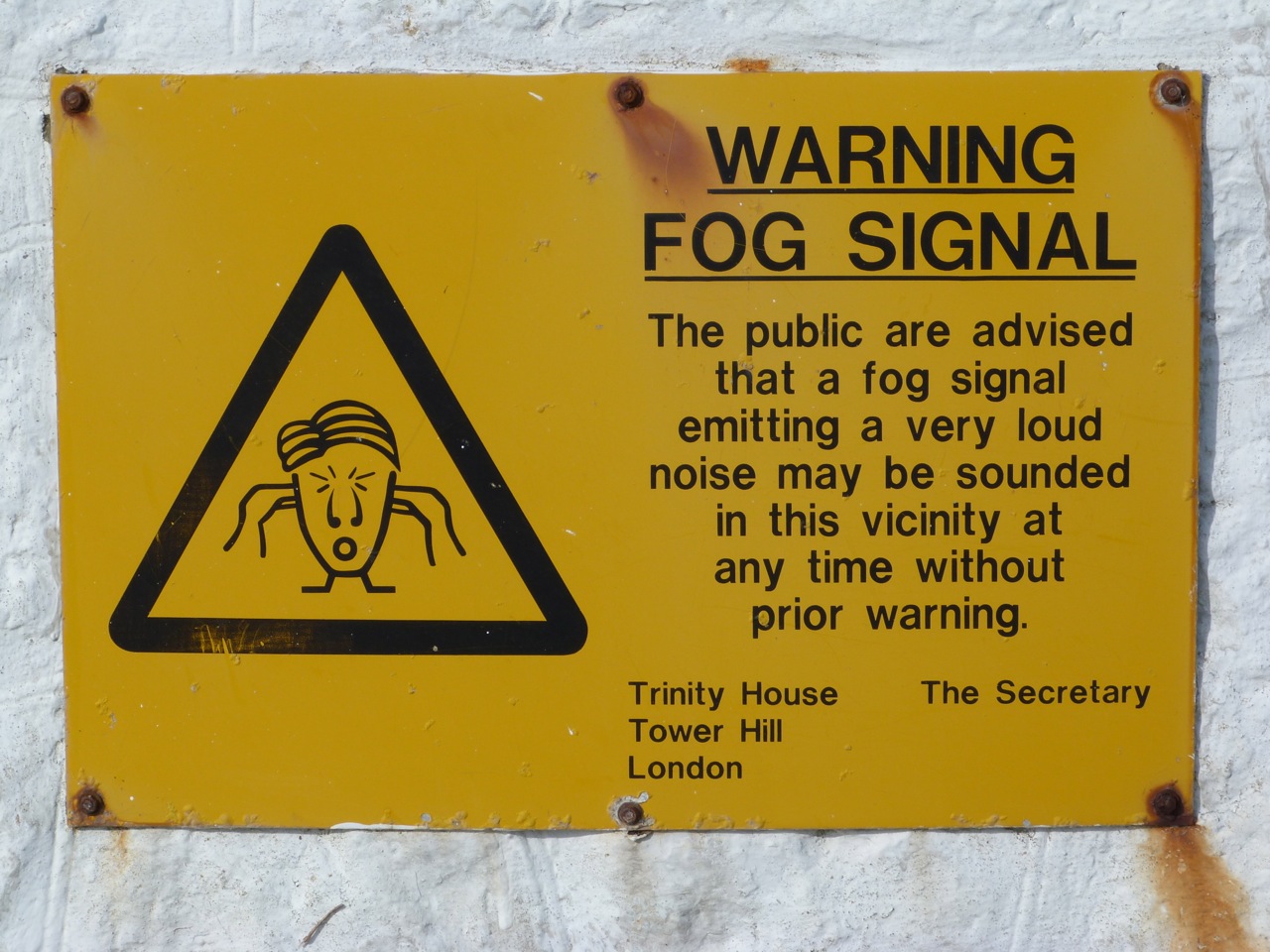
It also bears a substantial foghorn, essential to warn of the coastal rocks as well as the strong current from the tidal race
As ships are warned by the foghorn, so humans are warned of the foghorn…
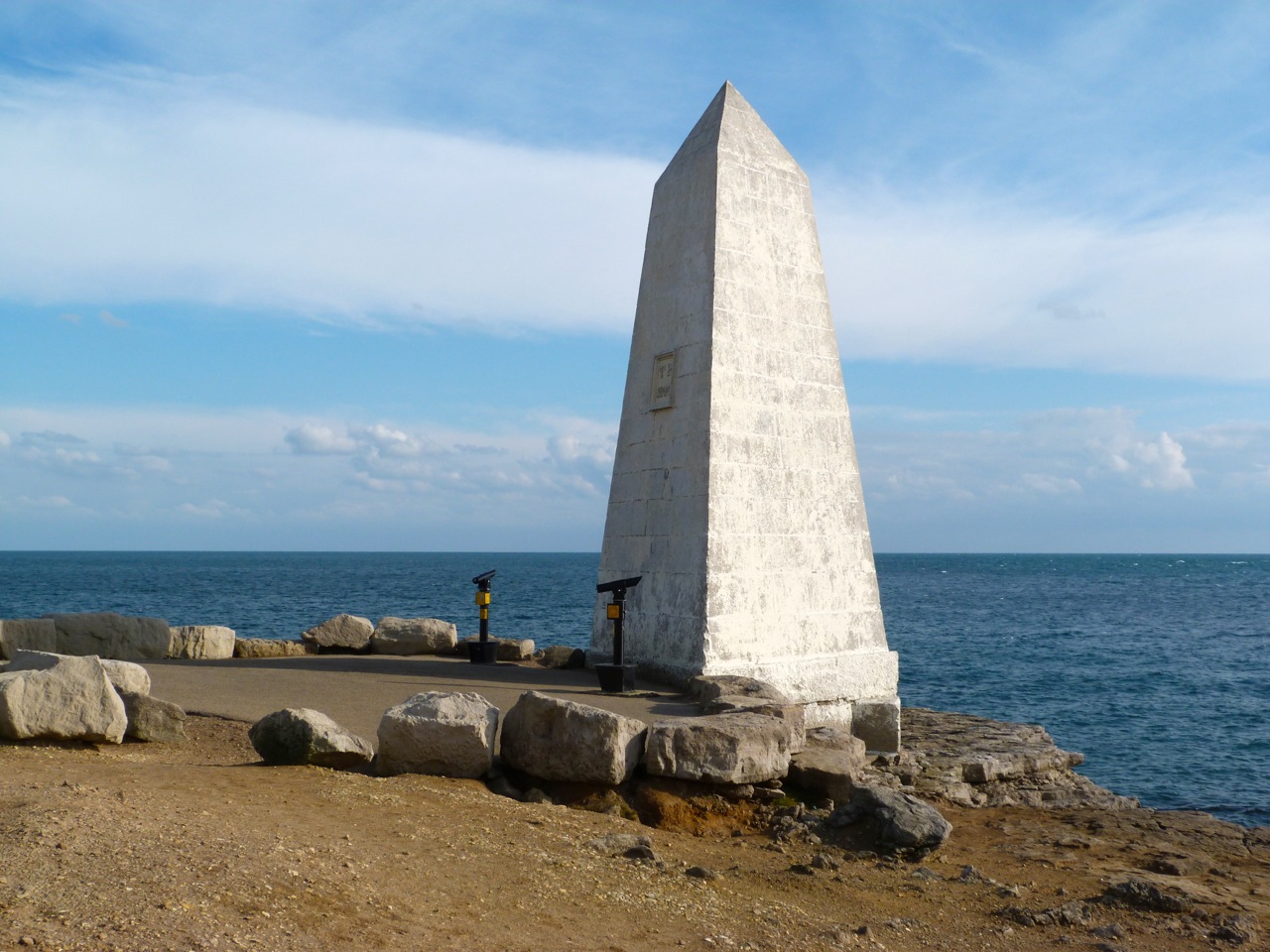
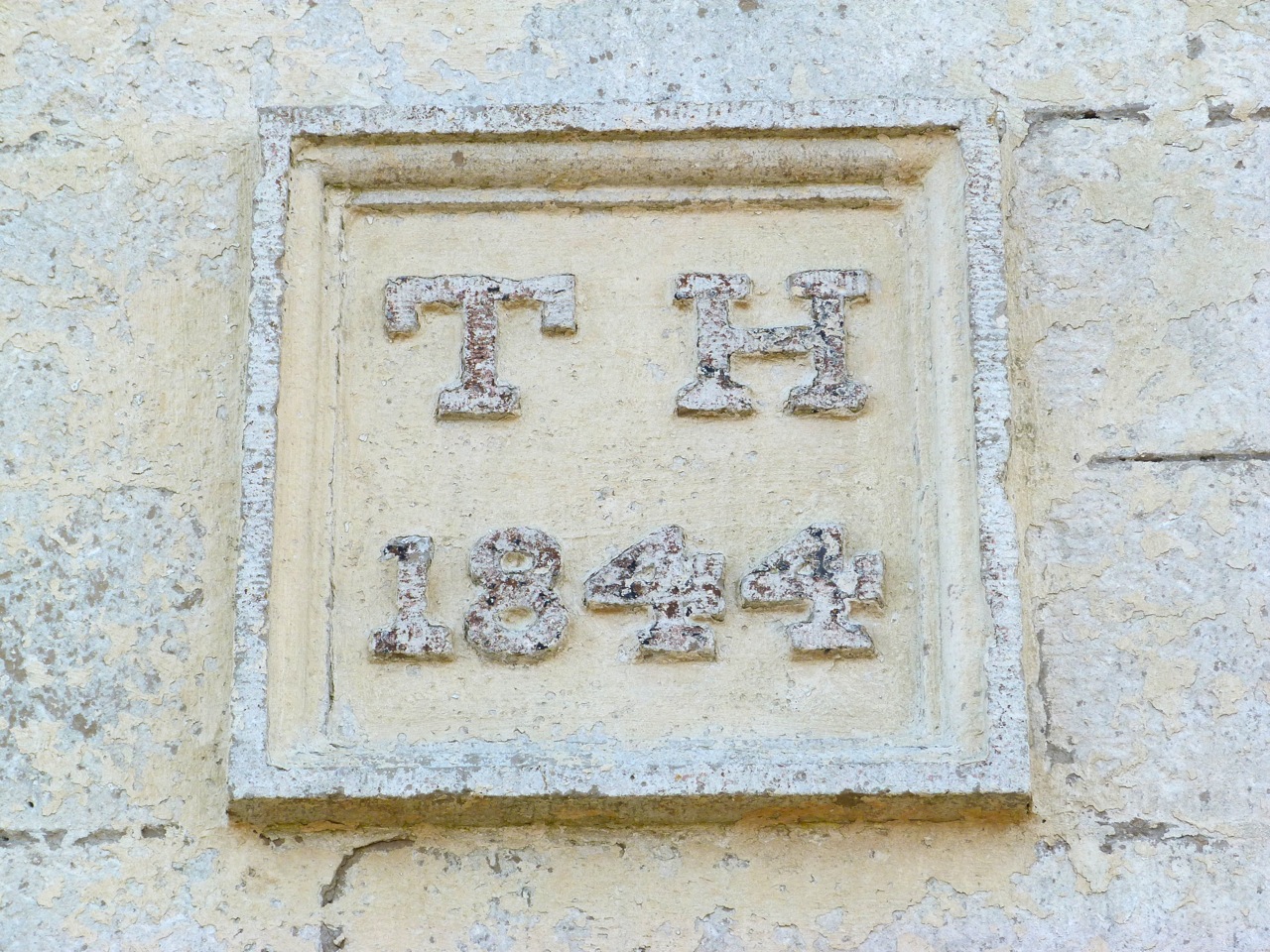
At the cliff edge is a stout obelisk of portland stone erected by Trinity House in 1844 (before the present lighthouse existed) as a daylight warning to passing ships of the dangers of the offshore race.
HARRIS HAWK, DORSET
![]()
This hawk is a bird of the Americas, but they are found in Europe – in particular in Britain – as the result of escapes from captivity. They are popular hawks for falconry, being relatively easy to train. However, when released they don’t always return to their owner. The large feral pigeon population of London’s Trafalgar Square is controlled by the tactical deployment of Harris Hawks at dawn.
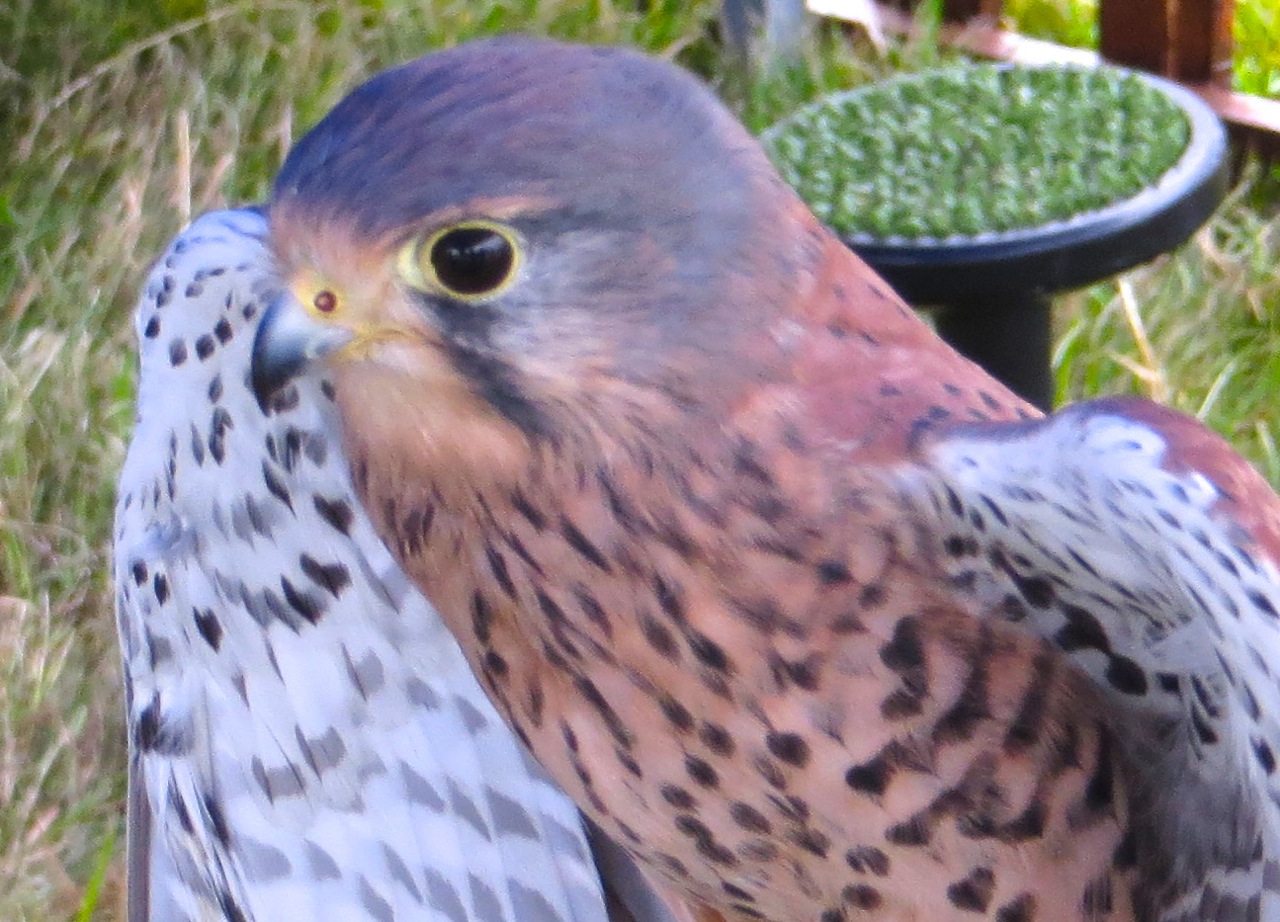
I was recently able to get quite close to one at an Oak Fair in Dorset, where watery sunshine brought out the wonderfully rich colouring of the bird. I only has a snapping camera with me, but these photos give a pretty good idea of the bird and its plumage. I’ve included a shot of its characteristic white-tipped tail.
KESTREL STUDIES, DORSET
A POPULAR POPPY WITH SMALL BEES Romneya coulteri
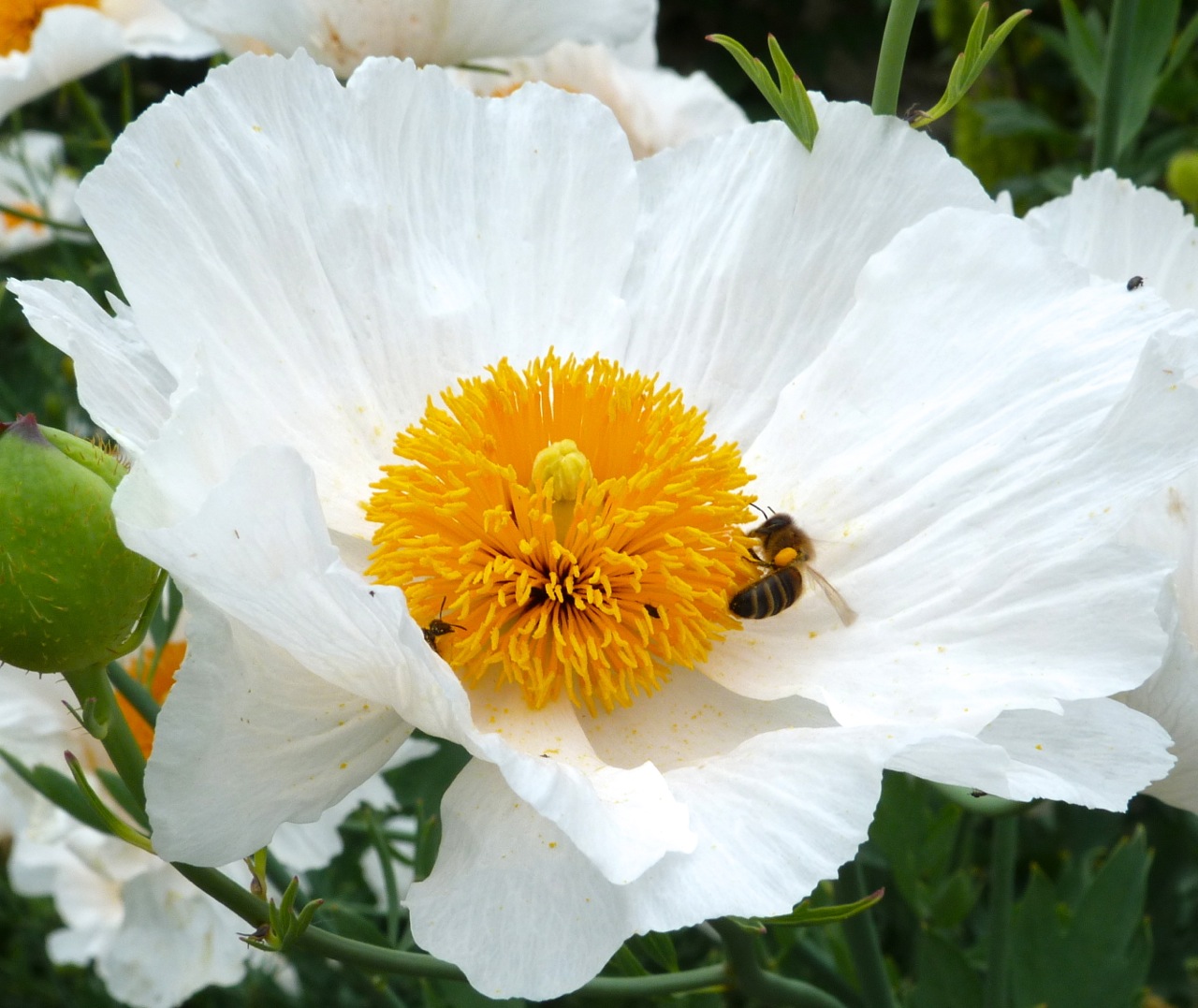
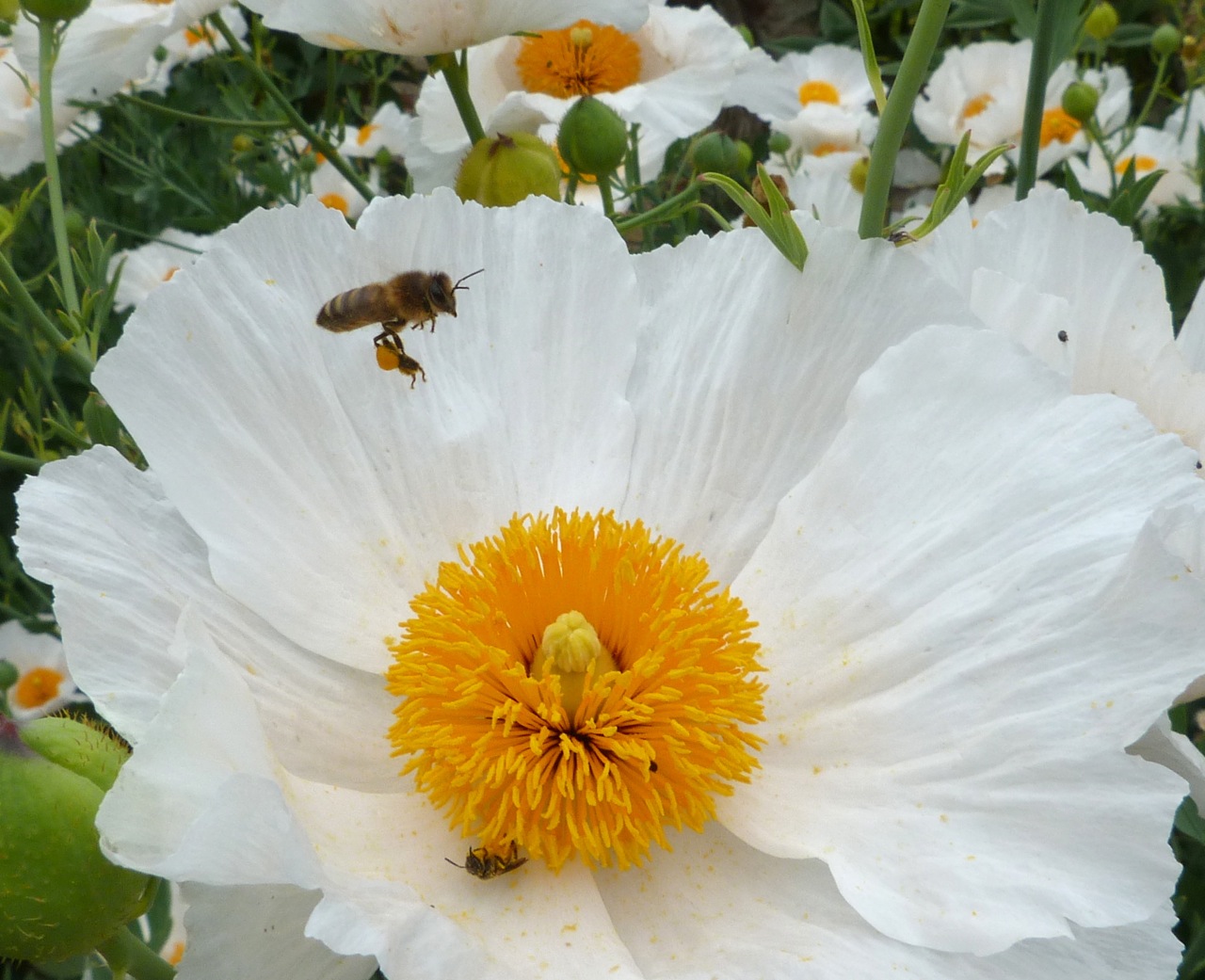
TREE POPPY Romneya coulteri
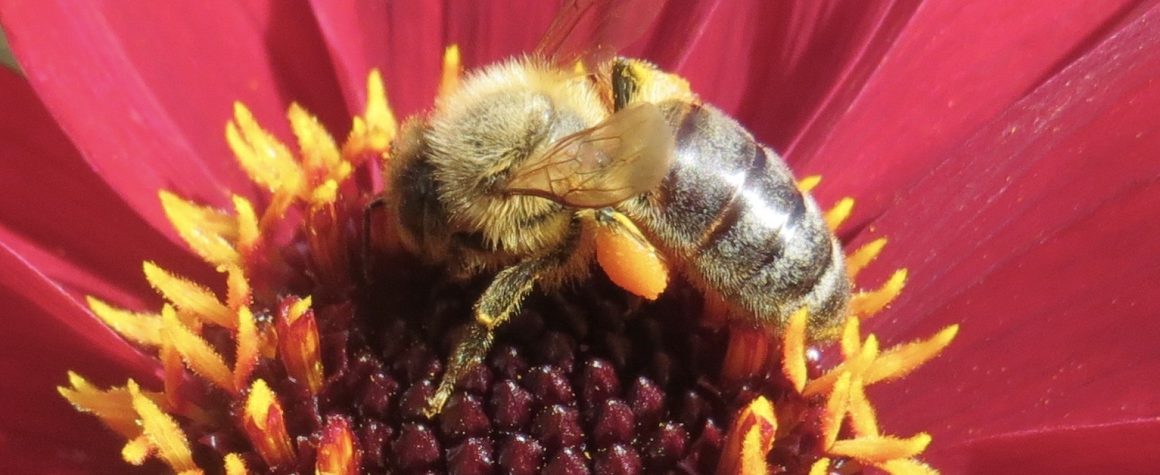
This plant at Oxburgh Hall, Norfolk was a magnet for small bees. We watched them come and go, filling up their little saddlebags. Photos of bees in flight don’t often work well. These are no exception. Still, they do catch the general bizzyness of the proceedings. The plant was lovely, not one we knew. Another new bee plant find for the year, along with Hyssop.
THE GRAPE HARVEST
GRAPE HARVEST
As summer gives way to autumn, the vine leaves start to turn rusty red


Grapes that have been green all summer gradually turn deep red, almost black

This year the grapes have been more prolific than for many years

The bunches are larger, juicier and sweeter than ever before

Today was the Vendemmia, the annual grape harvest


About 25% of the harvest filled a traditional blue grape-picking receptacle

And this happened today in… West London
SHEEP ON DARTMOOR
“HONEY RUSH” – LAST ORDERS IN THE SEASON’S FLORAL SALOON
The bees are working overtime as a chill spreads over September and winter downtime looms for them. So busy are they that there is competition for individual flowers – even though there are more than enough to go round. Bumbles were out in force yesterday, and there are still butterflies around, mainly tiny Small Coppers and Whites of different sizes.
We’ve done a quick assessment of plant popularity this spring and summer that produces this league table:
- Hyssop – the runaway winner for bees of many types, ditto butterflies and (new entry) moths. Planted for the first time in May, and has effortlessly thrived (throve? thriven?) to become Nectar Central.
- Lavender – perennial success with bees and butterflies. More planted this spring and very well visited.
- Cosmos – new to the garden this year, a fast and easy grower, and hugely popular with bees, especially bumbles. Also visited by honey bees and butterflies, but only on their way the the hyssop.
Blurry, I know, but the intruder arrived from nowhere as I pressed the button… Why it didn’t land on one of several vacant flowers next to this one, I have no idea. Maybe fighting drunk on pollen?